
TL;DR:
- An accountability partner increases exercise consistency by over 30%, making structured partnerships highly reliable.
- Match on commitment level and compatible habits, not just friendship or proximity.
- Use verifiable tracking and treat fitness sessions as fixed professional appointments.
- Financial stakes and formal goal-setting outperform motivation-only accountability systems.
An accountability partner in fitness is someone who holds you to your commitments through regular check-ins, honest feedback, and shared goal tracking. Not a cheerleader. Not a friend who lets you cancel. A real partner who shows up and expects you to do the same. For professional women managing demanding careers alongside fitness goals, this kind of structured support often makes the difference between a consistent routine and another abandoned gym membership.
Here is what a strong accountability partnership looks like in practice:
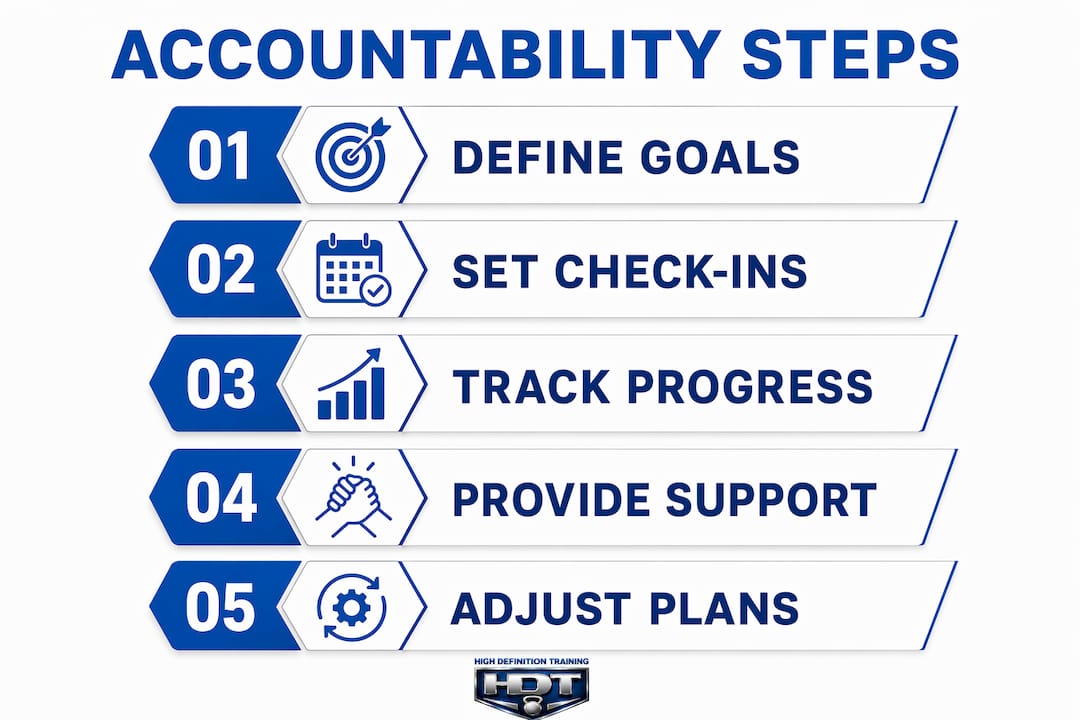
- Scheduled check-ins: Weekly or twice-weekly touchpoints to review progress and flag obstacles
- Shared goal tracking: Using tools like the Peloton App or collaborative documents to log workouts and milestones
- Mutual commitment: Both partners hold equal responsibility, not one coaching the other
- Emotional support: Encouragement during high-stress weeks without enabling skipped sessions
- Fitness accountability groups: Structured communities like Ur Accountability Club that add a social layer to individual effort
Research from Duke University confirms that accountability partners increase exercise consistency by over 30%, a figure that holds up especially well for time-constrained women balancing career and fitness.
Why accountability partnerships work so well for fitness-focused professional women
The core benefit is consistency, and consistency is exactly what busy schedules destroy. When you have someone expecting a workout report on Tuesday morning, skipping Monday night’s session carries a social cost that internal motivation alone rarely creates.
- Reduced workout skipping: Social commitment creates external pressure that outlasts willpower
- Stronger resilience: A partner who has seen your hard weeks makes it harder to quit during a rough month
- Measurable progress: Shared tracking through fitness apps makes progress visible, not just felt
- Emotional grounding: Career-focused women often carry stress that bleeds into fitness; a partner provides perspective without judgment
Statistic: Studies show accountability partners increase exercise adherence by over 30% compared to solo training efforts.
For women over 40 managing leadership roles, the emotional support piece tends to be underestimated. A partner who understands the demands of a high-pressure career can recalibrate your expectations during crunch periods rather than letting you abandon fitness entirely.
How to find the right accountability partner for your fitness goals
Shared commitment level matters more than friendship. Research on psychological mechanisms in accountability partnerships shows that partners with overlapping dedication and compatible habits outperform pairs built purely on social closeness. Your best friend who cancels every other week is not your best accountability partner.
- Match commitment levels: Look for someone with a similar workout frequency and seriousness about goals
- Align on communication style: Decide early whether you prefer daily texts, weekly video calls, or in-person sessions
- Use platforms to find partners: Fitness accountability groups on platforms like Meetup, local gym communities, or the Peloton App’s social features connect you with like-minded women
- Consider proximity: In-person partners work well for shared gym sessions; virtual partners work when schedules rarely sync
- Avoid the social trap: A partner who consistently validates skipped workouts is worse than no partner at all
Pro Tip: Set a written agreement in your first meeting. Define check-in frequency, what counts as a completed workout, and what happens when one of you misses. Treating it like a professional commitment changes how seriously both of you take it.
The “social trap” is real and worth naming directly. When two people with similar excuses pair up, they tend to reinforce each other’s avoidance rather than challenge it. Look for someone slightly ahead of where you are, or at minimum equally committed to not sliding backward.
Strategies to build a fitness accountability partnership that actually lasts
Goal-setting with deadlines beats vague intentions every time. Write specific targets: not “work out more” but “complete four strength sessions per week through March.” Shared documents or apps make these targets visible to both partners, which adds a layer of transparency that verbal agreements rarely achieve.
- Use formal goal-setting: Attach deadlines and measurable outcomes to every fitness target
- Track progress digitally: The Peloton App’s social features, shared Google Sheets, or dedicated fitness tracking apps keep both partners informed in real time
- Apply loss aversion: Research on self-funded commitment contracts shows that tying financial stakes to consistency drives adherence more reliably than motivation alone
- Schedule check-ins like meetings: Block them in your calendar with the same weight as a client call
- Celebrate small wins: Positive reinforcement between check-ins keeps momentum alive between bigger milestones
Pro Tip: Start with one “tiny habit” commitment: a ten-minute walk logged and shared with your partner every morning. Small, verifiable actions build the trust and rhythm that sustain bigger goals later.
Statistic: Behavioral research on commitment contracts shows that financial stakes tied to gym attendance significantly outperform purely motivational accountability systems.
The loss aversion principle from behavioral psychology is worth taking seriously here. The brain responds more strongly to the prospect of losing something than to gaining a reward of equal value. Structuring your partnership around small, real stakes, even a $10 bet on weekly completion, tends to produce more consistent behavior than a purely supportive arrangement.
Common challenges in accountability partnerships and how to fix them
Motivation drops are predictable, not personal. Most partnerships hit a rough patch around weeks six through eight, when the novelty fades and real-life demands crowd in. Knowing this in advance lets you plan for it rather than interpret it as failure.
- Inconsistent communication: Set a default check-in day and treat it as non-negotiable; missing it requires a reschedule, not a skip
- Commitment mismatch: If one partner consistently underperforms, have a direct conversation about whether the arrangement still serves both of you
- Enabling behavior: Agreeing to skip together is the fastest way to dissolve a partnership; build a rule that one partner always completes the session even when the other cannot
- Goal drift: Revisit your written targets every four weeks and adjust for schedule changes rather than quietly abandoning them
- Workload spikes: Build a “minimum viable workout” protocol for high-pressure weeks, something short enough to complete even during a deadline crunch, so the habit survives the chaos
The mismatch problem is the one most women avoid addressing directly. A partner who is consistently less committed than you are will gradually pull your standards down rather than lift them. Resetting expectations early, or finding a better match, protects both the partnership and your progress.
What expert coaching adds to accountability for professional women over 40

Personalized coaching changes the accountability equation in a specific way: it removes the guesswork about what to do and lets the partnership focus entirely on whether you did it. For women over 40, that distinction matters because the wrong program, done consistently, still produces poor results or injury.
High Definition Training builds accountability into its coaching model from the first session. The approach combines pressure-free progression with measurable tracking, so clients always know where they stand without the anxiety of being pushed past safe limits. The social support layer, including fitness accountability groups and community check-ins, mirrors the structure of a formal accountability partnership but with expert guidance built in.
- Pressure-free progression: Avoids the injury and burnout cycles that derail women returning to fitness after 40
- Measurable tracking: Clients see concrete results within weeks, which sustains motivation better than subjective feelings of progress
- Community accountability: Group check-ins add social stakes without the competitive pressure of traditional gym environments
If you train better with others, our small group personal training programs build accountability into every session.
How to tailor your accountability partnership to a professional woman’s schedule
The biggest scheduling mistake is building a fitness plan around ideal weeks rather than typical ones. Most professional women’s calendars include travel, late meetings, and unpredictable deadlines. An accountability structure that only works when everything goes smoothly will fail constantly.
Build your check-ins around fixed anchors in your week, not around workout days. A Sunday evening five-minute check-in to plan the week’s sessions works better than a post-workout debrief that never happens because the workout got moved. Personal trainer support for women with demanding schedules often centers on exactly this kind of structural flexibility.
Virtual accountability partnerships give professional women the option to connect across time zones and irregular hours. A quick voice note logged in a shared app at 6:00 AM counts as a check-in. The format matters less than the consistency. Women executives who prioritize fitness after 40 often cite schedule integration, not motivation, as the factor that finally made their routines stick.
What do successful accountability partner routines actually look like?
The most effective routines share one feature: they are specific enough to be verifiable. “I worked out” is not accountable. “I completed a 40-minute strength session and logged it in our shared tracker” is.
A common structure for professional women pairs two weekly gym sessions with one active recovery check-in, all logged through a shared app. Partners review each other’s logs on Sunday, flag any missed sessions without judgment, and set the targets for the following week together. Group fitness programming adds a third layer when both partners join the same class, turning individual accountability into a shared experience.
For women who travel frequently, a home workout program with equipment keeps the routine intact across locations. Logging a hotel-room session carries the same weight as a gym visit when the tracking system is consistent. The partnership’s job is to make sure the log gets filled, wherever the workout happens.
Balancing professional commitments with fitness accountability
The tension between career demands and fitness consistency is not a time problem. It is a priority problem. Fitness sessions that live on the calendar as optional get bumped first. Sessions treated as fixed appointments, the way a board meeting or client call would be, survive the week intact.
Accountability partnerships enforce this priority externally. When someone else is expecting your workout log, canceling feels like canceling on them, not just on yourself. That social weight is exactly what behavioral psychology research on commitment contracts identifies as the mechanism behind improved adherence. Strength training for career women works best when it is treated as a professional commitment, not a personal indulgence.
The practical move is to block fitness time before the week fills up, ideally Sunday night, and share that block with your accountability partner. If a conflict arises, the default is to reschedule within 48 hours, not to skip the appointment. That single rule, agreed on in advance, prevents the slow erosion that ends most fitness routines.
High Definition Training brings structure and support together
Most accountability partnerships work better with a professional framework underneath them. High Definition Training offers exactly that for women in the Bronx’s Throgs Neck and Pelham Bay neighborhoods who want more than a workout buddy.
The programs at High Definition Training are built for adults over 40 who need personalized plans, hands-on coaching, and a community that holds them accountable without pressure. You get measurable tracking from day one, a coach who adjusts your plan as your schedule and capacity change, and a group environment that serves as built-in fitness accountability- no guessing about whether you are doing the right exercises or progressing safely.
If you are ready to add professional structure to your fitness commitment, check the available training classes or review program pricing to find the right fit.
Key Takeaways
| Point | Details |
|---|---|
| Consistency boost | Accountability partners increase exercise adherence by over 30%, per Duke University research. |
| Partner selection | Match on commitment level and compatible habits, not just friendship or proximity. |
| Financial stakes | Commitment contracts with real financial stakes outperform motivation-only accountability systems. |
| Schedule integration | Block fitness sessions before the week fills and treat them as fixed professional appointments. |
| High Definition Training | Offers personalized, pressure-free coaching with built-in community accountability for women over 40 in the Bronx. |
FAQ
What is a gym accountability partner?
A gym accountability partner is someone who commits to mutual support and regular check-ins to help both people stay consistent with their fitness goals. The relationship works best when both partners share a similar level of commitment and use verifiable tracking, not just encouragement.
What should an accountability partner do?
An accountability partner should schedule regular check-ins, review shared progress logs, and hold you to your stated commitments without enabling excuses. The role is not to motivate you emotionally but to create a social obligation that makes skipping sessions carry a real cost.
How much does an accountability coach cost?
Accountability coaching costs vary widely depending on format. Group-based programs tend to be more affordable than one-on-one coaching; High Definition Training’s program pricing reflects a personalized approach for adults over 40 in the Bronx.
How do fitness accountability groups differ from one-on-one partners?
Fitness accountability groups add a social layer with multiple check-in points and shared visibility, which can amplify motivation beyond what a single partner provides. One-on-one partnerships offer more personalized attention and direct communication, which works better for women with highly specific or complex fitness goals.