Walking into a strength studio for the first time can feel bigger than it should. Maybe it has been twenty years since you last exercised regularly. Maybe a commercial gym once left you feeling lost or judged. Maybe you are simply not sure your knees, back or shoulders are up to it.
Knowing exactly what will happen removes most of that anxiety. Here is a walk-through of a first strength training session at High Definition Training, from the moment you arrive to the moment you leave.
Have a question before you book? Call HIGH DEFINITION TRAINING at (917) 432-9418 and we will talk you through it.
Before Your First Strength Training Session
- What to wear: comfortable clothes you can move in, such as leggings or athletic shorts and a breathable top. Nothing needs to be new or technical.
- Shoes: bring a clean pair of indoor training shoes, or be ready to train barefoot. Flat, stable shoes work better for strength training than thick running shoes.
- What to bring: a water bottle and a sweat towel. That is all.
- Eating: a light meal or snack one to two hours beforehand usually feels best. Training on a completely empty stomach or right after a large meal can both feel uncomfortable.
- Information to have ready: a short list of any injuries, surgeries, joint concerns or medications that affect exercise. If your doctor has given you restrictions, bring them up.
Arriving
Once your first strength training session is booked, Coach Angel will send you a text message confirming the date and time, along with the studio address (3843 East Tremont Avenue, Bronx) and directions for finding us. Please arrive at least 10 minutes early so we can review a few details with you and introduce you to the team. Your coach will show you around and explain how the session will run. There is no expectation that you already know the equipment or the exercise names. You can check current session times on our schedule page.
Part 1: The Conversation
Your first strength training session starts with a conversation, not a workout. Before anything physical, you talk. Your coach will ask about your goals, your history with exercise, how your body feels day to day, and what has gotten in the way before. This is also your chance to ask questions. Good questions include:
- How will you adjust exercises if something hurts?
- How will I know I’m progressing?
- How hard should this feel?
Part 2: Movement Check
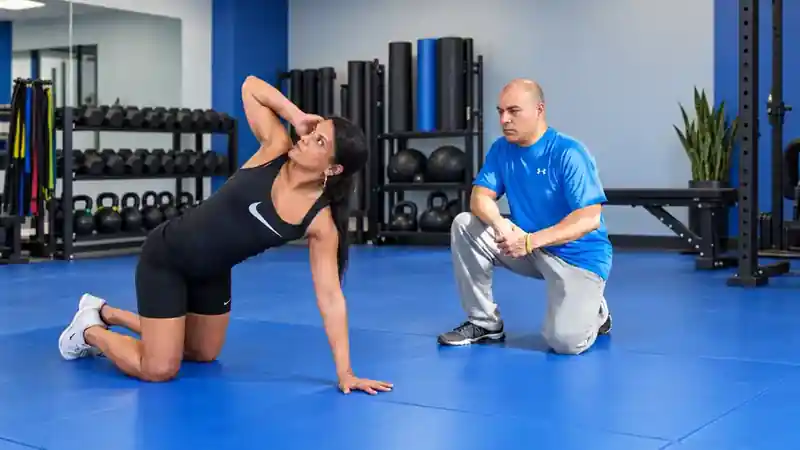
Next comes a simple look at how you move. You might be asked to sit down to a box and stand up, hinge at the hips, step up onto a low platform, reach overhead, or balance on one leg. None of these are tests you can fail. They show the coach where to start you and which exercises to adjust.
Part 3: The Warm-Up
In your first strength training session, the warm-up raises your body temperature and prepares your joints: easy mobility for hips, upper back and shoulders, plus light versions of the movements to come. For many people, this is where nerves start to settle.
Part 4: The Lifts in Your First Strength Training Session
You will learn a few foundational patterns, the same building blocks behind our beginner strength workouts, typically some version of:
- A squat: often to a box or bench so depth is controlled and safe
- A hinge: learning to bend at the hips while keeping the back neutral, the basis for lifting things off the floor safely
- A push: a wall or incline push-up, or a light press
- A pull: a band or cable row to strengthen the upper back
- A carry or core exercise: holding weights while walking, or a supported plank
Weights will be lighter than you expect. That is intentional. The first sessions are about learning positions and building confidence, not testing your limits.
How hard should it feel? On a scale of 1 to 10, aim for about 5 or 6: noticeable effort, with good form, while still able to talk. You should finish each set feeling you could have done two or three more reps.
How Exercises Are Adapted for You
If a movement causes pain, tell your coach immediately. There is almost always another way to train the same muscles:
- Knee discomfort when squatting: a higher box, a shorter range, or a different stance
- Lower back sensitivity: supported rows, a raised starting position for hinges
- Shoulder limitations: neutral-grip handles, landmine presses, a reduced range of motion
- Balance concerns: holding a support, or starting with two-footed exercises
Discomfort from effort, the burn of working muscles, is normal. Sharp, pinching or joint pain is not, and should always be mentioned. A fitness coach does not diagnose injuries; if something needs medical attention, you will be advised to see a healthcare professional.
Part 5: Cool-Down and Next Steps
Your first strength training session ends with easy movement and stretching, then a quick recap: what you did well, what you will work on, and a recommendation for how often to train and which format suits you. For most new clients, the next step is your first 60 days in the 60-Day Transformation Program.
The Next 48 Hours
After a first strength training session, mild muscle soreness one to two days later is normal, especially in your legs and glutes. Gentle walking, staying hydrated and a good night’s sleep help. If you feel joint pain rather than muscle soreness, let your coach know before your next session so the plan can be adjusted.
Frequently Asked Questions
Q: I’m out of shape. Should I get fitter before I start?
A: No. Coached strength training is how you get fitter. Your coach starts where you are today.
Q: What if I can’t do an exercise?
A: Then you do a different version of it. Every exercise has easier and harder options.
Q: Will I be sore?
A: Possibly a little, for a day or two. A well-planned first session should not leave you struggling to walk down stairs.
Q: Is my age a problem?
A: No. Strength training benefits adults at every age, and the program is designed specifically for adults over 40.
Book Your First Session
Your first strength training session is about learning, not proving anything. It is the first step toward the muscle-strengthening work the CDC physical activity guidelines for adults recommend at least two days a week, alongside the strength, balance and flexibility exercise that keeps you moving well after 40. Book your complimentary assessment at High Definition Training in Throgs Neck. Bring water, a towel and an open mind; we will take care of the rest.
Call (917) 432-9418 today to book your first session with HIGH DEFINITION TRAINING.