Physical fitness is a direct driver of leadership confidence, strengthening the brain, regulating stress hormones, and building the mental toughness that high-stakes leadership demands. The role of fitness in leadership confidence goes well beyond looking good in a boardroom. Exercise reshapes how you think, how you recover from setbacks, and how you carry yourself in front of a team. Research now confirms what many high-performing women already sense: a consistent fitness practice is one of the most reliable tools for building the kind of self-assurance that earns respect and drives results. For professional women over 40, this connection is not optional. It is a career advantage.
How does fitness improve cognitive and emotional leadership confidence?
Fitness strengthens the prefrontal cortex, the part of the brain responsible for logical decision-making, impulse control, and composure under pressure. When that region functions well, you make clearer calls in high-pressure meetings and recover faster from difficult conversations. Aerobic conditioning improves oxygen flow to the brain, reduces cognitive fatigue, and helps leaders maintain logic under stress. That is not a minor benefit. That is the difference between reacting and responding.
Exercise also regulates cortisol, the primary stress hormone. When cortisol stays chronically high, it clouds judgment, disrupts sleep, and erodes emotional control. Fitness lowers cortisol and activates the parasympathetic nervous system, the body’s recovery mode, which restores calm and mental clarity between leadership demands. Think of it as a biological reset button you can trigger three to five times a week.
The psychological benefits are just as significant. Exercise releases dopamine, serotonin, and norepinephrine, neurotransmitters that regulate mood, motivation, and focus. A meta-analysis of 36 randomized controlled trials found that exercise interventions improve self-efficacy with a moderate-to-large effect size (Hedges’ g = 0.68). Self-efficacy is the belief that you can handle what is in front of you. It is the psychological core of leadership confidence.
Physical activity self-worth also predicts psychological resilience in women, with a statistically significant mediation effect (b = 0.309, p < 0.001). Resilience is not just bouncing back. It is the capacity to stay grounded when everything around you is uncertain.
Pro Tip: Schedule your workouts at the same time each day and treat them as non-negotiable appointments. Your brain begins associating that time slot with mental recovery, which compounds the stress-regulation benefit over weeks.
What fitness practices build confidence for women leaders over 40?
Strength training is the single most underused leadership tool available to professional women over 40. Lifting weights builds tolerance for discomfort. That tolerance transfers directly to high-stakes negotiations, difficult feedback conversations, and the kind of sustained pressure that leadership roles generate daily. Resistance training builds mental toughness by increasing your capacity to push through resistance, both physical and professional.
Here are four fitness practices that deliver the strongest returns for leadership confidence:
- Strength training two to three times per week. Compound movements like squats, deadlifts, and rows build full-body strength and teach your nervous system to stay calm under load. That neurological training carries over to high-pressure leadership situations.
- Aerobic conditioning three to five times per week. Brisk walking, cycling, or swimming for 30–45 minutes supports brain health, improves sleep quality, and keeps cortisol in check. You do not need to run a marathon. Consistent moderate effort is enough.
- Mobility and recovery work. Yoga, stretching, and foam rolling reduce physical tension that accumulates from long hours at a desk. Leaders who move well tend to carry themselves with more ease and authority.
- Daily movement habits. Walking meetings, standing desks, and short movement breaks between calls add up. Consistency matters more than intensity for managing leadership stress and sustaining executive energy across a full workweek.
Pro Tip: Block your workout time in your calendar the same way you block a board meeting. Leaders who schedule fitness sessions with professional discipline are far more consistent than those who fit it in when time allows.
Strength training vs. aerobic exercise: which builds more leadership confidence?
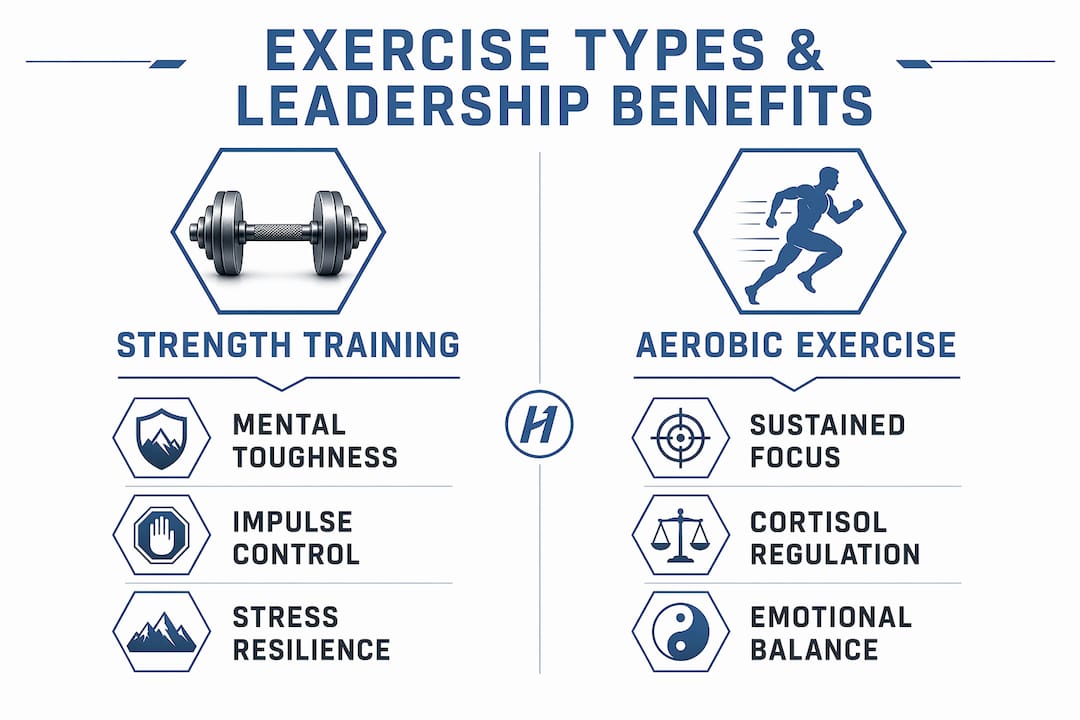
Both modalities contribute to leadership confidence, but they do so through different pathways. The most effective approach combines both rather than choosing one.
| Exercise type | Primary leadership benefit | Mechanism |
|---|---|---|
| Strength training | Mental toughness and composure | Builds discomfort tolerance and projects self-mastery |
| Aerobic exercise | Cognitive endurance and stress recovery | Improves oxygen delivery to the brain and regulates cortisol |
| Combined training | Greater self-esteem and leadership effectiveness | Synergistic effect on mood, resilience, and executive presence |
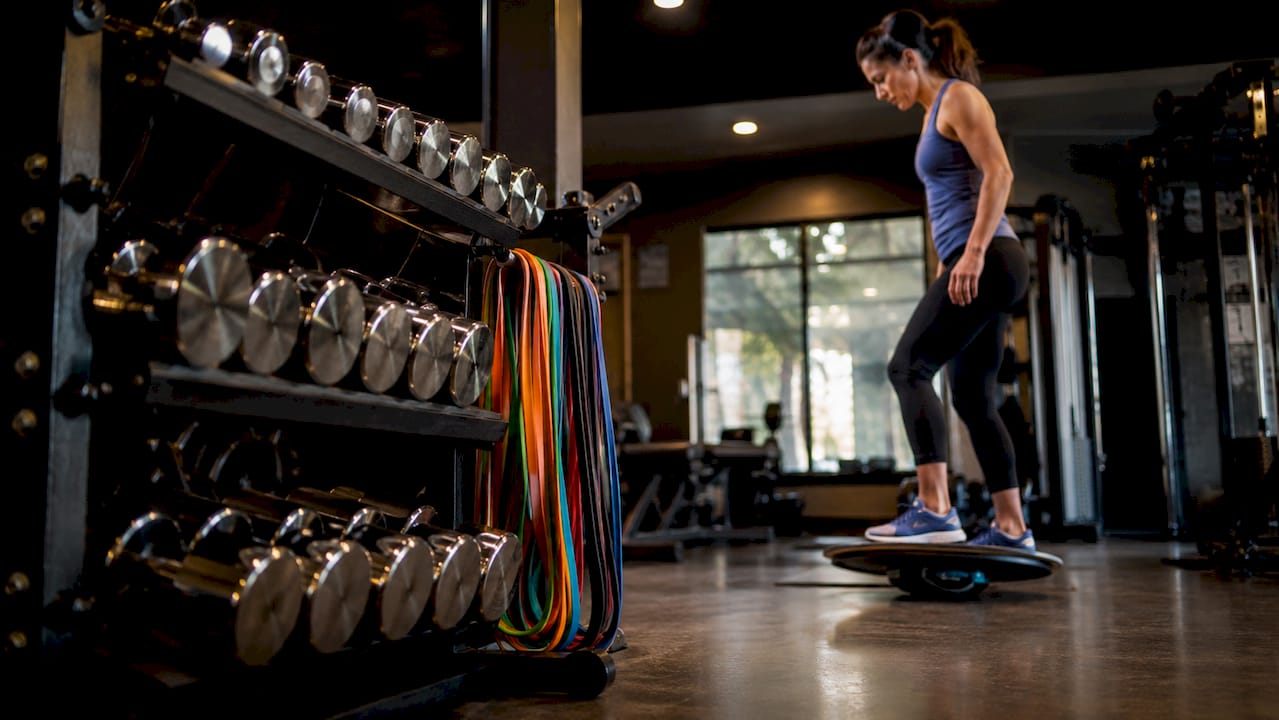
Strength training teaches you to stay composed when things get hard. Every set you complete under fatigue is a small proof of your own capability. That proof accumulates into a quiet, unshakeable confidence that shows up in how you lead. Women leaders are increasingly choosing strength training as a deliberate strategy for professional advancement, not just physical health.
Aerobic exercise works differently. It improves the brain’s ability to sustain focus over long periods, which is exactly what you need during a full day of meetings, decisions, and problem-solving. The two modalities together produce a greater combined effect on self-esteem and leadership effectiveness than either does alone.
How does body image factor into leadership presence and confidence?
Positive body image is a direct mediator between physical activity and well-being. A large-scale study involving 64,697 participants found that physical activity correlates with positive body image, which in turn drives significant increases in subjective well-being. That chain matters for leaders because confidence is not just internal. It is communicated through posture, eye contact, and the way you occupy a room.
Physical fitness also improves posture and vitality, which enhances executive presence and leadership credibility. When you stand tall, move with ease, and project energy, people read that as authority. That perception is not superficial. It shapes how your team responds to your direction and how peers treat your input in a meeting.
Key ways fitness shapes leadership presence:
- Posture and body language. Strength training corrects the forward-head and rounded-shoulder posture that desk work creates. Better posture signals confidence before you say a word.
- Energy and vitality. Fit leaders show up with more sustained energy across a full workday. That visible vitality signals to others that you are in control of yourself.
- Visible self-mastery. Visible physical strength signals ambition and discipline, qualities that enhance a woman leader’s credibility and workplace influence.
- Emotional steadiness. Women who train consistently report feeling more grounded and less reactive in high-pressure situations. That steadiness is one of the most valued leadership qualities.
The cultural shift is real. Women in senior roles are increasingly treating strength training not as vanity, but as a professional investment. The gym has become a place where leadership capacity is built, not just calories burned.
Key takeaways
Fitness builds leadership confidence through biology, psychology, and presence, making it one of the most direct investments a professional woman over 40 can make in her career.
| Point | Details |
|---|---|
| Exercise improves self-efficacy | A meta-analysis of 36 RCTs found a moderate-to-large effect size (Hedges’ g = 0.68) for exercise improving self-efficacy. |
| Strength training builds mental toughness | Resistance training increases discomfort tolerance, which transfers directly to composure in high-pressure leadership situations. |
| Consistency beats intensity | Sustainable, regular movement regulates cortisol and sustains executive energy better than sporadic high-intensity workouts. |
| Body image drives presence | Positive body image mediates the link between physical activity and well-being, shaping how leaders carry themselves. |
| Combined training is most effective | Pairing aerobic and strength work produces the greatest gains in self-esteem and leadership effectiveness. |
Why I stopped treating fitness as a reward and started treating it as work
For years, I watched professional women walk into the gym apologetically, as if carving out an hour for themselves was something they needed to justify. I understood it. When your calendar is packed with other people’s priorities, fitness feels like a luxury. That framing is the problem.
The women I train at Highdefinitiontraining in the Bronx who make the biggest leadership gains are not the ones who work out hardest. They are the ones who show up consistently, treat their training with the same seriousness as a client call, and stop waiting until they feel motivated. Motivation follows action. It does not precede it.
What I have seen over and over is this: a woman starts strength training, not because she wants to lose weight, but because she wants to feel capable. Six weeks in, she is standing differently. She is speaking more directly. She is less rattled by conflict. None of that happened because she read a book on leadership. It happened because she built real, physical evidence of her own strength.
The mental shift that matters most is treating fitness as self-management, not self-indulgence. Leaders who manage their physical state manage their professional state. That is not a metaphor. That is neuroscience.
— Angel
Train with purpose at Highdefinitiontraining in the Bronx
Professional women over 40 in the Throgs Neck and Pelham Bay areas of the Bronx now have access to personal training built specifically around their leadership goals. Highdefinitiontraining designs programs that build strength, regulate stress, and develop the physical confidence that carries directly into your professional life.
Every program at Highdefinitiontraining starts with where you are right now and builds toward the version of you that leads with authority and energy. If you are ready to stop fitting fitness in around your schedule and start building it into your leadership strategy, this is where you start.
FAQ
How does fitness directly improve leadership confidence?
Exercise improves self-efficacy, regulates cortisol, and strengthens the prefrontal cortex. These biological changes produce the mental clarity, emotional control, and composure that define confident leadership.
Is strength training or cardio better for leadership confidence?
Both contribute, but combined training produces the greatest effect on self-esteem and leadership effectiveness. Strength training builds mental toughness; aerobic exercise supports cognitive endurance and stress recovery.
How often should a woman over 40 train to see leadership benefits?
Consistency matters more than frequency or intensity. Two to three strength sessions and three to five aerobic sessions per week, maintained over time, produce measurable gains in confidence and resilience.
Can fitness improve how others perceive my leadership?
Yes. Physical fitness improves posture, vitality, and body language, all of which shape how others read your authority and credibility before you speak a single word.
How long before fitness starts affecting leadership confidence?
Research and practical experience both point to noticeable shifts within four to six weeks of consistent training. Self-efficacy gains build gradually, but the mood and energy benefits appear within the first few sessions.