TL;DR:
- Meal prep involves cooking and portioning balanced meals in advance to ensure healthy food is always ready, reducing decision fatigue.
- Consistent nutrition separates those who see results from those who stall; meal prep reduces reliance on processed foods.
- A simple plate structure (protein, complex carbs, vegetables, and healthy fats) supports any fitness goal.
- Start small with 3-4 days of meals to avoid burnout and properly store your meals to maintain food safety.
What is meal prep, and how does Fitness Connection use it?
Meal prep is the practice of cooking and portioning balanced meals in advance, typically once or twice a week, so healthy food is ready when you need it. At Fitness Connection, meal prep is treated as a core nutrition strategy, not an afterthought. The gym integrates it directly into clients’ fitness plans to remove the daily friction of figuring out what to eat.
Here is what meal prep at Fitness Connection typically involves:
- Batch cooking proteins, carbohydrates, and vegetables in one session
- Portioning meals into containers sized to your calorie and macro targets
- Planning grocery lists to cut waste and control spending
- Pairing prepped meals with Fitness Connection’s ProShop supplements and snacks
- Connecting with Elevate, Fitness Connection’s personal training partner, for a tailored nutrition plan
Why meal prepping is one of the best things you can do for your fitness
Consistent nutrition is what separates people who see results from those who stall. Meal prep reduces reliance on ultra-processed foods and fast food, two of the biggest obstacles to hitting fitness goals. When your meals are already made, you eat what is in the fridge rather than whatever is fastest.
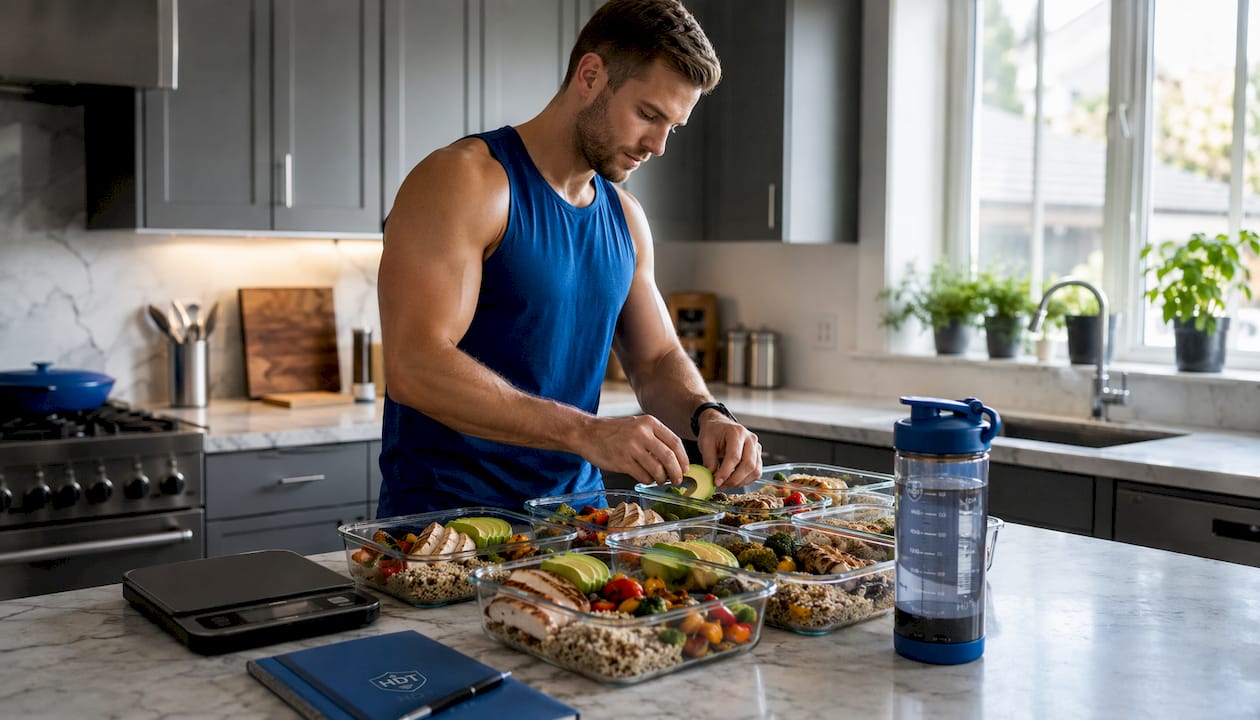
The Cleveland Clinic points out that meal prep eliminates decision fatigue, which is the mental exhaustion that leads to poor food choices when you are hungry or tired. Beyond that, meal prep supports any dietary goal, whether you are building muscle, losing weight, or maintaining, by making it far easier to hit your calorie and macro targets consistently.
Pro Tip:
Pair your meal prep habit with a clear fitness goal. Knowing whether you are cutting, bulking, or maintaining changes how you portion each container, and that specificity is what makes the habit stick.
Time savings are real too. Spending 60–90 minutes on a single prep session saves 5–7 hours of cooking across the week. For busy adults, that math alone makes it worth trying.
Practical meal prep strategies Fitness Connection recommends
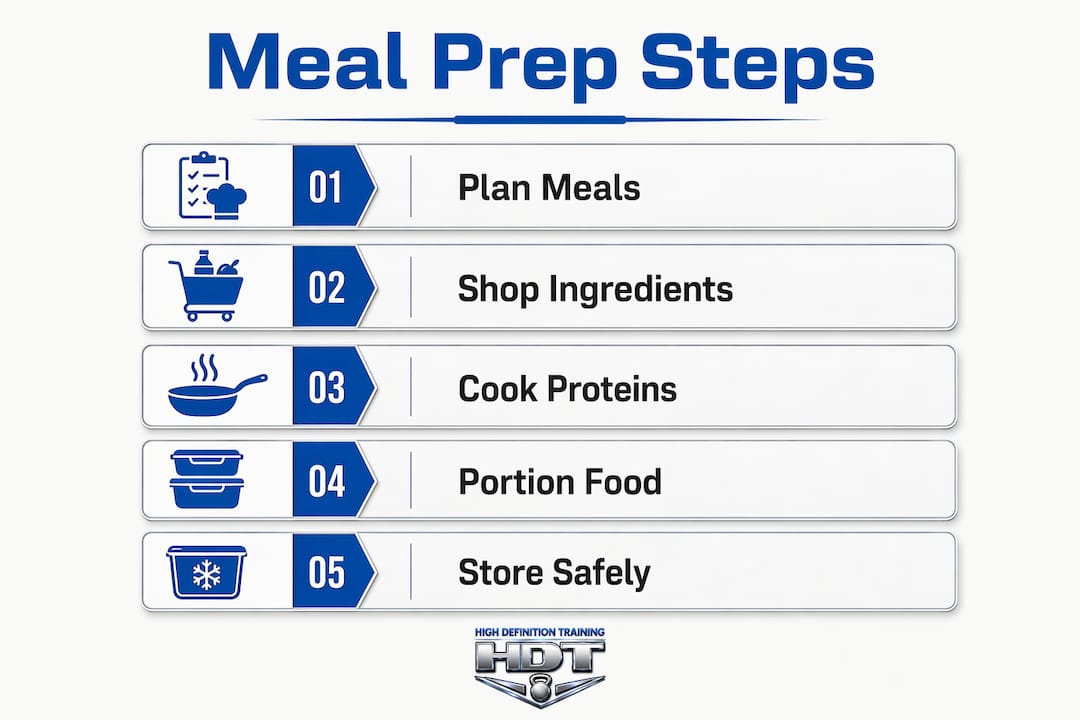
The most effective prep system is also the simplest. Cook 3 proteins, 2 carbs, and 1 vegetable in one batch session, then mix and match throughout the week. This gives you variety without turning Sunday into a four-hour ordeal.
Budget-friendly tactics that work:
- Buy proteins like chicken thighs, canned tuna, and eggs in bulk
- Choose versatile carbs such as brown rice, oats, and sweet potatoes
- Use frozen vegetables, which are just as nutritious as fresh and far cheaper
- Plan shopping around sales and build your grocery list before you leave the house
- Cook proteins and grains simultaneously using the oven and stovetop together
Pro Tip:
Rotate your sauces weekly, teriyaki one week, garlic herb the next, a Mexican spice blend after that. The base meals stay the same, but the flavor changes enough to keep things interesting for months.
How to build a balanced plate for your fitness goals
A well-structured meal plate does not need to be complicated. The goal is hitting the right ratio of protein, carbohydrates, vegetables, and healthy fats in each container. Fitness Connection’s nutrition philosophy, guided by principles from the American Heart Association, emphasizes portion control and balanced macros as the foundation of sustainable weight management.
A simple plate breakdown for most fitness goals:
- Protein (25–30% of the plate): chicken breast, ground turkey, eggs, Greek yogurt, or legumes
- Complex carbs (30–35%): brown rice, quinoa, sweet potato, or whole grain pasta
- Vegetables (35–40%): roasted broccoli, spinach, bell peppers, or zucchini
- Healthy fats (small addition): olive oil, avocado, or a handful of nuts
Proper workout nutrition starts with getting these ratios right before you ever set foot in the gym.
How to start meal prepping without burning out
The biggest beginner mistake is going all-in on day one. Starting with just 3–4 days’ worth of meals prevents the burnout and food fatigue that kills the habit before it forms. Build the system gradually, and it becomes automatic.
A simple first-week plan:
- Choose 2 proteins, 1 carb, and 1 vegetable you actually enjoy eating
- Write your grocery list before shopping, not during
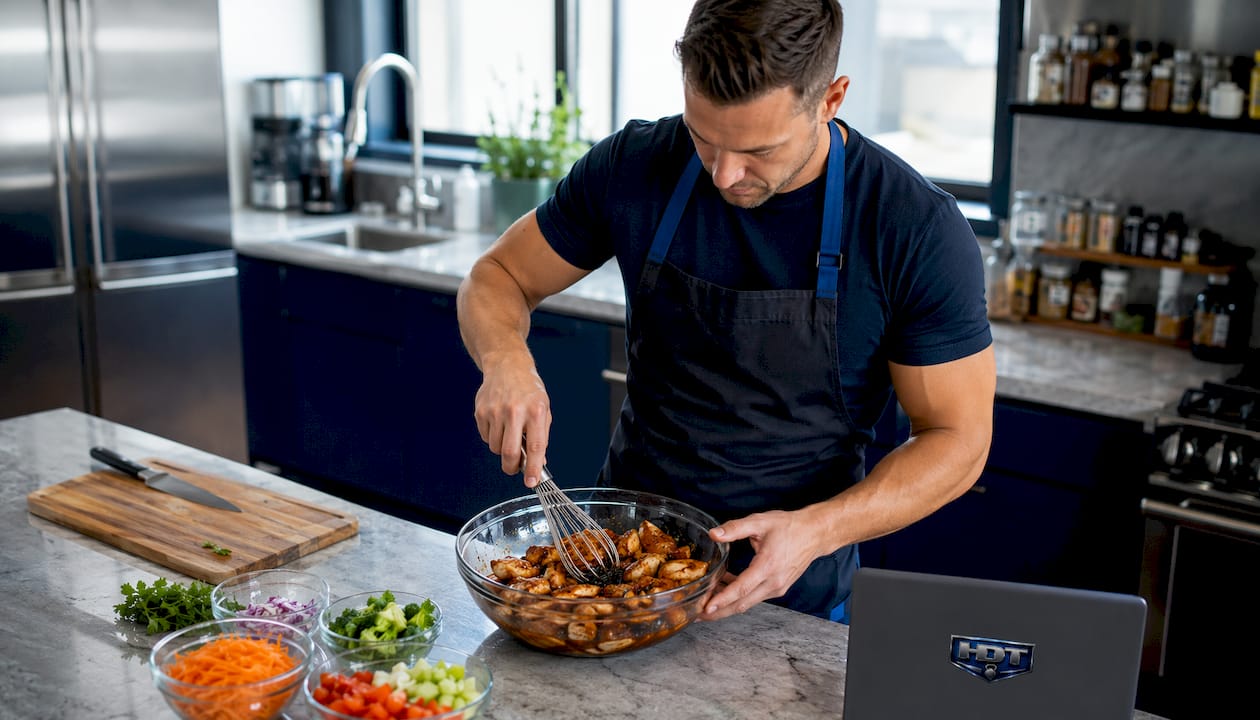
- Set aside one 60–90 minute block; Sunday works well for most people
- Portion meals into labeled containers immediately after cooking
- Add dinners the following week once lunches feel easy
Consistency in fitness depends on removing barriers, and meal prep is one of the most direct ways to do that. Adults juggling work and family find that planning meals is often the difference between a productive week and a reactive one.
Meal prep safety and storage guidelines you should follow
Food safety is where many people cut corners, and it is not worth the risk. Fully assembled prepped meals last 4 days refrigerated, or 2–3 months when frozen. Those timelines are not suggestions; they are the boundaries that keep your food safe to eat.
Key storage practices:
- Label every container with the item name and date it was made
- Store the oldest meals at the front of the fridge so you use them first
- Keep highly perishable items like leafy greens at eye level so they do not get forgotten
- Reheat meals to an internal temperature of 165°F before eating
- Freeze anything you will not eat within 4 days immediately after cooking
Fitness Connection’s meal prep program overview
Fitness Connection supports members through a combination of in-gym resources and partner services. The ProShop carries protein powders, healthy snacks, and supplements designed to complement a prepped meal plan. Elevate, the gym’s personal training partner, works with members to design nutrition strategies matched to their specific fitness goals. Together, these resources give members a practical system rather than generic advice.
Meal prep recipe ideas aligned with Fitness Connection’s approach
Simple, repeatable recipes are the backbone of any sustainable prep routine:
- Sheet pan chicken and vegetables: season chicken thighs with olive oil and herbs, roast alongside broccoli and bell peppers at 400°F for 35 minutes
- Ground turkey rice bowls: brown ground turkey with garlic and onion, serve over brown rice with a side of roasted zucchini
- Egg muffins: whisk eggs with spinach, diced peppers, and feta, bake in a muffin tin for grab-and-go breakfasts
- Overnight oats: combine oats, Greek yogurt, and berries the night before for a ready protein-rich breakfast
Nutrition principles Fitness Connection follows in meal prep
Fitness Connection’s approach aligns with guidance from the American Heart Association and Cleveland Clinic: prioritize whole foods, control portions, and minimize ultra-processed ingredients. Meals are built around lean proteins to support muscle repair, complex carbohydrates for sustained energy, and fiber-rich vegetables for satiety. Supplements from the ProShop fill gaps without replacing whole food foundations.
Real results from Fitness Connection’s meal prep approach
Fitness Connection members who combine structured meal prep with personal training consistently report faster progress toward weight loss and strength goals. The gym’s clients, many of them adults over 40 working with High Definition Training principles, find that having food ready removes the daily negotiation with themselves about what to eat. That consistency, week after week, is what produces measurable results.
Key Takeaways
Meal prep paired with a structured fitness plan is the most reliable way to hit nutrition targets consistently over time.
| Point | Details |
|---|---|
| Prep once, eat well all week | A 60–90-minute session saves 5–7 hours of cooking throughout the week. |
| Start with 3–4 days | Beginners who prep fewer days avoid burnout and build the habit faster. |
| Refrigerate or freeze promptly | Prepped meals stay safe for 4 days refrigerated or 2–3 months frozen. |
| Rotate sauces for variety | Changing the sauce weekly keeps the same base meals from feeling repetitive. |
| Balanced plate formula | Aim for protein, complex carbs, vegetables, and a small amount of healthy fat per meal. |
FAQ
What does meal prep include?
Meal prep involves batch-cooking proteins, carbohydrates, and vegetables, then portioning them into containers sized to your nutrition targets. It also covers grocery planning, labeling, and proper storage.
What is the 3-3-3 rule for meal prep?
The 3-3-3 rule is not a single standardized framework; definitions vary. A common version suggests prepping 3 proteins, 2 carbs, and 1 vegetable to mix and match throughout the week, matching Fitness Connection’s approach for efficiency and variety.
Are meal prep services actually worth it?
For most adults, yes. Meal prep reduces reliance on fast food, supports portion control, and saves meaningful time each week, making it one of the highest-return habits for anyone with fitness goals.
What is the difference between meal prep and a meal plan?
A meal plan is the written schedule of what you will eat. Meal prep is the physical act of cooking and portioning those meals in advance. You need both: the plan tells you what to make, and the prep makes it ready to eat.