How to Perform Squats Correctly to Avoid Injury
Squats are an amazing way to build strength, but you need to do them right. When done with proper form, squats can boost your lower-body strength, balance, and core stability. But if you're not careful, they might put extra strain on your knees, hips, back, and ankles, especially if you add weight or have mobility issues. So, let's dive into how you can make squats a safe, long-term part of your fitness routine.
There's some solid research out there showing that squats aren't just for training. They're also a handy tool for spotting potential injuries. A 2025 review in the Journal of Bodywork and Movement Therapies highlighted how squats can help clinicians assess injury risk without any special equipment. This is especially useful for adults over 40 looking to train safely or athletes bouncing back from injuries. Squats can show movement limitations before they turn into injuries.
At High Definition Training, we often see clients who want to move better and feel stronger. Whether it's mobility and flexibility training, corrective exercise, or something customized, squats are usually one of the first things we assess. In this guide, we'll walk you through the right way to do squats, common pitfalls, and tips for building a safe squat technique.
Why Proper Squat Form Matters
Controlled Movement Builds Strength
Squats are compound exercises, meaning they work multiple joints and muscles at once. Your glutes, quads, hamstrings, calves, and core all team up to lift and lower your body. When you control the movement, you practically build strength and coordination. But if your form is off, even bodyweight squats can cause issues.
Maintaining good form is crucial for long-term joint health. While squat depth is important, control through the entire motion is key. That's why gradual progression is important—using functional movement training can help you build up safely instead of rushing into heavy weights.
Research Supports Quality Movement
Studies show that poor squat performance can lead to more injuries. In one study of NCAA athletes, those with poor squat form were more likely to get injured. This is why coaches and trainers keep a close eye on how squats are performed. Another study found that poor technique and heavy loads contribute to powerlifting injuries. Check out more details in the PubMed record on squat, bench press, and deadlift injuries. Good form won't eliminate all risks, but it can reduce unnecessary strain.
The Setup: How to Prepare for a Safe Squat
Find the Right Foot Position
Your squat setup starts before you even begin the movement. Your feet should be about shoulder-width apart, but feel free to adjust based on your comfort and mobility. The goal is a stable base where your knees and hips can move without your lower back rounding.
A common mistake is shifting weight incorrectly on your feet. Aim for a "tripod" stance, distributing your weight across the heel, big toe, and little toe. This helps you stay balanced during the squat. If this is tough, consider adding mobility restoration or balance and fall prevention exercises.
Brace Your Core
Good squats aren't just about legs. Your core needs to stay engaged to support your spine. Before you squat, take a breath, brace your abs, and keep your ribs aligned over your pelvis. This helps protect your lower back and reduces strain when you're lifting heavier.
Core stability is even more important if you're dealing with pain or posture issues. If that's the case, back pain rehabilitation training or exercise-based chronic pain management can help you adapt your squat safely. A good coach will guide you on bracing your core while keeping your shoulders and neck relaxed.
The Descent: What a Correct Squat Should Look Like
Focus on Hip Movement
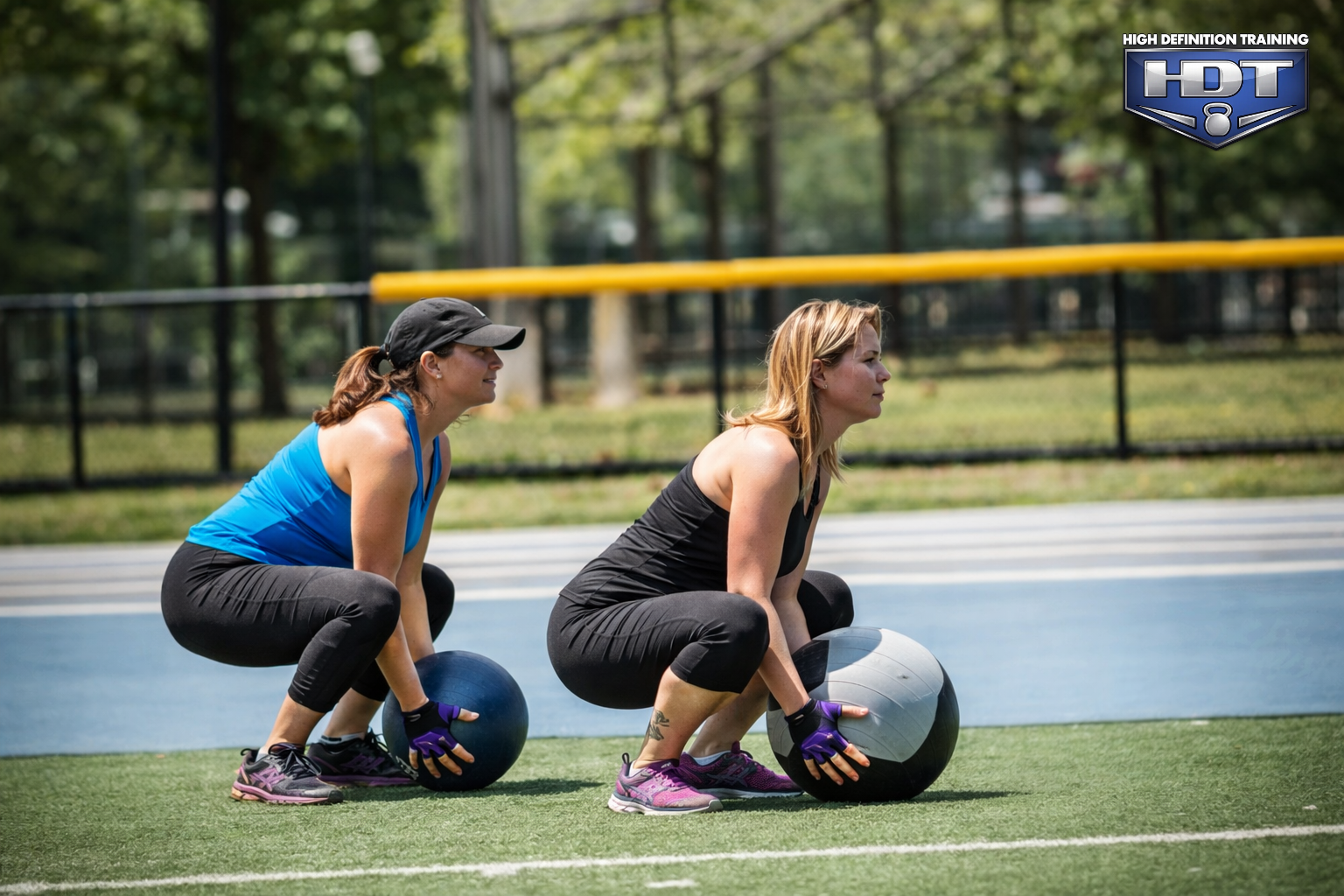
When you squat down, think about moving your hips back and down while your knees bend naturally. Keep your chest open, spine neutral, and heels grounded. You don't need to stay perfectly upright, but avoid leaning too far forward unless it's necessary for your anatomy or squat variation. Aim for a smooth descent with even foot pressure.
Squat depth should be comfortable and controlled. Lower until your thighs are parallel to the ground or as low as you can go without losing form. If you struggle with mobility, a higher squat with good form is better than forcing depth. Our mobility and flexibility training can help improve your range of motion.
Avoid Lower Back Rounding
A common mistake is "butt winking," where your lower back rounds at the bottom of the squat. This often happens when mobility is limited or the stance doesn't match your body. Rounding your back under load can stress your spine. If you notice this, reduce your squat depth, adjust your stance, or work on mobility. For recurring back issues, our joint pain relief programs or personal training for adults 40+ can help you find the best technique for your body.
Common Squat Mistakes That Increase Injury Risk
Knees Caving In
When your knees collapse inward, it shifts the load and can irritate your knees and hips. This usually means your glutes aren't activating enough, your feet are unstable, or you're tired. The issue often starts with your hips, ankles, and trunk.
A helpful cue is to keep your knees aligned with your toes. Imagine pressing the floor apart gently as you stand up. Strengthening your thighs, glutes, and hips can help fix this pattern. In the Bronx, NY, many benefit from personalized training programs that address these issues directly.
Heels Lifting Off the Floor
If your heels lift during the squat, your center of gravity shifts forward, making control difficult. This might happen due to ankle stiffness or a too-narrow stance. It can reduce glute activation and increase the risk of losing balance.
To fix this, focus on ankle mobility and calf work. Try squat variations that match your ability, like goblet squats or box squats. If mobility is a challenge, a mix of mobility restoration and functional movement training can help.
Going Too Heavy Too Soon
Jumping to heavy weights before mastering basic technique is a quick way to get injured. Heavy squats are great, but should come after you nail the bodyweight version. Too much weight can worsen form issues like foot instability or spinal rounding.
Progression is key. Start with bodyweight, then move to goblet squats or light barbell variations. If you're looking for a safe place to progress, small group personal training offers coaching and accountability without losing personal focus.
How to Improve Squat Technique Step by Step
Use a Simple Cueing Sequence
Improving your squat can be as easy as following a mental checklist. First, set your stance and tripod foot. Then, brace your core. Lower yourself with control, keeping your knees aligned with your toes. Finally, push through your mid-foot to stand tall. Consistency makes the technique easier to repeat.
Don't overwhelm yourself with too many cues. Focus on one or two priorities, like foot pressure and knee alignment. This works well in semi private training, where a coach can fine-tune details while letting you practice on your own.
Choose the Right Squat Variation
Not every squat has to look the same. Goblet squats, box squats, split squats, and tempo squats each teach different skills. A goblet squat can help beginners stay upright, while a box squat teaches depth control. The best squat is the one that lets you work hard while keeping good form.
For older adults or those recovering from pain, variety is often key. Pairing squats with strength training over 40 can rebuild confidence without straining joints. If pain is an issue, a coach might add injury recovery and corrective exercise to make squatting more comfortable.
Combine Mobility and Strength
Mobility and strength go hand in hand. If your ankles are stiff or your hips lack control, your squat will compensate elsewhere. Instead of forcing the movement, address limitations and then reinforce the new range with strength work.
This is crucial for people dealing with stiffness or pain. Programs like chronic pain management through exercise can combine gradual loading, movement retraining, and symptom-aware progression to make squats a tool for resilience instead of irritation.
Practical Squat Progressions for Safer Training
Bodyweight Squat to Box Squat
If you're learning to squat, a box squat can be a helpful bridge. It gives you a visible depth target and helps you practice the hip-back, sit-down motion without going too low. Pause briefly on the box, then stand with control. This makes the squat easier to standardize and reduces the urge to bounce out of the bottom.
Once the pattern feels smooth, lower the box height gradually until you can squat to parallel or your best comfortable depth. This is a great starting point for those interested in hybrid training, as it allows practice both in person and remotely.
Goblet Squat for Posture and Control
The goblet squat is a fantastic teaching tool. Holding a dumbbell or kettlebell in front of your chest encourages a better torso position and helps you stay more upright. It also provides feedback: if the weight drifts away, your posture usually follows.
This version is especially helpful for beginners, adults with limited mobility, and people who need a manageable way to build strength. It pairs well with nutritional guidance when the goal is body composition change, as effective training and recovery go hand in hand.
Split Squat for Balance and Asymmetry
Single-leg or split-stance variations can reveal side-to-side differences that regular squats hide. If one side feels less stable or weaker, a split squat can help improve control while reducing spinal load. It also benefits walking, stair climbing, and general lower-body function.
Research suggests poor single-leg squat performance can be linked to injury risk, making this variation valuable for prevention. Athletes, older adults, and recreational lifters can benefit from single-leg work when progression is controlled and technique is strict.
Real-World Lessons from Research and Coaching
Catch Problems Early with Movement Screens
The 2025 review on squat tasks shows a big advantage for coaches: squats are easy to assess without special tools. This means a trainer can quickly spot issues like poor foot pressure or limited depth. In a busy gym, that simplicity is a game-changer for realistic and repeatable assessments.
For studios focused on movement quality, this means better training decisions. At High Definition Training, squats help us understand a client's strengths and weaknesses to create safer progressions. If you're local and need personalized support, our Bronx, NY fitness services are designed for this purpose.
Smart Loading for Older Adults
Many over-40 adults avoid squats, fearing knee or back pain. But skipping squats can make everyday tasks harder. When scaled properly, squats can help with sitting, standing, climbing stairs, and more.
The key is smart loading. This might mean fewer reps, lighter weights, or more recovery time. A coach who understands joint health can tweak the exercise to build capacity without causing pain. This is where individualized coaching shines over generic plans.
FAQ: Squat Safety, Depth, and Knee Pain
How Low Should I Squat?
For most, the best depth is as low as you can go while keeping your spine neutral and feet stable. Parallel is a good benchmark, but not a must. If mobility or pain limits you, work within a comfortable range and improve gradually.
What If My Knees Cave In?
Knees collapsing inward often means there's an issue in the kinetic chain. Check your foot pressure, stance width, and glute engagement. If the problem persists, reduce load and strengthen your hips and thighs. Consistent coaching can speed up improvement.
Should Squats Hurt?
No exercise should cause sharp or worsening pain. Mild muscle fatigue and temporary soreness are normal, but joint pain or discomfort is a sign to modify the movement. If pain is persistent, consider joint pain relief programs or corrective training before continuing.
Build Better Squats for Long-Term Progress
Technique First, Intensity Second
Squats work best when technique and progression go hand in hand. By learning to control your movements, you lay a foundation for lasting strength. Whether your goal is muscle gain, athletic performance, or staying pain-free, that foundation is key.
If you're ready to improve your squat, don't chase heavier weights just yet. Identify and fix weaknesses, then rebuild with intention. For many, this process becomes easier with expert coaching, mobility work, and a plan that fits your current body.
Work with a Coach for Better Squats
Even experienced lifters can miss subtle issues in their squat form. A coach can spot instability or poor tracking before these habits cause pain. That's why supervised training is a valuable investment for injury prevention and performance.
If you want to squat with confidence, build strength safely, and support long-term health, High Definition Training can help. Explore our personal training for adults 40+, functional movement training, and corrective services to build a strong, stable squat. When you're ready, reach out and start training with a plan tailored to you.