Guide to Boosting Strength and Stability with Resistance Bands
Resistance bands are a fantastic way to build strength without needing bulky gym equipment. They're ideal for anyone looking to improve their balance, protect their joints, and move better. Whether you're working out at home, recovering from an injury, or just want to enhance your regular strength training, resistance bands are a great option to keep you on track.
What's great about bands is that they don't just offer convenience; they challenge your muscles with constant tension. This can help activate stabilizers, improve control, and enhance your movement over time. If you're curious about strength training for adults over 40 or want a gentler approach to fitness, give resistance bands a go. They're also perfect companions for mobility and flexibility training, as stronger muscles often lead to better movement.
Research supports the use of elastic resistance. A 2019 study found that resistance bands can produce strength gains similar to traditional weight training, which matches findings from reputable sources like the Cleveland Clinic. Let's explore how resistance band training boosts your strength and stability, why it's becoming popular, and how to incorporate it into your routine effectively.
Why Resistance Band Training Works
Constant Tension as a Unique Challenge
Unlike dumbbells or barbells, resistance bands keep the muscle working throughout the movement. This means the muscle is active from start to finish, creating a unique challenge that can improve muscle activation and control.
This constant tension is a big reason why bands are popular in rehab and corrective exercises. As the band stretches, the load increases, making movements feel smoother and more controlled. This is why bands are often used in injury recovery and corrective exercise settings. Controlled movement is key.
They Engage Stabilizing Muscles
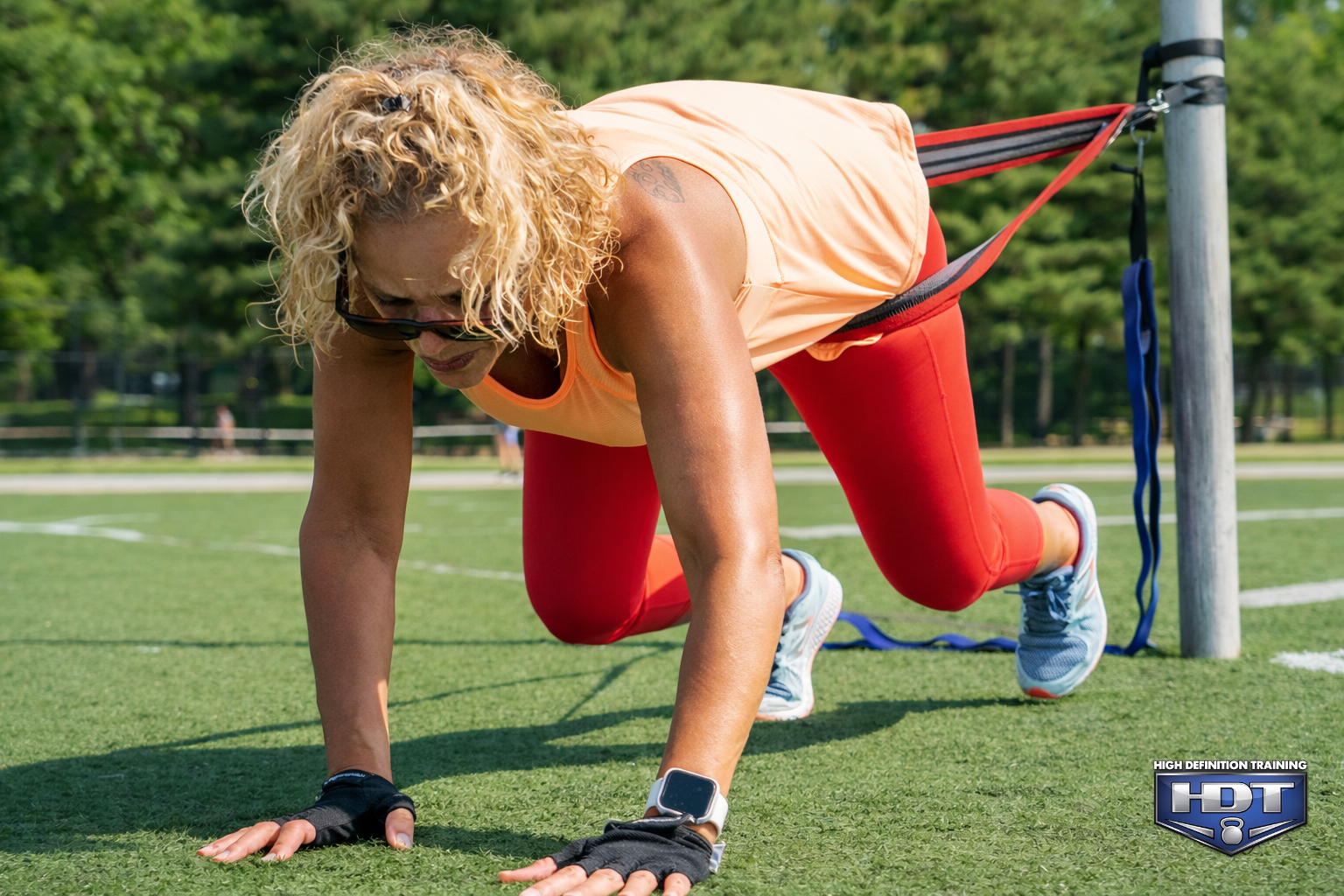
When you use bands for exercises like rows, squats, or presses, your body needs to resist the band's pull while completing the movement. This engages stabilizer muscles, especially around your shoulders, hips, and core, leading to better coordination and control.
Experts highlight that this stabilizing demand can improve balance and movement quality. Sources like Live Science note that bands help recruit muscles supporting posture and stability. This is particularly useful if you spend long hours sitting or feel unsteady during exercises.
Scalable Resistance for All Fitness Levels
Resistance bands come in various thicknesses and tension levels, making it easy to adjust from beginner to advanced workouts. A lighter band can help learn movement patterns, while a heavier band can drive serious strength work. This makes them suitable for personal training, group exercise, and home programs alike.
This adaptability is why bands work well in small group personal training. Participants with different strength levels need the same movement pattern, and the coach can simply adjust band resistance. This creates efficient programming and keeps everyone training at the right challenge level.
The Strength Benefits of Resistance Band Training
Building Real Strength with Bands
One common myth about bands is that they're only for warm-ups or rehab. In reality, research shows that elastic resistance can lead to significant strength improvements. The 2019 findings often cited in fitness media indicate bands can be as effective as free weights for increasing strength when used correctly.
This is important because many assume muscle growth only comes from barbells or machines. But what drives adaptation is progressive overload, not the equipment itself. If you increase band resistance over time and perform exercises with effort, your body will adapt and become stronger. A structured program can support long-term progress safely.
Great for Both Upper and Lower Body
Resistance bands can train nearly every major muscle group. Upper-body exercises like band presses, rows, and curls improve strength, while lower-body moves like squats and bridges build the glutes, quads, and hips. You can create a full-body routine with minimal equipment.
This versatility is why bands appeal to those wanting efficient workouts at home. They also suit busy adults needing a convenient option that doesn't require a gym visit. Combined with personalized training programs, band training can be tailored to your goals and schedule without sacrificing results.
Supporting Endurance and Muscle Growth
Band training isn't just about strength. Because resistance remains active through movement, bands can also boost muscular endurance and contribute to muscle growth. High-repetition band work, especially close to fatigue, can create enough stress and demand to stimulate adaptation.
This makes bands ideal for those wanting to tone and condition their bodies without heavy loads. They're also great for circuits, supersets, and bridging rehab to fitness. According to Mass General Brigham, resistance bands are especially beneficial for gradual strength building and controlled movement, essential for sustainable results.
How Resistance Bands Improve Stability and Balance
Enhancing Core Engagement
Stability starts with the core, which includes the deep muscles of your abdomen, lower back, and hips. Bands challenge this system by pulling your body off-center, requiring you to resist rotation or wobble.
Exercises like Pallof presses and band-resisted marches are great examples. They teach your body to stay controlled under pressure, which translates to everyday actions like carrying groceries or climbing stairs. This kind of training fits well with functional movement training, where the goal is not just to look strong but to move well.
Improving Joint Control and Movement Quality
Stable joints rely on more than muscle strength; they depend on the nervous system's ability to coordinate movement. Resistance bands excel at teaching this because the resistance changes as you move, requiring constant adjustment.
This makes band exercises valuable for knees, shoulders, hips, and ankles, where poor control can lead to discomfort. People with a history of aches or movement limitations often find bands easier than abrupt free-weight loading. If discomfort is an issue, joint pain relief programs and back pain rehabilitation training can integrate band work for safer movement.
Reducing Fall Risk and Boosting Confidence
Stability isn't just about sports performance; it's about reducing fall risk and feeling confident in daily movement. Resistance band exercises that challenge balance and controlled stepping can improve your body's response to unexpected shifts.
That's why band training appears in balance and fall prevention programs. The mix of strength, coordination, and body awareness makes daily tasks feel more secure. If you want to stay active and steady, balance and fall prevention training pairs well with band-based workouts.
Resistance Bands vs. Free Weights
Different Tools for Building Strength
Resistance bands and free weights aren't competitors; they offer different benefits. Free weights provide a constant load, great for building raw strength. Bands create resistance that gets tougher as the band stretches, focusing on control and tension.
Using both methods in one program can be beneficial. For example, use dumbbells for foundational lifts and bands for accessory work or rehab-focused movements. This approach works well in hybrid training, where flexibility matters.
Safer for Some People
For those managing pain, returning from injury, or rebuilding confidence, bands can feel less intimidating than heavy weights. The movement is easier to control, and resistance can be matched closely to your capacity. While bands are not risk-free, they can reduce the chance of overloading or poor form.
Trainers often use them in early-stage plans to restore motion before heavier loads. Bands offer a bridge from inactivity to full strength training, relevant for adults wanting a gradual return through mobility restoration or chronic pain management through exercise.
Better Results by Combining Methods
If your goal is well-rounded fitness, combining bands with free weights provides a range of benefits. Bands improve activation and add variety, while free weights help with force production and load-bearing. Together, they form a complete training ecosystem.
This is especially useful for adults wanting a sustainable plan rather than a short-term challenge. You might use bands for glute activation, band rows for stability, and dumbbells for main lifting sets. This mix works well for those seeking expert guidance from a team like High Definition Training in the Bronx.
Best Practices for Using Resistance Bands
Pick the Right Band and Exercise
Not all bands are the same. Tube bands with handles, loop bands, and heavy-duty power bands serve different purposes. Choose the right style to match the exercise, your desired range of motion, and strength level.
For instance, loop bands are perfect for lower-body activation and movement, while long bands work well for rows and presses. The most effective programs choose bands based on individual needs, not a one-size-fits-all approach.
Focus on Form, Not Just Intensity
Good band training relies on technique. Because resistance changes through movement, it's tempting to rush or use momentum. This reduces exercise effectiveness and may stress joints. Controlled tempo and full range of motion are key.
Start with movements you can perform smoothly and gradually increase tension or volume. This progression is similar to how coaches approach strength work in personal training for adults 40+, where quality movement matters as much as effort. If the form breaks, reduce resistance or shorten the range until you regain control.
Gradually Progress Over Time
Like any tool, bands work best with planned progression. You can increase resistance, reps, or add pauses and circuits. The goal is to challenge the body without unnecessary strain.
Gradual progression is crucial for older adults or those returning from discomfort. The aim is not to overwhelm but to build strength and stability. This principle underlies semi-private training and other coach-led programs designed for accountability and appropriate workload.
Sample Resistance Band Exercises for Strength and Stability
Exercises for the Upper Body
Band rows, chest presses, face pulls, and overhead presses are great for upper-body strength. These exercises target the back, shoulders, chest, and arms while encouraging better posture. For many, upper-body band work helps offset stiffness from long periods of sitting.
Face pulls and pull-aparts are especially useful for shoulder stability and upper-back activation. They're often included in warm-ups to prepare the shoulder girdle for more demanding work. They can also support posture and reduce overuse.
Exercises for the Lower Body
Band squats, glute bridges, lateral band walks, and banded deadlifts are effective for the lower body. These movements build the glutes, hamstrings, quads, and hips while maintaining alignment. They're also great for improving knee tracking and hip control, which influence stability.
If you want examples of movement mechanics that pair well with lower-body band work, check out our squat technique article. Better squat mechanics often depend on better hip and trunk control, which bands can support. This is why bands are popular in functional and corrective fitness settings.
Core and Anti-Rotation Drills
Pallof presses, band holds, and band-resisted marches challenge your torso to stay steady while your limbs move. These drills are simple but effective for those looking to improve balance and protect the lower back. They train the body to resist unwanted motion, crucial in real life.
Anti-rotation work also helps with daily tasks like reaching and lifting. Many coaches place these exercises mid-session when activation has occurred, but fatigue hasn't set in. If your goal is to move more efficiently, these drills are a valuable part of any routine.
Real-World Example: How Bands Improve Workout Quality
Insight from a Pilates Routine
A real example comes from Pilates and movement-focused training. A Pilates instructor using bands daily noticed improved muscle activation and joint stability. The added tension sharpened the mind-muscle connection, making each session feel more precise.
This mirrors what many clients experience in coaching settings. Bands don't just make exercises harder; they make them more intentional. When clients pay attention to alignment and control, the workout becomes more effective.
How This Applies to Everyday Life
In daily life, better strength and stability show up in meaningful ways. You might find stairs easier, your knees more stable during lunges, or less shoulder irritation during tasks. That's the true value of band training: it supports the tasks you need to do.
For adults balancing work, family, and health, this practicality matters. If you're seeking structured support, functional movement training and mobility training can make band work more effective by connecting strength to real-world movement patterns.
How to Add Resistance Bands to Your Weekly Routine
Use Them as a Warm-Up
One easy way to start is by using bands before your main workout. Light activation drills for the glutes, shoulders, and core prepare the body for heavier training and improve movement quality. This can reduce stiffness and make your sets feel more controlled.
A simple warm-up might include lateral walks, band pull-aparts, and bodyweight squats with light band support. These exercises wake up the muscles you'll use and reinforce good mechanics, making the session more productive.
Make Them the Main Workout
Resistance bands can be the focus of a training session, especially for home or travel routines. A full-body circuit with rows, presses, squats, and core drills can deliver a surprisingly challenging workout. With structure, this can build endurance, strength, and coordination.
For those wanting minimal equipment but maximum benefit, this is a practical solution. It suits those needing flexibility in scheduling and preferring a coach-supported plan. In such cases, a mix of in-person and remote support through hybrid training keeps the program consistent.
Use for Recovery and Accessory Work
After lifting, bands are excellent for accessory work targeting smaller muscle groups or reinforcing movement quality. Exercises like external rotations and shoulder activation support joint health, which is why bands are common in warm-up and recovery phases.
If your body tends to feel tight or irritated after training, bands can help restore balance rather than add stress. They can support a broader recovery plan that includes coaching and mobility work. This is helpful for those who want to regain confidence after setbacks.
Frequently Asked Questions About Resistance Band Training
Are Resistance Bands Effective for Building Muscle?
Yes. Resistance bands can build muscle strength and contribute to growth when used with enough intensity and progression. They're especially effective when exercises are close to fatigue and with proper technique. Treat band training as real resistance training, not just a stretch routine.
Can Bands Replace Free Weights?
For some, bands can replace free weights for specific goals, especially at home or for rehab. But combining both provides the best results. Free weights are great for absolute loading, while bands offer benefits related to tension and control.
How Do Resistance Bands Improve Stability?
Bands improve stability by making your muscles resist changing tension and maintain control throughout the movement. This activates stabilizers around the core, hips, and shoulders, leading to better balance and joint control in both exercise and daily activities.
Who Can Benefit Most from Band Training?
Almost anyone can benefit, but bands are especially useful for adults over 40, beginners, those returning from injury, and anyone wanting a portable training option. They're ideal for joint-friendly exercise that still challenges. If you want a program tailored to your needs, personalized training programs can help you use bands effectively.
Final Thoughts: Why Resistance Bands Belong in Your Routine
Resistance band training boosts strength and stability by combining constant tension, adaptable resistance, and demands on balance and control. Research supports its effectiveness, and real-world experience shows it works for beginners, experienced exercisers, and those managing pain or limitations. Best of all, bands are accessible and easy to use anywhere.
If your goal is better movement, stronger muscles, and joint protection, resistance bands aren't just a backup. They're a smart training method that stands on its own or complements other exercises. For those seeking expert coaching, High Definition Training offers strength training over 40, corrective exercise, and movement-focused programs to help you stay active long-term. To learn more or start a plan that fits your goals, visit our studio in the Bronx or explore our services online today.