TL;DR:
Personal training for women over 40 focuses on recovery, joint health, and hormonal changes to prevent injury and improve strength. Hybrid coaching models make expert guidance accessible and sustainable by combining in-person and app-based programs. Consistency, proper assessment, and open communication are key to achieving long-term results and building confidence.
Hiring a personal trainer over 40 is the most direct path to building strength, protecting your joints, and managing menopause symptoms through a program built around your body right now. Women over 40 are the fastest-growing segment of personal training clients, and the reason is simple: generic fitness apps and group classes were not designed for the recovery needs, hormonal shifts, and joint considerations that define this life stage. Certifications like NASM, ACE, NSCA, and ACSM now include specialized tracks for corrective exercise and older adult fitness. Modern hybrid coaching models combine in-person sessions with app-based programming, making expert guidance more accessible than ever.
Why specialized personal training matters for women over 40
The body after 40 recovers differently. Estrogen decline affects bone density, muscle retention, and joint lubrication. A program that worked at 28 can cause real harm at 45 if it ignores those changes.
General fitness programs designed for younger adults increase injury risk for older clients because they lack the form supervision and load management that aging joints require. A sidelined injury does not just hurt. It can set back progress by weeks and erode the consistency that produces long-term results.
One of the most persistent myths is that women over 40 need to push harder to see results. Expert trainers prioritize joint integrity and movement quality over intensity. Strength training, when done correctly, supports metabolism and builds bone density that helps protect against osteoporosis. That is the goal: training smart, not punishing yourself.
Recovery is not optional at this stage. Adequate rest between sessions, typically 48–72 hours, prevents the accumulation of fatigue and keeps progress moving forward. Skipping recovery does not accelerate results. It reverses them.
Key reasons specialized training outperforms generic programs for women over 40:
- Hormonal awareness: Trainers adjust load and volume around menopause-related fatigue and mood shifts.
- Joint-first programming: Exercises are selected and modified to protect knees, hips, and shoulders.
- Metabolic support: Strength-focused sessions preserve lean muscle mass, which naturally declines after 40.
- Injury prevention: Proper form coaching reduces the risk of the overuse injuries common in self-directed training.
- Sustainable progression: Gradual load increases build capacity without burning you out.
Pro Tip: Pay attention to how your body feels 24 hours after a session. Soreness that lingers past 48 hours is a signal to scale back intensity or add a recovery day. Share that feedback with your trainer every week.
How to choose a personal trainer over 40
The right fitness coach over 40 holds more than a basic certification. Look for credentials from NASM, NSCA, ACE, or ACSM, and ask whether the trainer has completed continuing education in corrective exercise, functional movement, or rehabilitation. Those specializations matter for clients with joint history or chronic conditions.
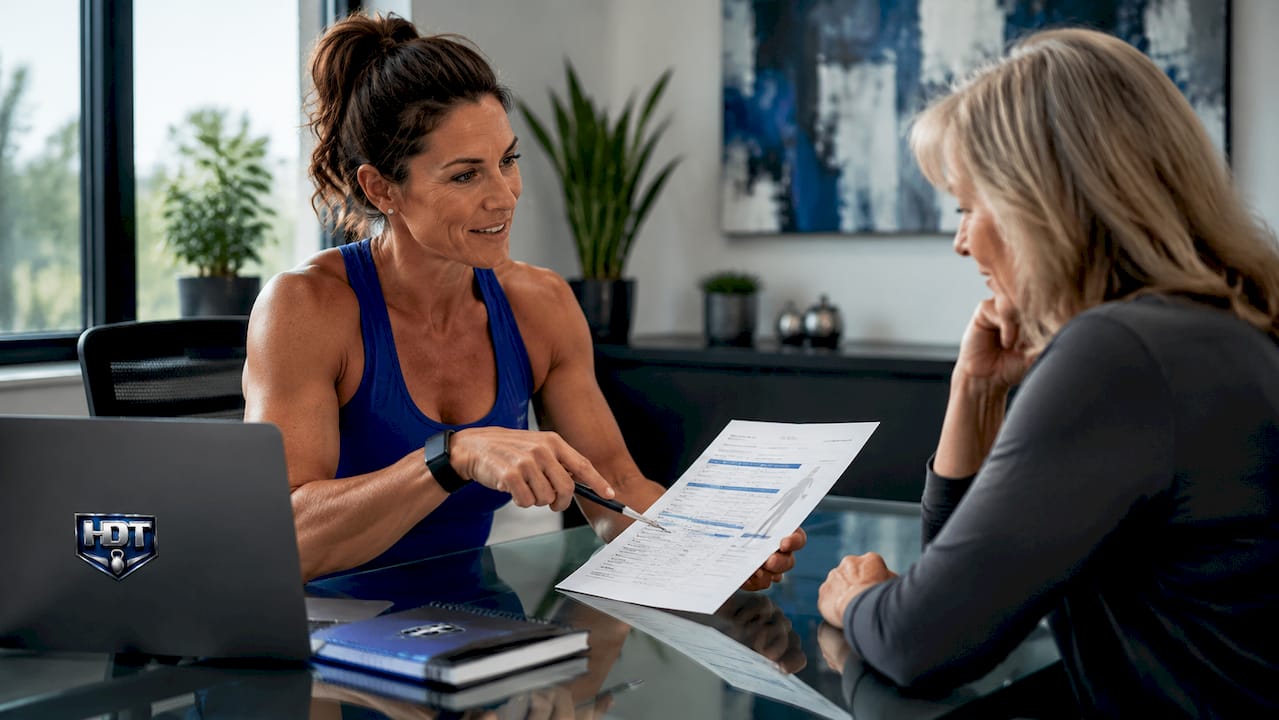
Qualified trainers begin with a comprehensive assessment covering health history, movement patterns, and recovery capacity. If a trainer skips the assessment and jumps straight into hard workouts, that is a red flag. The assessment is how a good trainer builds a program that fits you, not a template.
Ask direct questions before committing. How many clients over 40 do you currently work with? Have you trained women through perimenopause or menopause? How do you adjust programming when a client is fatigued or dealing with a flare-up? The answers reveal whether the trainer has real experience or just theoretical knowledge.
Programming philosophy matters as much as credentials. The best trainers for women over 40 treat the relationship as a collaboration. They adjust plans based on your feedback, not just a fixed schedule.
| Credential | Issuing Body | Relevant Specialization |
|---|---|---|
| CPT (Certified Personal Trainer) | NASM, ACE, NSCA | Foundation for all personal training |
| CES (Corrective Exercise Specialist) | NASM | Joint health, movement dysfunction |
| CSCS (Strength and Conditioning Specialist) | NSCA | Progressive strength programming |
| SFS (Senior Fitness Specialist) | NASM | Older adult training, mobility, balance |
| HFS (Health Fitness Specialist) | ACSM | Chronic conditions, medical fitness |
Pro Tip: Use the first session as a two-way interview. Notice whether the trainer listens more than they talk. A trainer who asks questions and adjusts based on your answers is far more valuable than one who delivers a scripted workout.
What does a training program for women over 40 actually look like?
Industry experts recommend 2–4 sessions per week for adults over 40, with the emphasis on consistency and recovery rather than session volume. Showing up three times a week for six months outperforms five sessions a week for six weeks, every time.
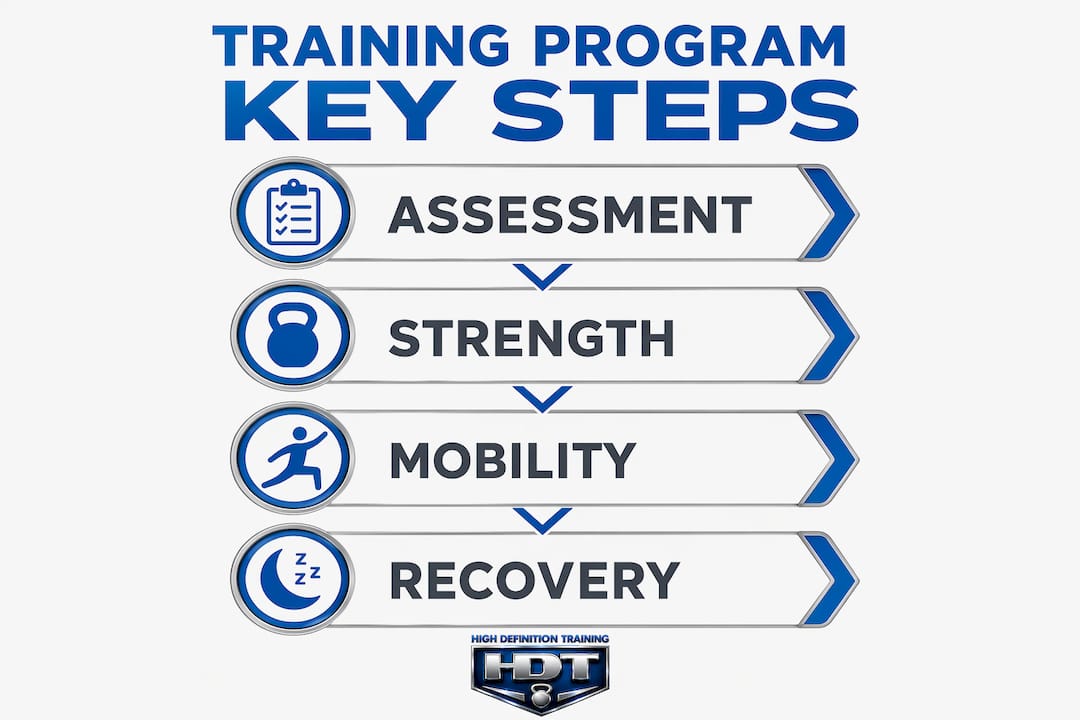
A well-built personalized fitness plan for women over 40 includes four core components: strength training, mobility work, functional movement, and cardio support. Each serves a distinct purpose. Strength preserves muscle and bone. Mobility keeps joints healthy and reduces pain. Functional movement trains the body for real-life tasks. Cardio supports heart health and energy levels.
Hybrid coaching models, which combine in-person sessions with app-based check-ins and remote programming, reduce weekly costs while maintaining expert oversight. In-person personal training in the US costs between $60 and $150 per session. Hybrid models bring that number down significantly by reducing the number of live sessions needed each week.
A sample weekly structure for a woman over 40 working with a trainer might look like this:
- Monday: In-person strength session focused on lower body and core stability.
- Wednesday: In-person or app-guided upper body strength and mobility circuit.
- Friday: Trainer-programmed cardio and functional movement session, completed independently.
- Saturday: Active recovery, such as walking, yoga, or stretching, based on trainer guidance.
Gradual progression is the engine of long-term results. A good trainer increases load, volume, or complexity only when your form and recovery support it. Rushing progression is the fastest route to injury.
Common challenges when hiring a trainer over 40 and how to solve them
Cost is the most common barrier. A full schedule of in-person sessions adds up quickly. Hybrid coaching, which pairs weekly in-person sessions with remote programming via platforms like Trainerize or TrueCoach, reduces costs without compromising quality. Combining in-person and remote programming also builds the independence that makes fitness sustainable over the long term.
Motivation dips are normal, especially in the first 8–12 weeks before results become visible. A trainer provides the external accountability that keeps you showing up on the days when you would rather not. Accountability is one of the most underrated benefits of hiring a trainer over 40.
Fear of injury is real and valid. The solution is not avoiding exercise. It is finding a trainer who respects that fear and builds a program that addresses it directly through careful progression and form coaching.
Top tips for long-term adherence when working with a fitness coach over 40:
- Schedule sessions like appointments. Block them in your calendar and treat them as non-negotiable.
- Communicate every week. Tell your trainer what felt hard, what felt easy, and how your energy levels are running.
- Track non-scale progress. Note strength gains, improved sleep, and reduced joint pain alongside any weight changes.
- Build in flexibility. Life happens. A good trainer adjusts your program when work or family demands spike.
- Celebrate consistency. Showing up regularly matters more than any single perfect workout.
Safety reminder: Never push through sharp joint pain or ignore persistent fatigue. These are signals, not weaknesses. A qualified trainer will always modify your program before asking you to override what your body is telling you.
How to get the most out of working with a trainer after 40
Open communication is the single biggest factor in training success. Tell your trainer when something hurts, when you are exhausted, and when your schedule is falling apart. That information is how they build a program that actually works for your life.
The goal of working with a trainer is to build self-regulation and sustainable habits, not to become permanently dependent on coaching. The best trainers teach you how your body responds so you can eventually manage your own fitness with confidence. That knowledge is the real return on your investment.
Track outcomes beyond the mirror. Strength gains, improved posture, better sleep, more energy, and reduced anxiety are all measurable signs of progress. Women who work with experienced trainers report that these quality-of-life improvements often matter more than aesthetic changes.
Signs your program is working and when to reassess goals:
- Strength is increasing over 6–8 weeks, even gradually.
- Recovery feels easier between sessions compared to your first month.
- Daily energy levels are more consistent throughout the week.
- Joint discomfort has decreased or stabilized with proper movement patterns.
- You feel confident performing exercises independently outside of sessions.
Pro Tip: Set a 90-day goal review with your trainer from day one. Reassessing at 90 days keeps the program aligned with where you are now, not where you started.
Key Takeaways
Women over 40 get the strongest results from personal training when the program is built around recovery, joint health, and hormonal changes rather than generic intensity.
| Point | Details |
|---|---|
| Specialized credentials matter | Look for NASM, NSCA, ACE, or ACSM certifications with corrective exercise or senior fitness specializations. |
| Assessment before intensity | A qualified trainer starts with health history and movement screening, not a hard workout. |
| Consistency beats volume | Training 2–4 times per week with proper recovery outperforms daily high-intensity sessions. |
| Hybrid coaching reduces cost | Mixing in-person and app-based sessions cuts the $60–$150 per-session cost while maintaining expert oversight. |
| Self-regulation is the real goal | The best trainers teach you to manage your own fitness long after the coaching relationship ends. |
What I have seen working with women over 40 in the Bronx
Women who come to me after years of generic gym programs share a common story. They worked hard, got hurt, or burned out, and walked away feeling like fitness was not for them. That story is not about effort. It is about the wrong program.
What I have learned training women in Throgs Neck and Pelham Bay is that this age group responds extraordinarily well to training when the program respects their bodies. The women who make the most progress are not the ones who push the hardest. They are the ones who communicate, stay consistent, and trust the process of gradual progression.
The fear of injury is real, and I take it seriously. Every program I build starts with an assessment, not assumptions. When a client tells me her knee aches after lunges, we find a modification that builds the same strength without the pain. That is not lowering the bar. That is good coaching.
Personal training after 40 is not a luxury. For women managing menopause, joint changes, and the demands of full lives, it is one of the most practical investments in long-term health available. The women I work with are not chasing a younger body. They are building a stronger, more capable version of themselves right now. That is worth showing up for.
— Angel
Personal training for women over 40 at High Definition Training
High Definition Training serves women over 40 in the Throgs Neck and Pelham Bay areas of the Bronx with personalized programs built around recovery, strength, and real-life results.
Private and hybrid coaching options are available, so you can choose the format that fits your schedule and budget. Every program starts with a full assessment, not a template. Whether you are new to strength training or returning after a long break, the training classes at High Definition Training are designed for where you are right now. Review pricing and package options to find the right fit for your goals and lifestyle.
FAQ
Why should women over 40 hire a personal trainer?
Women over 40 face hormonal shifts, slower recovery, and joint changes that generic programs ignore. A qualified trainer builds a program around those specific needs, reducing injury risk and producing more consistent results.
How many sessions per week do women over 40 need?
Industry experts recommend 2–4 sessions per week, with 48–72 hours of recovery between strength sessions. Consistency over time matters more than session frequency.
What certifications should a personal trainer for women over 40 have?
Look for NASM, ACE, NSCA, or ACSM certifications. Specializations in corrective exercise, functional movement, or senior fitness indicate experience with the needs of this age group.
Is hybrid coaching a good option for women over 40?
Hybrid coaching combines in-person sessions with app-based programming, reducing weekly costs compared to fully in-person training. It also builds the independence needed for long-term fitness sustainability.
How long before women over 40 see results from personal training?
Most women notice improved energy, sleep, and strength within 6–8 weeks of consistent training. Visible physical changes typically follow at the 10–12 week mark with proper nutrition and recovery in place.