
TL;DR:
Sustainable fitness routines blend moderate aerobic activity, strength training, and eco-friendly practices to support long-term health. Women over 40 benefit from outdoor workouts, resistance circuits, and gear choices that reduce environmental impact. Building a consistent routine with small, sustainable steps fosters lasting health and motivation.
Sustainable fitness routines are structured exercise programs that you can maintain over the long term without burning out, injuring yourself, or harming the environment. For women over 40, the best approaches combine moderate aerobic activity, functional strength work, and eco-friendly practices such as outdoor workouts and reusable gear. Federal guidelines recommend 150 minutes per week of moderate aerobic activity plus strength training twice weekly for older adults. Examples of sustainable fitness routines include green exercise in local parks, plogging, resistance-band circuits, and mindful gear choices that reduce microplastic pollution.
1. What is green exercise, and why does it work?
Green exercise is any physical activity performed outdoors in natural environments, from parks and trails to waterfronts and neighborhood greenways. A systematic review and meta-analysis found that green exercise outperforms indoor exercise in terms of both well-being and positive affect. That gap matters for women over 40, because mental health and motivation are two of the biggest factors in whether a fitness routine actually sticks.
Practical green exercise options include brisk walking in a local park, cycling on a neighborhood path, gentle trail jogging, and open-water swimming. Each of these requires no gym membership, no electricity, and no commute if you anchor your route to places you already visit. Replacing gym visits with outdoor workouts also cuts fossil fuel dependency by removing the car trip entirely.
For women in the Throgs Neck and Pelham Bay areas of the Bronx, green spaces like Pelham Bay Park offer safe, well-maintained routes for all fitness levels. Pacing matters more than speed. Aim for a pace where you can hold a conversation, which keeps intensity in the moderate zone recommended by federal guidelines.
Pro Tip: Map three walking or cycling loops near your home before you start. Having pre-planned routes removes the decision barrier on low-motivation days and keeps your workout close to home.
- Walk or jog in a local park three to five days per week
- Cycle on flat neighborhood paths for low-impact cardio
- Swim in a supervised natural body of water when available
- Carry a reusable water bottle on every outdoor session
2. Plogging: cardio and cleanup combined
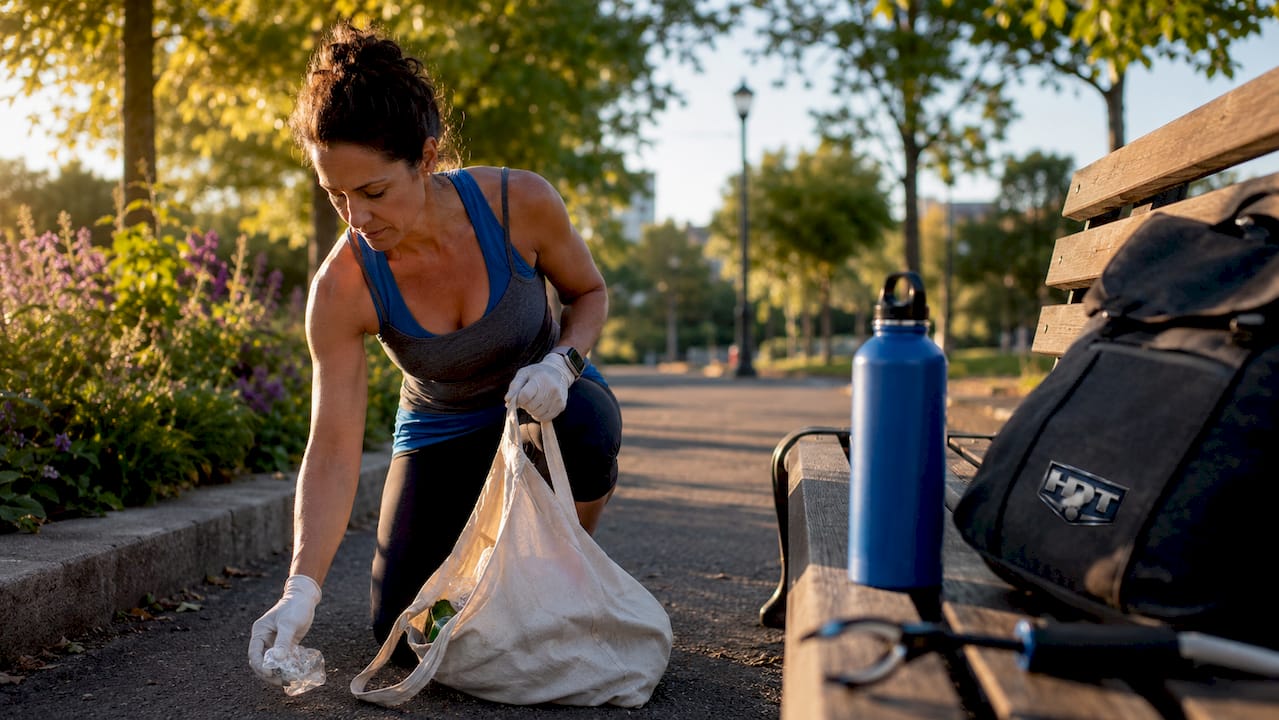
Plogging is a fitness practice that originated in Sweden. It combines jogging with picking up litter along your route. The word blends “plocka upp” (Swedish for “pick up”) with “jogging,” but the workout itself is straightforward and requires no special equipment beyond a pair of gloves and a bag.
A structured plogging workout runs 30 minutes and follows this format:
- Five-minute warm-up walk at an easy pace
- Twenty minutes of alternating jogging intervals with litter pickup stops
- Five-minute cool-down walk with light stretching
The pickup stops add functional strength work. Every time you bend to grab a piece of litter, you perform a squat or hip hinge. Over 20 minutes, those repetitions add up to real lower-body conditioning. The visible result of a cleaner street also provides immediate motivation, which helps with long-term consistency.
For women who find jogging hard on the joints, a walk-only version works just as well for the cleanup mission and still delivers moderate-intensity cardio. The key is keeping the pace brisk enough to elevate your heart rate.
Pro Tip: Use controlled hip and knee bends when picking up litter, not a rounded-back reach. Proper pickup form protects your lower back and turns each stop into a mini-strength rep rather than an injury risk.
3. Strength training examples safe for women over 40
Strength training twice per week is a non-negotiable part of any long-term fitness plan for women over 40. Muscle mass declines with age, and resistance work is the most direct way to slow that process. The MSD Manual recommends light resistance with higher reps in the 12–20 range for older adults, prioritizing safe form over heavy loads.
You do not need a gym to build functional strength. Resistance bands, light dumbbells, and body weight moves cover every major muscle group. The following exercises form a complete beginner-friendly circuit:
- Resistance band squats: 15 reps, two sets
- Push-ups from knees or full position: 12–15 reps, two sets
- Resistance band rows: 15 reps, two sets
- Plank holds: 20–30 seconds, two sets
- Glute bridges: 15–20 reps, two sets
Full-range motion on every rep matters more than adding weight. Moving through the full range of motion in a squat or push-up supports joint health alongside muscle strength. Gradual progression means adding one rep or a slightly heavier band every two to three weeks, not every session.
Pro Tip: Schedule strength sessions right after a grocery run or another regular errand. Anchoring workouts to daily habits cuts travel time and makes skipping much harder.
4. Eco-friendly workout gear and clothing choices
Synthetic activewear is the most overlooked environmental issue in fitness. A 2026 MDPI study found that new polyester fleece released 5.42 g/kg of microfibers on the first wash with powder detergent. That is a significant microplastic load entering waterways from a single garment in a single wash cycle.
The good news is that microfiber release drops sharply after the first few washes. Microplastic release plateaus after three washes, meaning that rotating your activewear and washing each piece less often significantly reduces cumulative pollution. Laundering behavior matters more than the fabric label on the tag.
Practical steps for more eco-conscious gear habits:
- Choose activewear made from organic cotton or recycled materials when replacing worn items
- Wash synthetic workout clothes on a gentle cycle with less detergent
- Rotate three to four pieces of activewear rather than washing after every single use
- Use a reusable water bottle and avoid single-use plastic at every workout
- Repair minor tears or worn elastic before replacing a garment
You do not need to throw out your current workout wardrobe. Wearing what you already own longer is the single most effective gear choice you can make.
5. How to build a long-term, sustainable fitness routine
The most durable fitness routines mix aerobic work, strength training, flexibility, and green exercise across the week. Variety prevents boredom and reduces overuse injuries, both of which are common reasons women over 40 stop exercising. Consistency over intensity is the rule that actually produces long-term results.
A realistic weekly structure for women over 40 might look like this:
| Workout type | Example activity | Sustainability factor |
|---|---|---|
| Moderate aerobic | Brisk park walk, 30 minutes | No equipment, no electricity |
| Strength training | Resistance band circuit at home | No gym travel required |
| Green cardio | Cycling or plogging outdoors | Cuts car trips and gym energy use |
| Flexibility | Outdoor yoga or stretching | Zero equipment, low impact |
| Active commuting | Walking to errands | Replaces sedentary travel |
Mental health is a real part of this equation. Exercise in nature boosts self-esteem within five minutes and motivates more eco-friendly lifestyle choices beyond fitness. That ripple effect means your workout habit can shift other daily behaviors in a positive direction.
Realistic goal setting matters as much as the workout itself. Starting with three sessions per week and building to five over two to three months is more sustainable than launching with a daily program that collapses in week two. For guidance on building consistency over time, the High Definition Training blog offers practical strategies to stay on track without burning out.
Key takeaways
Sustainable fitness routines for women over 40 work best when they combine moderate aerobic activity, twice-weekly strength training, outdoor green exercise, and mindful gear habits that reduce environmental impact.
| Point | Details |
|---|---|
| Green exercise beats indoor workouts | Outdoor activity outperforms gym sessions for well-being and positive affect. |
| Strength training twice weekly is required | Federal guidelines set two strength sessions per week as the baseline for older adults. |
| Plogging adds functional strength | Pickup stops during a jog deliver real lower-body conditioning alongside cardio. |
| Wash synthetic gear less often | Microfiber pollution drops sharply after the first three washes, so rotating gear matters. |
| Consistency beats intensity | Starting with three sessions per week and building gradually produces lasting results. |
What I have learned training women over 40 in the Bronx
Most fitness advice for women over 40 focuses on what to avoid. Avoid high impact. Avoid heavy weights. Avoid overtraining. That framing is backward. The real question is what you can build, and the answer is more than most women expect.
The clients I work with at High Definition Training who stick with their routines the longest are the ones who stop treating exercise as a separate task and start weaving it into their daily lives. A resistance band circuit after dropping off groceries. A 30-minute walk through Pelham Bay Park before the afternoon gets busy. Those sessions happen because they cost almost no extra time or travel.
The eco-friendly angle is not a gimmick. Women who connect their workouts to something larger than personal appearance, whether that is cleaner streets from plogging or reduced plastic waste from gear choices, report stronger motivation over time. The workout becomes part of an identity, not just a chore.
My honest recommendation is to pick one green exercise route, one at-home strength circuit, and one eco-friendly gear swap. Start there. Add the second layer in month two. Sustainable fitness is not built in a week. It is built into decisions that compound quietly over months.
— Angel
Highdefinitiontraining: personal training built for women over 40
Women over 40 in Throgs Neck and Pelham Bay deserve a fitness program designed around how their bodies actually work, not a generic plan built for a 25-year-old. High-definition training offers personalized coaching that blends moderate aerobic work, safe strength progressions, and outdoor session options into routines you can maintain for years.
Every program at High Definition Training starts with where you are right now, not where you think you should be. The focus is on gradual, safe progression that protects your joints, builds real strength, and fits your schedule. Explore the current class offerings to find a program that matches your goals, or check membership and pricing to get started.
FAQ
What are the best sustainable workout examples for women over 40?
Brisk walking in a park, resistance-band circuits at home, and plogging are three of the most practical, sustainable workout options. Each requires minimal equipment, no gym travel, and fits the moderate-intensity guidelines recommended for women over 40.
How many days per week should women over 40 exercise?
Federal guidelines recommend at least 150 minutes of moderate aerobic activity per week, plus two strength-training sessions. That works out to five moderate cardio days or three to four days combining cardio and strength.
Does eco-friendly fitness actually make a difference?
Replacing gym visits with outdoor workouts removes car trips and electricity use. Cycling instead of driving to a gym can cut meaningful CO2 emissions over a year, and washing synthetic activewear less often reduces microplastic pollution in waterways.
Is plogging safe for women with joint concerns?
Yes, with the right form. Use controlled hip and knee bends for every pickup rather than bending from the lower back. Women who find jogging difficult can walk the entire route and still complete the full cleanup workout at a joint-friendly pace.
What is the easiest first step to build a sustainable fitness routine?
Map one 30-minute walking route near your home and schedule it three times this week. Adding green exercise to your existing neighborhood is the lowest-barrier entry point into a long-term, eco-friendly fitness habit.