TL;DR:
- Strength training three times a week with compound movements improves muscle mass, bone health, and metabolism in women over 40.
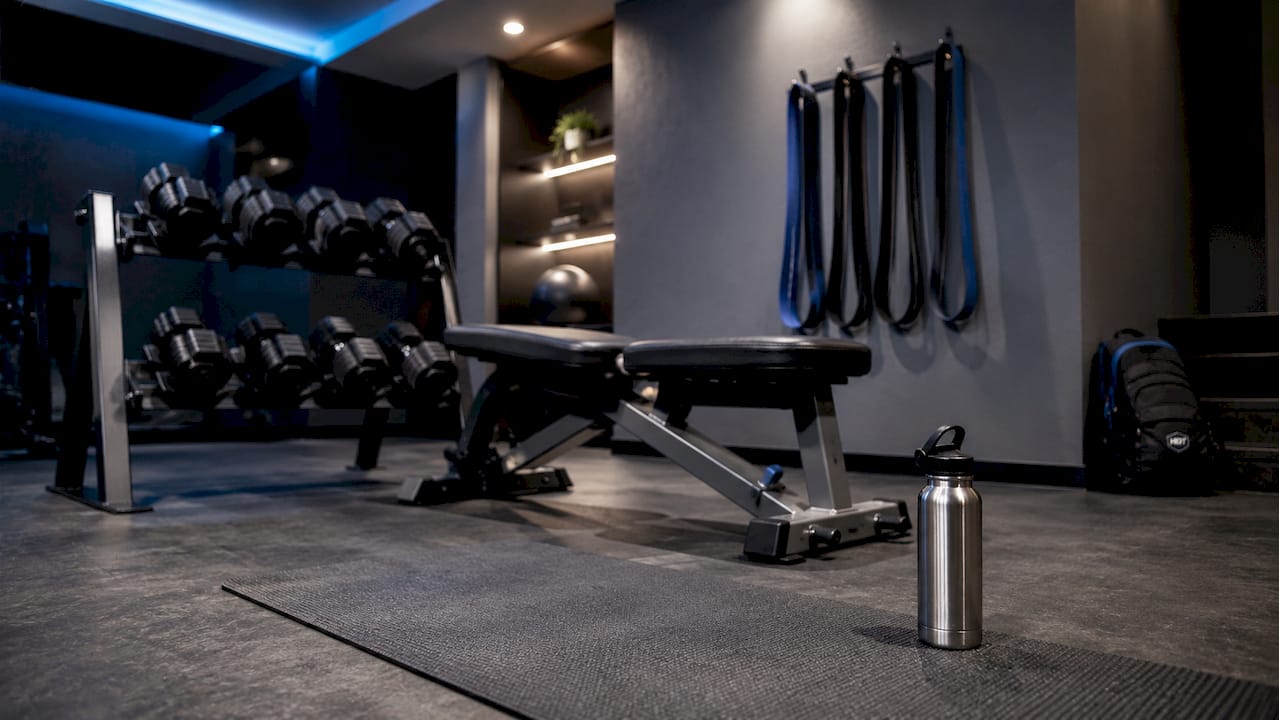
- Using light or medium dumbbells, resistance bands, and a mat supports joint-friendly progress at home.
Strength training three times a week is the most effective at-home workout for women over 40, according to clinical guidelines from the American College of Sports Medicine (ACSM), the National Strength and Conditioning Association (NSCA), and the World Health Organization (WHO). This approach builds muscle, protects bone density, and supports metabolism during the hormonal shifts of midlife. Sessions of just 20–30 minutes, combined with 150 minutes of moderate aerobic activity weekly, deliver measurable results without overtaxing your recovery. Compound movements and progressive overload are the two non-negotiable principles that make this framework work.
What home gym equipment do women over 40 need for strength training?
A functional home gym does not require much space or money. The right equipment supports joint-friendly, progressive training from day one.
The three core items are:
- Light dumbbells (5–10 lbs): Used for upper body exercises, warm-up sets, and movements where control matters more than load.
- Medium dumbbells (12–20 lbs): Used for lower body work, rows, and pressing as strength builds.
- Resistance bands with handles: Add variety, protect joints, and fill the gap between dumbbell weights.
- Exercise mat: Protects your spine and knees during floor work and stretching.
Beginners should start with light loads and increase weight by 2.5–5 lbs only when they can complete the full rep range with clean form. That rule prevents injury and keeps progress steady. Chasing heavier weights too soon is the most common mistake women make in the first month.
| Equipment | Best use | Starting weight |
|---|---|---|
| Light dumbbells | Upper body, warm-up | 5–10 lbs |
| Medium dumbbells | Lower body, rows | 12–20 lbs |
| Resistance bands | Accessory work, joint care | Light to medium resistance |
| Exercise mat | Floor work, mobility | N/A |
Pro Tip: Buy a set of adjustable dumbbells if space is limited. They replace an entire rack and cost less than a year of gym membership.
Movement quality comes before load. Spend the first 1–3 weeks prioritizing form and consistency before adding weight. Your nervous system adapts first, and that foundation prevents the injuries that derail beginners.
How to structure a weekly workout routine for women over 40 at home
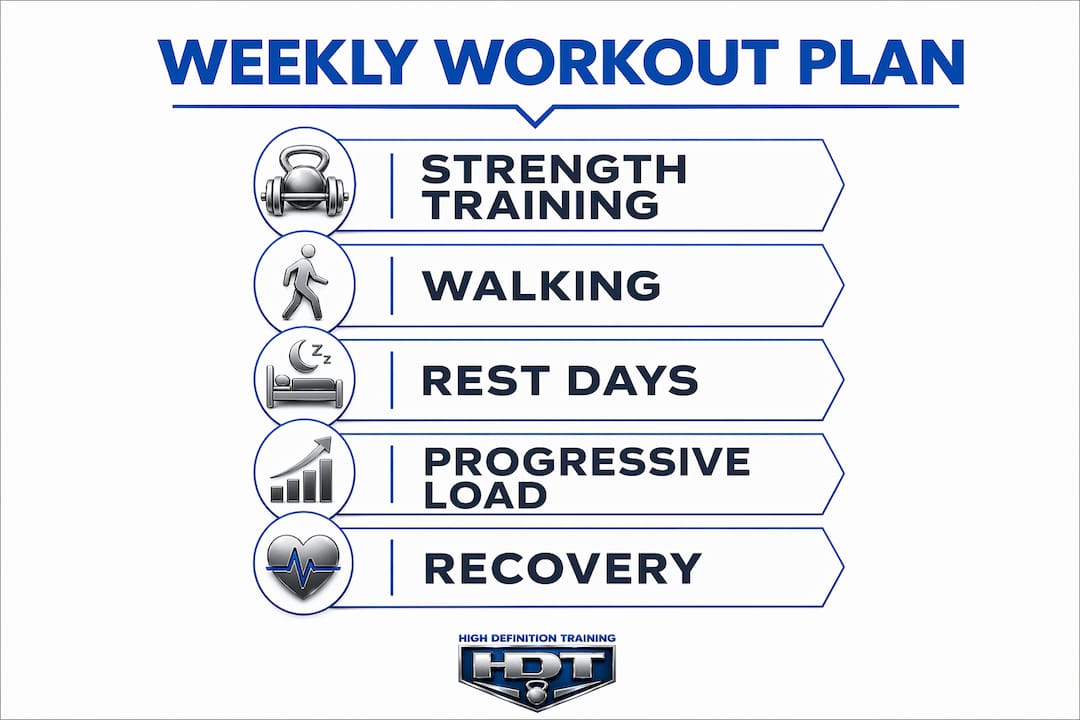
The optimal weekly structure for a beginner workout routine for women over 40 is three strength sessions spaced 48–72 hours apart, plus daily or near-daily walking. That spacing gives muscles enough time to repair before the next session.
A sample weekly schedule looks like this:
- Monday: Strength training (20–30 minutes)
- Tuesday: Walking (30 minutes, moderate pace)
- Wednesday: Strength training (20–30 minutes)
- Thursday: Walking or full rest
- Friday: Strength training (20–30 minutes)
- Saturday: Walking (30 minutes) or yoga
- Sunday: Full rest
Three strength sessions per week is the clinical sweet spot. Two sessions produce gains, but three is optimal. More than three increases injury risk and elevates cortisol, which disrupts sleep and slows fat loss.
Walking fills the aerobic requirement without spiking cortisol. Walking 150 minutes weekly supports cardiovascular health and fat loss while actively aiding recovery between strength days. High-intensity cardio on top of three strength sessions is counterproductive for most women over 40.
Rest days are not optional. Muscles repair and grow during rest, not during the workout itself. Skipping rest days does not speed progress. It stalls it.
What are the most effective strength exercises for women over 40 at home?
The five foundational movement patterns deliver the best results for women in midlife at home: squat, hip hinge, push, pull, and carry or brace. These five patterns recruit large muscle groups and support bone density at the same time.
Squat pattern
The squat targets the quads, glutes, and core. Bodyweight squats and goblet squats with a single dumbbell are the best starting points. Aim for 3 sets of 10–12 reps.
Hip hinge pattern
The hip hinge targets the hamstrings, glutes, and lower back. Romanian deadlifts with medium dumbbells are the go-to exercise here. This pattern also protects the lower back by teaching proper spinal alignment.
Push pattern
Push-ups and dumbbell chest presses train the chest, shoulders, and triceps. Wall push-ups are a valid starting point if floor push-ups are too difficult—progress to incline, then full push-ups over weeks.
Pull pattern
Dumbbell rows and resistance band pull-aparts train the back and biceps. The pull pattern is the most neglected by beginners and the most important for posture, especially for women who sit at desks.
Carry and brace pattern
Farmer carries (walking with dumbbells at your sides) and plank holds train the core under real load. This pattern transfers directly to daily life and reduces lower back pain.
Pro Tip: For each session, pick one exercise from three or four patterns. You do not need to hit all five every workout. Rotate them across the week.
Compound strength training outperforms steady-state cardio for lean body mass and metabolic health in postmenopausal women, according to a 2024 randomized controlled trial. That finding matters because most women over 40 default to cardio when they want to lose weight. Lifting is the more effective tool.
Target 8–12 reps per set, with the last two reps feeling genuinely challenging. If you finish 12 reps and feel like you could do 6 more, the weight is too light. Progressive overload means adding a small challenge every week or two, whether that is one more rep, a slightly heavier dumbbell, or a slower tempo.
How to manage recovery and hormonal health during home workouts after 40
Recovery is where results actually happen. Women over 40 experience longer recovery times than younger women, making rest days and recovery strategies non-negotiable parts of any training plan.
- Dynamic warm-up (5–10 minutes): Always warm up before lifting. Cold joints under load significantly increase injury risk. Leg swings, hip circles, arm circles, and bodyweight squats prime the nervous system and connective tissue.
- Protein intake: Aim for 1.4–2.0 g of protein per kg of body weight daily, spread across meals. Protein is the raw material for muscle repair. Skimping on it slows recovery and reduces the results you get from training.
- Sleep: Seven to nine hours of sleep per night is when muscle protein synthesis peaks. Poor sleep raises cortisol levels, which break down muscle and increase fat storage.
- Walking and yoga: Low-intensity movement on rest days reduces muscle soreness and keeps cortisol in check. A 20-minute walk or a short yoga session on Thursday does more for your Friday workout than sitting still all day.
“Rest days are when muscles repair and grow. They are not lazy days. They are training days in disguise.”
Proper recovery requires 48–72 hours between sessions targeting the same muscle groups. Exceeding three high-intensity sessions per week pushes most women over 40 past their recovery capacity. Chronic overtraining elevates cortisol, worsens hormone-related symptoms, and stalls progress. The minimum effective dose is the goal, not maximum volume.
Common challenges women over 40 face when starting home workouts
The biggest barrier is not physical. It is the belief that more cardio equals better results. Lifting builds muscle tone, which creates a firmer, stronger physique. Cardio alone does not.
Other common challenges and practical fixes:
- Muscle soreness in week one: Soreness is normal and signals adaptation. It peaks around 24–48 hours after a session and fades by week three. It does not mean you are injured.
- Fear of overtraining: Three sessions per week at 20–30 minutes is well within safe limits. The risk is doing too much, not too little. Stick to the plan.
- Motivation dips: Track your workouts in a notebook or app. Seeing three weeks of completed sessions is more motivating than any inspirational quote.
- Joint pain or limited mobility: Modify, do not skip. Wall push-ups replace floor push-ups. Seated rows with a band replace standing rows. Every movement pattern has a gentler entry point.
- Time pressure: Twenty minutes three times a week is 60 minutes total. That is less time than most people spend scrolling their phones on a Tuesday evening.
Setting realistic, measurable goals matters more than setting ambitious ones. “Complete three workouts this week” beats “lose 20 pounds.” Small wins compound into lasting change.
Key takeaways
Strength training three times a week, centered on compound movements and supported by adequate protein intake, sleep, and walking, is the most effective home fitness approach for women over 40.
| Point | Details |
|---|---|
| Optimal training frequency | Three strength sessions per week, 20–30 minutes each, is the clinical sweet spot. |
| Equipment needed | Light and medium dumbbells, resistance bands, and a mat cover all foundational movements. |
| Five movement patterns | Squat, hip hinge, push, pull, and carry or brace recruit the most muscle and protect bone density. |
| Recovery is non-negotiable | Allow 48–72 hours between sessions; protein, sleep, and walking accelerate repair. |
| Cardio role | Walking 150 minutes weekly supports fat loss and recovery without raising cortisol. |
What I have learned coaching women over 40 at home
The women I work with at High Definition Training come in with two fears: getting hurt and wasting time. Both fears are valid. Both disappear within the first few weeks when the program is built right.
The most common mistake I see is treating rest as failure. Women who have spent decades pushing through discomfort at work, at home, and everywhere else bring that same drive to training. They want to do more. They add a fourth session. They skip the warm-up. They wonder why they feel worse, not better. The answer is always cortisol. The body over 40 does not respond to volume the way it did at 25. It responds to precision.
What actually works is boring in the best way. Three sessions. Five movement patterns. Progressive overload. Good sleep. Enough protein. Walking. That is the whole system. Women who follow it consistently for 8–12 weeks are always surprised by how much stronger they feel, and how little time it actually took.
The mindset shift that changes everything is this: you are not trying to punish your body into a result. You are giving it the right signal and then getting out of the way so it can adapt. Rest is part of the signal. So is the warm-up. So is the protein. None of it is optional.
If you are thinking about hiring a trainer to get started, the right time is before you build bad habits, not after.
— Angel
High Definition Training: personalized support for women over 40
Women over 40 deserve a program built for their specific physiology, not a generic plan recycled from a fitness magazine.
High Definition Training works with women in the Throgs Neck and Pelham Bay areas of the Bronx, offering personalized strength training programs designed around midlife fitness needs. Whether you prefer training at home or in person, every program is built on the same clinical framework covered in this article: three sessions per week, compound movements, progressive overload, and real recovery support. Visit High Definition Training’s classes page to see current offerings or book a free consultation with a trainer who understands exactly where you are starting from.
FAQ
How many days a week should women over 40 work out at home?
Three strength training sessions per week is the clinical recommendation from the ACSM, NSCA, and WHO. Add 150 minutes of moderate walking spread across the remaining days.
What is the best beginner workout routine for women over 40?
Start with three 20–30-minute sessions per week, built around squats, hip hinges, push-ups, rows, and planks. Use light dumbbells and resistance bands, and increase weight by 2.5–5 lbs only when form is solid.
Are joint-friendly workouts effective for building strength after 40?
Yes. Compound movements with controlled loads and proper warm-ups build significant strength without stressing joints. Resistance bands and bodyweight progressions are especially effective for women with knee or shoulder sensitivity.
How much protein do women over 40 need when strength training at home?
Aim for 1.4–2.0 g of protein per kg of body weight daily, spread across meals. That intake supports muscle repair and helps maintain lean mass when combined with regular strength training.
Is cardio or strength training better for women over 40?
Strength training produces better results for body composition, bone density, and metabolic health. Walking is the preferred cardio complement. High-intensity cardio on top of three strength sessions typically raises cortisol and slows progress.