TL;DR:
- Strength training is the most effective means for women over 40 to preserve muscle and protect bones.
- Consistent resistance training improves functional health and mental confidence, even amid hormonal changes.
Strength training is the single most effective tool professional women over 40 have for maintaining muscle, protecting bone, and sustaining the physical confidence that carries into every area of life. Resistance training, the clinical term for what most people call strength or weight training, delivers benefits that no other form of exercise fully replicates. If you are a busy professional in your 40s or beyond, the science is clear: lifting weights is not optional for long-term health. It is the foundation.
Why professional women need strength training: the physical case
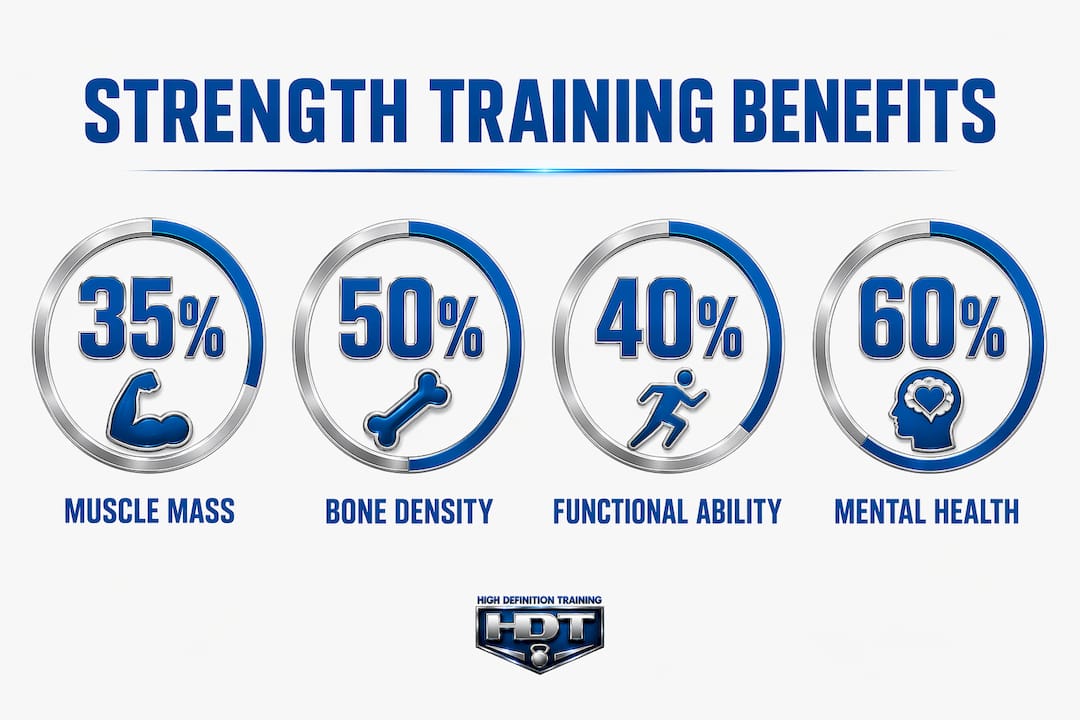
The body changes after 40 in ways that cardio alone cannot fix. Muscle mass declines with age, and without direct resistance stimulus, that loss accelerates. The American College of Sports Medicine’s 2026 umbrella review of 137 systematic reviews covering more than 30,000 adults confirmed that resistance training at higher intensities with 2–3 sets performed at least twice per week produces consistent improvements in muscle strength and functional outcomes. That is not a minor finding. It means the prescription is clear, repeatable, and proven at scale.
Bone density is the other urgent concern. A review of studies from 2015 to 2025 found that moderate to high intensity resistance training at 60% to over 80% of one-rep max, performed 2–3 times per week for 30–60 minutes over six or more months, improves bone mineral density at key sites in postmenopausal women. That matters because osteoporosis does not announce itself until a fracture happens. Strength training is the intervention that prevents it.
Functional ability is the third pillar. A meta-analysis of 17 randomized controlled trials covering 744 women found large effects on the Timed Up and Go test and other functional indicators in postmenopausal women with sarcopenia, despite minimal changes in BMI. Grip strength and gait speed are more meaningful targets than the number on a scale. They predict independence, fall risk, and quality of life decades from now.
| Training variable | Physical health impact |
|---|---|
| Intensity: 60–80%+ of 1RM | Drives bone mineral density gains at hip and spine |
| Frequency: 2–3 sessions per week | Builds and maintains lean muscle mass |
| Duration: 6+ months consistent | Produces measurable functional improvements |
| Volume: 2–3 sets per exercise | Supports strength and hypertrophy adaptations |
Pro Tip: Track grip strength and your time on the Timed Up and Go test every 8 weeks. These functional markers tell you more about your real-world progress than body weight alone.
How does strength training support mental health and body confidence?
Physical improvements from lifting weights translate directly into psychological ones. Research linked to the National Academy of Sports Medicine and Mayo Clinic associates resistance training with improved self-esteem and body satisfaction in women. The mechanism is straightforward: when your body does things it could not do before, your perception of that body shifts.
For professional women, this matters beyond the gym. Confidence built through physical competence carries into boardrooms, client meetings, and leadership roles. The connection between physical strength and professional presence is not metaphorical. It is neurological. Stress hormones drop, resilience increases, and the mental clarity that follows a well-programmed training session is measurable.
The psychosocial benefits extend to anxiety and stress reduction. Women managing demanding careers report that consistent strength training provides a structured outlet that cardio alone does not replicate. The focus required to execute a compound lift, a deadlift, a squat, a row, pulls attention away from work stress and into the present moment.
- Improved body image and self-worth from visible strength gains
- Reduced anxiety through structured physical effort and hormonal regulation
- Greater stress tolerance built through progressive physical challenge
- Increased sense of control over physical health and aging
- Stronger professional presence linked to physical confidence
Pro Tip: Pair your training sessions with a two-minute post-workout reflection. Note one thing your body did well. This builds the mindset connection that sustains long-term consistency.
Do women need hormone-specific strength training programs in midlife?
The short answer is no. The fundamentals of strength training work regardless of where you are in your hormonal cycle. A 2026 National Geographic review of emerging research concluded that menstrual cycle hormone phases do not require radically different training approaches. Progressive overload, consistency, and adequate nutrition drive results. Hormone phase syncing is a secondary consideration at best.
The risk of over-focusing on cycle syncing is real. Experts caution that frequent intensity reductions tied to hormonal lows undermine the total training volume needed to produce adaptations. If you cut your load every time you feel off, you accumulate less work over time. Less work means slower progress.
Feeling worse during a particular phase of your cycle does not mean the training is ineffective. Consistent stimulus matters more than perfect timing. Experienced trainers design progressions around repeatable loads rather than adjusting heavily for hormonal fluctuations. That approach preserves training quality across the full month.
- Progressive overload is the primary driver of strength gains, not cycle timing
- Consistent training volume across the month outperforms cycle-adjusted programs
- Feeling fatigued during a phase is not a signal to skip or dramatically reduce load
- Nutrition and sleep quality affect training readiness more than cycle phase alone
- Professional supervision helps maintain safe, consistent progression without guesswork
Why strength training beats cardio alone for women in their 40s
Cardio has real benefits. It supports cardiovascular health, mood, and endurance. But for women over 40, cardio alone cannot prevent sarcopenia, rebuild bone density, or maintain the metabolic rate that declines with muscle loss. Strength training addresses all three. Research confirms that resistance training better preserves muscle mass and bone density than aerobic exercise, and also improves metabolic rate and functional independence.
The metabolic difference is significant. Muscle tissue burns more calories at rest than fat tissue. When you lose muscle through aging and inactivity, your resting metabolic rate drops. Cardio burns calories during the session. Strength training rebuilds the tissue that burns calories around the clock.
| Health factor | Cardio | Strength training |
|---|---|---|
| Muscle mass preservation | Minimal effect | Direct and measurable |
| Bone mineral density | Modest benefit | Site-specific, dose-dependent gains |
| Resting metabolic rate | Temporary increase | Sustained through muscle retention |
| Functional independence | Moderate | Strong, especially for fall prevention |
| Joint protection | Variable | Strengthens surrounding tissue |
| Cardiovascular health | Primary benefit | Secondary but present |
The best approach combines both. But if your schedule forces a choice, strength training addresses the aging risks that matter most for women over 40. A sustainable fitness routine built around two to three lifting sessions per week, supplemented with walking or cycling, covers the full spectrum.
Pro Tip: If you have 45 minutes three times per week, spend 35 of those minutes on resistance work and 10 on cardio. You get the metabolic and structural benefits of lifting without sacrificing cardiovascular conditioning.
How can professional women over 40 safely start strength training?
Start with frequency and consistency before chasing intensity. The ACSM recommends at least two sessions per week as the minimum effective dose for strength and functional gains. Three sessions per week produce faster results. Sessions of 30–60 minutes are sufficient when the work is focused and progressive.
Progressive overload is the non-negotiable principle. You must gradually increase the challenge, whether through added weight, more reps, or reduced rest, to keep driving adaptation. Without progression, the body stops responding. With it, strength and functional outcomes continue improving for years.
Accessible starting points include resistance bands, dumbbells, barbells, and bodyweight exercises. You do not need a fully equipped gym to begin. What you do need is a structured program and someone qualified to teach you the movement patterns safely. Poor form under load causes injury. Good form under progressive load builds the body you want.
- Start with two full-body sessions per week using compound movements: squats, hinges, rows, and presses.
- Learn proper form before adding significant weight. Technique is the foundation.
- Add load or reps every 1–2 weeks to maintain progressive overload.
- Track your sessions. Written records reveal progress that memory misses.
- Work with a qualified trainer, especially in the first 8–12 weeks, to build safe habits.
UCHealth’s 2026 reporting confirms that women who incorporate resistance training experience improved strength and reduced menopausal symptoms, along with better overall quality of life. The physical and hormonal benefits compound over time. Starting is the hardest part.
Pro Tip: Choose a trainer who specializes in women over 40. The programming considerations for this demographic, including bone health, hormonal context, and recovery, are specific enough to warrant specialized expertise. High Definition Training in the Bronx focuses exclusively on this population.
Key takeaways
Strength training is the most evidence-backed tool professional women over 40 have for preserving muscle, protecting bone, and building the physical and mental confidence that sustains a high-performing life.
| Point | Details |
|---|---|
| Muscle and bone protection | Resistance training at 60–80%+ of 1RM, 2–3x per week, directly counters age-related decline. |
| Functional independence | Grip strength and gait speed are better training targets than BMI or scale weight. |
| Mental health gains | Consistent lifting reduces stress, improves body image, and builds professional confidence. |
| Hormone myths | Cycle syncing is secondary. Progressive overload and consistency drive results regardless of phase. |
| Strength beats cardio alone | Resistance training preserves muscle mass and metabolic rate in ways cardio cannot replicate. |
What I’ve learned training women over 40 in the Bronx
The women who walk into High Definition Training are not beginners at life. They are executives, nurses, teachers, and business owners who have managed demanding careers and families for decades. What surprises most of them is how quickly strength training changes not just their bodies but also their relationship with them.
The science I see play out in real sessions matches what the ACSM and the 2026 research confirm. Women who train consistently, who show up even when they feel tired, who add a little more weight every few weeks, make progress that genuinely changes how they move and how they feel. The ones who struggle are not the ones who train hard. They are the ones who keep waiting for the perfect moment or the perfect program.
The conversation about the hormone cycle comes up often. My honest position: stop waiting for your body to feel perfect before you train. Feeling off on a given day is not a reason to skip or go through the motions. The cumulative load you build over months is what produces results. One hard week matters less than twelve consistent ones.
The most underrated benefit I see is the transfer of confidence. A woman who can deadlift her body weight walks differently. She negotiates differently. She holds herself differently in rooms where she used to shrink. That is not a coincidence. Physical competence builds psychological authority. For professional women over 40, that combination is worth more than any supplement or wellness trend.
— Angel
Strength training programs for professional women at High Definition Training
High Definition Training serves women over 40 in the Throgs Neck and Pelham Bay areas of the Bronx with personal training programs tailored to this stage of life. Every program is designed around the evidence: progressive overload, consistent frequency, and individualized progression that accounts for your current fitness level, health history, and goals.
Whether you are starting from scratch or returning after a long break, the personal training classes at High Definition Training give you the structure, supervision, and expertise to build strength safely and effectively. You get a trainer who understands the physical realities of midlife, not a generic program designed for a 25-year-old. If you are ready to build a body that performs as well as your career demands, High Definition Training is where that work begins.
FAQ
What is the minimum training frequency for strength gains after 40?
Two sessions per week is the minimum effective dose according to ACSM guidelines. Three sessions per week yield faster, more consistent results for women over 40.
Does strength training help with menopausal symptoms?
Yes. Research from UCHealth in 2026 reports that women who incorporate resistance training experience improved strength, reduced menopausal complaints, and better overall quality of life.
Should women over 40 adjust training based on their hormonal cycle?
No major adjustments are necessary. National Geographic’s 2026 review of current research confirms that progressive overload and consistency drive results regardless of cycle phase. Frequent load reductions tied to hormonal lows reduce total training volume and slow progress.
Is strength training safer than cardio for women with bone density concerns?
Strength training is the preferred intervention for bone density. A review of studies from 2015 to 2025 found site-specific gains in bone mineral density in postmenopausal women who engaged in moderate- to high-intensity resistance training, with safe outcomes when progression is individualized.
How is strength training different from general fitness classes for women over 40?
Strength training uses progressive overload to build muscle and bone density directly. General fitness classes may improve conditioning but rarely provide the structured intensity needed to counter sarcopenia or improve functional independence measures such as grip strength and gait speed.