Private training is a personalized fitness model designed to deliver maximum results in minimum time, making it the most effective option for busy professionals. Unlike commercial gym memberships or group classes, private training matches every session to your schedule, your body, and your goals. Women over 40 in demanding careers face a specific set of challenges: limited time, accumulated stress, and bodies that respond differently than they did at 30. Understanding why private training suits professionals means recognizing that efficiency, expert oversight, and adaptability are not luxuries. They are requirements.
Why private training suits professionals better than any other option
Private training delivers 2–3 focused sessions per week, which research shows produce more consistent results than the typical 4–6 unstructured visits to commercial gyms per month. Frequency alone does not explain the gap. The quality of each session, guided by a coach who knows your history, makes the real difference. At High Definition Training in the Throgs Neck and Pelham Bay areas of the Bronx, that coaching relationship is built from day one.
The industry term for this model is personal training, sometimes called one-on-one or individualized training. Private training is the informal term most professionals use when searching for this service. Both refer to the same structured, coach-led approach in which programming, pacing, and feedback are centered on one person.
How does private training maximize time for busy professionals?
Time is the resource professionals protect most fiercely, so private training is structured to waste none of it. Sessions run 45–60 minutes with no commute delays, no waiting for equipment, and no distractions from other gym members. Every minute has a purpose. That structure alone separates private training from the average commercial gym experience, where a significant portion of time disappears to logistics.
Here is how a well-run private training schedule protects your time:
- Book sessions in advance. Locking in your training slots like a work meeting prevents cancellations and builds the habit.
- Choose early morning or lunch-hour slots. These windows are least likely to be disrupted by work demands later in the day.
- Communicate your week ahead. Tell your trainer when travel or deadlines are coming so the session intensity can be adjusted, not skipped.
- Use the warm-up as a transition. A structured warm-up signals to your brain that work mode is off and training mode is on.
- Track sessions on a shared calendar. Visibility keeps you accountable and makes it harder to reschedule without a real reason.
Pro Tip: Schedule your private training sessions at the start of each month, not week by week. Professionals who book in monthly blocks show significantly higher attendance rates than those who schedule one session at a time.
Private training clients train with better consistency and purpose because the structure removes the decision fatigue that derails most gym routines. When the session is already on your calendar and your trainer is expecting you, showing up becomes the default.
What makes private training truly personalized?
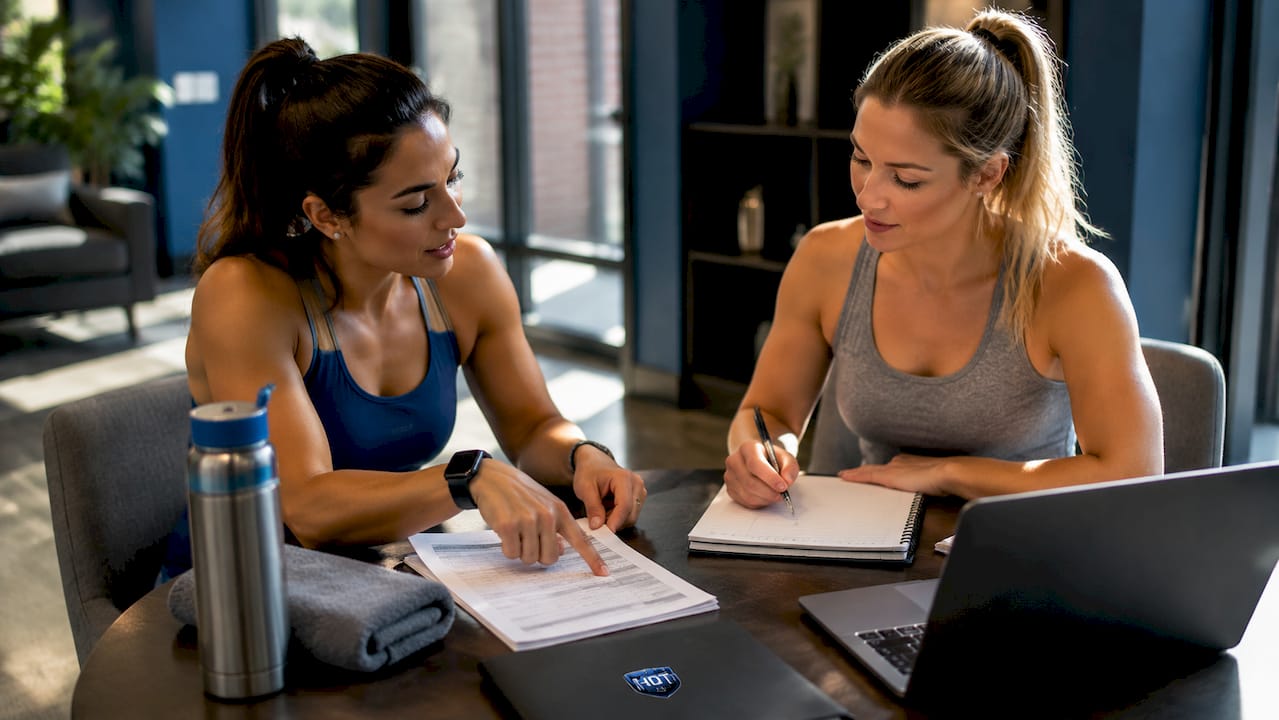
Personalization in private training starts before you lift a single weight. A mandatory initial consultation lasting 30–60 minutes, often provided at no charge, establishes your movement history, injury background, current fitness level, and specific goals. That baseline shapes every decision your trainer makes in the future.
The key elements of a genuinely personalized program include:
- Movement screening. Your trainer identifies compensating patterns, such as favoring one side during a squat, that signal weakness or past injury.
- Goal mapping. Strength, stress reduction, and pain management each require different programming. Your goals determine the entire structure.
- Progress tracking every 4 weeks. Body composition metrics and performance data are reviewed regularly, so the program adjusts based on real results, not assumptions.
- Adaptive programming. When work stress spikes or you return from travel, programs adjust in real time rather than pushing you through a plan that no longer fits your current state.
- Injury risk management. Senior coaches detect subtle compensations that lead to injury before they become problems, which is especially critical for women over 40 with desk-based jobs and accumulated wear and tear.
Pro Tip: Bring a written list of any past injuries or surgeries to your first consultation. Trainers who ask detailed questions about your history before designing your program are the ones worth working with.
Good coaching, as described by Vaughan’s Fitness and Conditioning, transforms workouts into clear plans tailored to your life, eliminating the guessing and frustration that stall most self-directed gym routines. That clarity is what keeps professionals coming back.
Private training vs. group classes and commercial gyms
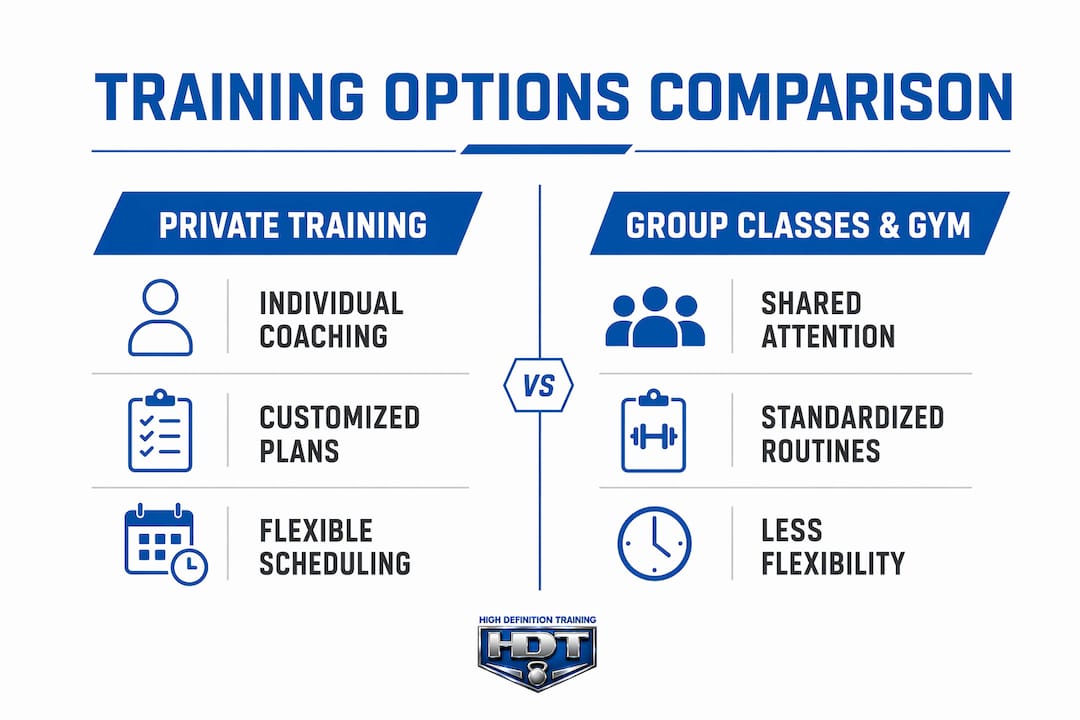
The differences between private training, group classes, and commercial gym memberships are not minor. They affect your results, your safety, and your long-term commitment.
| Feature | Private training | Group classes | Commercial gym |
|---|---|---|---|
| Individual coaching | Yes, every session | No | No |
| Program customization | Fully customized | Generic | Self-directed |
| Injury prevention | Active, session by session | Limited | Minimal |
| Schedule flexibility | High | Fixed class times | Open access |
| Accountability | Built in | Peer pressure only | None |
| Cost efficiency | High ROI on results | Moderate | Low if underused |
Group classes deliver energy and community, but they cannot accommodate your bad knee or tight left hip. The instructor is managing 15 people at once. Your form correction is a general cue, not a specific fix. For women over 40 with specific mobility concerns or post-rehab needs, that gap in attention creates real injury risk.
Commercial gyms offer access but not direction. Professionals often abandon memberships within 6 months because, without a plan or accountability, attendance drops and results stall. Paying monthly for equipment you rarely use is not a fitness investment. Private training, by contrast, delivers measurable outcomes tied directly to the money and time you put in.
Private studios also provide safer, less distracting environments that support better movement quality, particularly for clients managing specific health concerns or returning from injury. That environment matters more than most people realize.
How does private training reduce stress and improve productivity?
Private training functions as a productivity tool, not a wellness indulgence. Coaches adapt plans around life stressors, turning fitness into a sustainable system rather than another obligation that competes with work. That distinction changes how professionals relate to exercise entirely.
The broader benefits for working women over 40 include:
- Improved energy during the workday. Structured strength training increases mitochondrial efficiency, which translates directly to sustained focus and less afternoon fatigue.
- Reduced physical pain from desk work. Targeted mobility and strength work corrects the posture damage from hours of sitting, reducing neck, shoulder, and lower back pain that affects concentration.
- Better stress regulation. Resistance training lowers cortisol over time. A coach who monitors your recovery prevents overtraining, which would spike cortisol rather than reduce it.
- Longer health span. Consistent, expert-guided training builds the muscle mass and bone density that protect women over 40 from the physical decline that accelerates after menopause.
“Viewing private training as an investment in your productivity, not your appearance, changes everything about how you show up to sessions and to work.”
Private training as a productivity investment reframes the entire value proposition. You are not spending time on fitness instead of work. You are building the physical foundation that enables your work performance. For professionals managing high-stakes careers alongside family responsibilities, that framing is not motivational language. It is accurate.
Strength training for career-focused women also builds a kind of confidence that carries directly into the workplace. Read more about that connection on the fitness and leadership blog at High Definition Training.
Key Takeaways
Private training suits professionals because it delivers expert-guided, fully customized sessions that protect time, prevent injury, and produce results that generic gym access cannot match.
| Point | Details |
|---|---|
| Efficiency over volume | Two to three focused private sessions outperform four to six unstructured gym visits per month. |
| Personalization starts at intake | A 30–60 minute consultation establishes your baseline before any programming begins. |
| Adaptive programming prevents stalls | Programs adjust for travel, stress, and recovery so you progress without risking injury. |
| Private training beats group classes for safety | Individual attention catches form errors and compensations that group instructors cannot address. |
| ROI beats unused memberships | Private training delivers measurable results; commercial memberships abandoned within 6 months deliver none. |
What I have seen coaching professionals in the Bronx
After years of working with women over 40 in Throgs Neck and Pelham Bay, the pattern I see most often is this: professionals arrive exhausted, skeptical, and carrying injuries they have learned to work around. They have tried group classes and felt lost. They have had gym memberships that they stopped using by March. What they have never had is a program built specifically for their body, their schedule, and their actual goals.
The barrier is rarely motivation. It is structured. When a professional knows exactly what she is doing, why she is doing it, and has someone watching her form and adjusting the plan in real time, she shows up. Consistently. The women I work with at High Definition Training are not athletes chasing performance records. They are busy people who want to feel strong, move without pain, and manage the stress of demanding lives. Private training is the only model that addresses all of that at once.
If you are evaluating private training options, ask one question before you commit: Does this trainer start with a full assessment, or do they hand you a generic program on day one? The answer tells you everything about whether the investment will pay off. You can also read about building long-term training consistency on the High Definition Training blog for more on what sustained progress actually requires.
— Angel
Private training at High Definition Training in the Bronx
High Definition Training serves women over 40 in the Throgs Neck and Pelham Bay areas of the Bronx with private training programs built around real assessments, flexible scheduling, and expert coaching.
Every program starts with a full consultation, so your training reflects your body, your goals, and your life. Sessions are designed to fit professional schedules without sacrificing results. Pricing options are available to suit different budgets, and you can review them on the pricing page before committing. When you are ready to see what a program built specifically for you looks like, explore the available training classes and book your first session.
FAQ
Why does private training work better for professionals?
Private training removes the logistical friction of commercial gyms and delivers focused, customized sessions that fit professional schedules. The built-in accountability and expert coaching produce consistent results that self-directed gym visits rarely achieve.
How many sessions per week do professionals need?
Two to three private training sessions per week are the standard for professionals seeking consistent results. That frequency, combined with quality coaching, outperforms more frequent but unstructured gym visits.
Is private training worth the cost compared to a gym membership?
Private training delivers measurable results tied directly to your investment. Commercial gym memberships are frequently abandoned within 6 months, making private training the higher-value option for professionals who need real outcomes.
What happens at the first private training session?
The first session typically includes a 30–60 minute consultation covering your movement history, injury background, and goals. That assessment forms the foundation of your custom program.
Can private training help with stress and not just fitness?
Private training directly supports stress management by regulating cortisol through structured resistance training and recovery planning. Coaches also adapt session intensity during high-stress periods so that training supports your workday rather than adding to your workload.