
TL;DR:
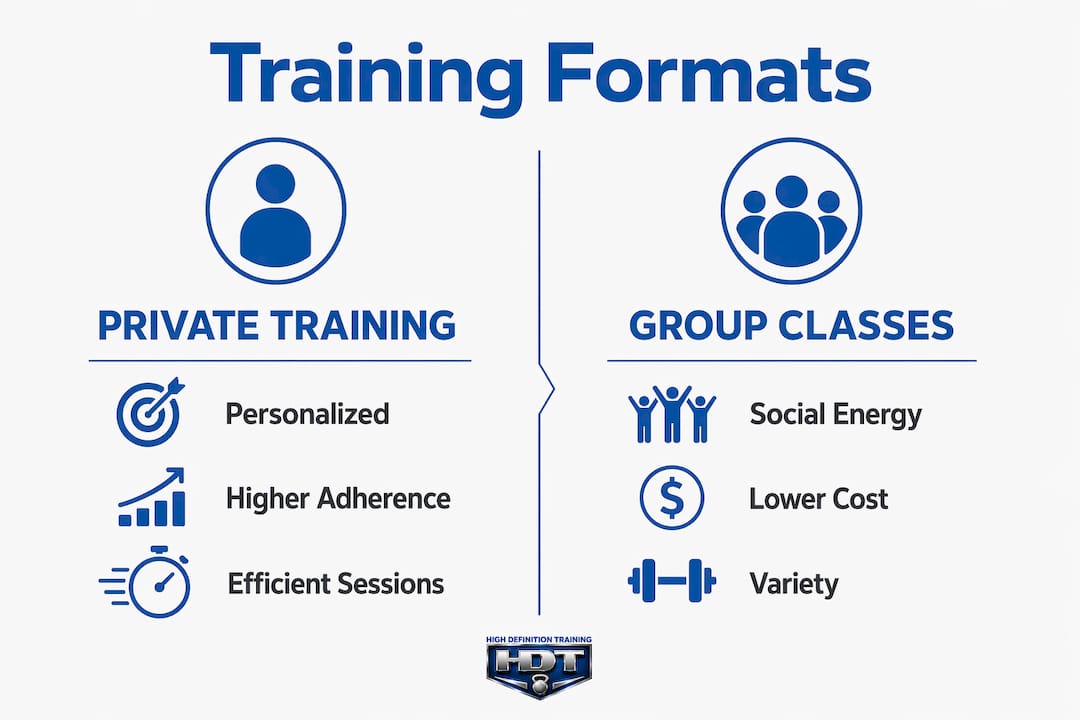
- Private training offers women over 40 personalized movement assessments and real-time form correction to prevent injuries.
- Group classes provide social motivation, structure, and affordability that support long-term fitness maintenance.
One-on-one personal training is a structured fitness relationship in which a certified coach designs, supervises, and adjusts every workout specifically for you. The debate around private training versus gym classes matters most to women over 40 because this is the decade when hormonal shifts, joint wear, and injury history start to shape what works and what causes setbacks. Private training delivers individualized movement screening and real-time form correction that group classes cannot replicate. Group classes offer social energy, lower cost, and structured sessions that remove the guesswork from showing up. Knowing which format fits your body and your life right now is the decision that changes everything.
How private training benefits women over 40
Private training is the most effective format for women over 40 who have an injury history, postural imbalances, or specific strength goals. The reason is simple: a qualified trainer builds your program around your body, not a class template.
Movement screening catches problems before they become injuries
A functional movement screening is a 30–60 minute assessment that identifies how your joints, spine, and hips actually move under load. This screening is rarely feasible in group classes because instructors are managing 10 to 30 people at once. For women over 40, common problem areas include the spine, shoulders, and knees. Catching a movement fault before you load it with weight prevents the kind of injury that sidelines you for months.
Real-time feedback protects your joints and spine
A private trainer watches every rep and corrects your form before bad patterns become habits. This matters because poor mechanics under fatigue are the leading cause of training injuries in midlife women. Group class instructors cannot watch every participant simultaneously, so subtle errors go uncorrected. Over weeks and months, those small errors compound into real pain.
Adherence rates are dramatically higher with private training
Exercise adherence reaches 88% with private training, compared to 52% for those training independently. That 36-point gap represents the difference between a fitness habit that sticks and one that fades by February. Scheduled appointments, a trainer who knows your name, and a program built around your goals all create accountability that a drop-in class cannot match. For busy women juggling work, family, and health demands, that structure is not a luxury. It is the mechanism that keeps the habit alive.
Efficient sessions maximize limited time
Private training optimizes 45–60-minute sessions, so every exercise serves a specific purpose in your program. There is no warm-up designed for the average person in the room. No cool-down ignores your tight hip flexors. Every minute is allocated to what your body needs that day. For women over 40 who are time-constrained professionals, this efficiency is one of the strongest personal training benefits available.
Pro Tip: Ask any private trainer you consider hiring whether they conduct a movement assessment in the first session. If they skip straight to a workout, that is a red flag for your safety.
Key advantages of private training at a glance:
- Customized movement screening identifies your specific limitations before training begins
- Real-time form correction reduces injury risk during every session
- Scheduled accountability drives adherence rates far above independent training
- Programming adapts week to week based on your progress and recovery
- Efficient session design eliminates wasted time and effort
What gym classes offer and when group training fits
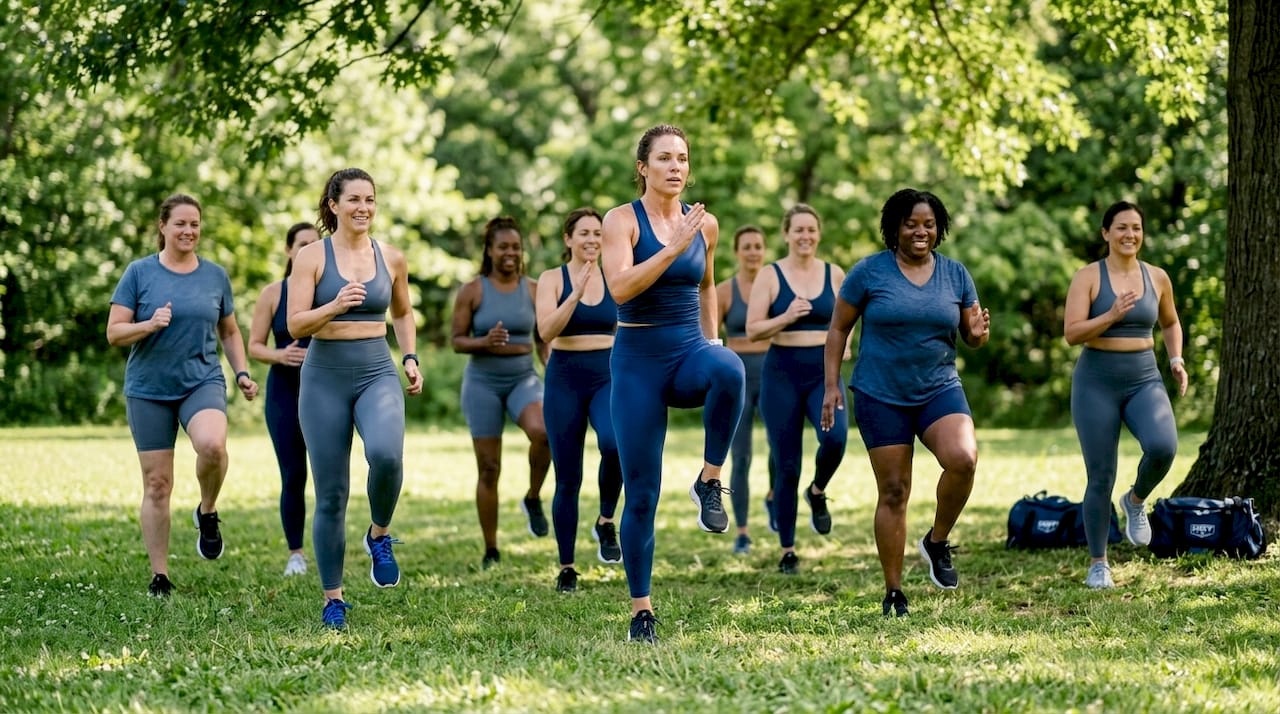
Group fitness classes are instructor-led sessions where participants follow a shared workout format, typically in formats like yoga, cycling, HIIT, or strength circuits. They are not a lesser option. They are a different tool, and for the right woman at the right stage, they are exactly what works.
Here is when group training is a strong fit for women over 40:
- You are in a maintenance phase. Once you have built foundational strength and movement patterns, a group class keeps you active, challenged, and consistent without the cost of weekly private sessions.
- Social motivation drives your consistency. Some women train harder and show up more reliably when others surround them—the energy of a room matters. Peer support is a real and documented motivator.
- You want structure without decision fatigue. A group class removes the need to plan your workout. You show up, the instructor leads, and you follow. That simplicity lowers the barrier to exercise on days when motivation is low.
- Budget sustainability is a priority. Group classes cost significantly less than private sessions. Private training runs $400–$1,200 per month for twice-weekly sessions, while group class memberships cost a fraction of that. Long-term fitness requires a financial model you can sustain for years, not just months.
- You enjoy community. Women who feel connected to a fitness community report higher long-term engagement. A class where the instructor knows your name and fellow participants cheer you on creates a sense of belonging that a solo gym session rarely provides.
The honest limitation of group classes is that they are designed for the average participant. If you have a knee replacement, a history of lower back pain, or significant postural imbalances, a group class instructor cannot safely modify every movement for you in real time. That gap is where private training earns its cost.
Key factors to consider when choosing your training format
The right choice between one-on-one training and group classes depends on four factors: physical complexity, goal specificity, accountability style, and budget.
Physical complexity and injury history
Women over 40 with chronic conditions, recent surgeries, or significant postural imbalances need individualized coaching before joining group classes. Attempting a group HIIT class with an unaddressed shoulder impingement is a reliable path to injury. Private training addresses these complexities directly.
Goal specificity
Rehabilitation, competitive performance, and significant changes in body composition all require targeted programming. General wellness and maintenance are achievable in a group setting. The more specific your goal, the more you need a private trainer who can build a precise path to it.
Accountability style
Accountability preference is a key factor in sustainable participation. Some women thrive with the scheduled commitment of a private session. Others stay consistent because they do not want to let their class group down. Neither style is wrong. Matching your format to your natural accountability wiring is what makes the habit last.
Budget and value over time
| Factor | Private training | Group classes |
|---|---|---|
| Monthly cost | $400–$1,200 (twice weekly) | Lower monthly membership |
| Personalization | Full program customization | Shared class format |
| Injury screening | Included in first session | Not typically available |
| Accountability | Scheduled one-on-one | Peer and instructor group |
| Best for | Complex goals, injury history | Maintenance, social motivation |
A combination approach suits many women whose needs evolve. Starting with private training and transitioning to group classes is a proven model, not a compromise.
How to integrate private training and gym classes for lasting results
A hybrid model combining private training and group classes is frequently the most effective long-term strategy. It balances personalization with social motivation and manages cost without sacrificing results.
The phased approach works like this. Spend the first 3–6 months in private training to build foundational movement patterns, correct imbalances, and develop confidence under load. This period is critical. The first 90 days of a new fitness program carry the highest risk of dropout and injury, and a private trainer dramatically reduces both. You leave this phase knowing how to move well, what your body responds to, and what to avoid.
After that foundation is set, transition to group classes for the social energy, variety, and lower cost that sustain long-term engagement. Use occasional private sessions, perhaps once a month, for form checkups, program updates, and injury prevention. This keeps your movement quality high without the full cost of weekly one-on-one sessions.
Pro Tip: When transitioning from private training to group classes, bring a written summary of your movement limitations and any exercises your trainer has flagged. Hand it to the group instructor before your first class. Most instructors will appreciate it and watch out for you.
The insight that ties this together is straightforward. Private training suits refining and fixing. Group classes support maintaining and social engagement. Using both at the right time means you get the safety and precision of individualized coaching when you need it most, and the community and affordability of group training when you are ready for it.
Sustainable fitness routines for women over 40 are built on this kind of flexibility. Rigid all-or-nothing approaches burn out. Adaptable ones last.
Key Takeaways
Private training delivers the personalization and accountability that women over 40 need most, while group classes provide the social motivation and cost efficiency that sustain long-term fitness habits.
| Point | Details |
|---|---|
| Adherence gap is significant | Private training produces 88% adherence vs 52% for independent training. |
| Movement screening is non-negotiable | A 30–60-minute assessment before training prevents injuries most common in women over 40. |
| Group classes suit maintenance phases | Once foundational strength is built, group formats offer community and affordability. |
| Hybrid approach optimizes results | Three to six months of private training followed by group classes balances cost and effectiveness. |
| Accountability style drives consistency | Match your training format to how you naturally stay committed, not to what sounds best on paper. |
What I’ve learned training women over 40 in the Bronx
After years of working with women over 40 in Throgs Neck and Pelham Bay, I can tell you that the question is rarely “which format is better?” The real question is “what does this woman need right now?”
I have seen women walk into their first private session convinced they need to “get back in shape,” only to discover during movement screening that they have been compensating for a hip imbalance for years. A group class would have loaded that pattern and made it worse. Private training caught it and fixed it. That is not a small thing. That is the difference between a fitness habit that builds you up and one that breaks you down.
I have also seen women who thrived in group classes after their private training foundation was set. The community kept them showing up on days when motivation alone would not have been enough. I do not believe one format wins. I believe the right sequence wins.
The financial concern is real, and I respect it. Private training is a meaningful investment. But I ask clients to compare the cost of private training to the cost of a physical therapy bill, a lost season of activity, or the compounding effect of years spent in pain or inactivity. Framed that way, the math often looks different.
My honest advice: start with private training long enough to learn your body. Then use group classes to stay connected and keep costs manageable. Come back to private sessions when something changes: a new goal, a nagging pain, a plateau. That cycle is what sustainable fitness for women over 40 actually looks like in practice.
— Angel
Training options built for women over 40 in the Bronx
High Definition Training serves women over 40 in Throgs Neck and Pelham Bay with both private training and group class options designed around the specific needs of this stage of life.
Private sessions at High Definition Training begin with a full movement screening so your program starts from an accurate picture of where you are, not where the average client is. Group classes offer the structured, instructor-led environment that makes showing up easier and more enjoyable. Scheduling is flexible, and options exist for women at every budget level. Whether you are starting fresh, returning after a break, or ready to level up, the classes at High Definition Training are built to meet you where you are and move you forward safely.
FAQ
What is the main difference between private training and gym classes?
Private training is one-on-one coaching with a program built entirely around your body and goals. Group classes follow a shared format led by an instructor, with less individual attention.
Is private training worth it for women over 40?
Private training produces 88% exercise adherence compared to 52% for independent training, making it especially worth the investment for women over 40 managing injury history or specific fitness goals.
How long should I do private training before joining group classes?
A 3–6 month period of private training builds the foundational movement patterns and confidence needed to train safely and effectively in a group setting.
Can I do both private training and group classes at the same time?
A hybrid approach that combines both formats is frequently the most effective long-term strategy, using private sessions for programming and form and group classes for motivation and consistency.
How much does private training cost compared to group classes?
Private training typically costs $400–$1,200 per month for twice-weekly sessions. Group class memberships carry a significantly lower monthly cost, making them more accessible for long-term budget planning.