TL;DR:
- Personal training offers women over 40 personalized, real-time feedback, improving safety and results. It enhances adherence through structured progression, accountability, and motivation. This focused approach builds confidence, prevents injury, and fosters long-term fitness in ways group classes cannot match.
One-on-one training is a private coaching relationship in which a certified trainer designs, supervises, and adjusts each session to your specific body, goals, and recovery needs. For women over 40, this format is not a luxury. It is the most effective way to build strength safely, maintain consistency, and get results that actually last. Why one-on-one training works better comes down to three things: real-time feedback, tailored programming, and built-in accountability. Generic workout plans and group classes cannot deliver all three at once. Personal training, the industry’s standard term for this format, does.
Why one-on-one training works better than any other format
The core advantage of personal training is immediate, expert correction. One-on-one coaching focuses on real-time corrective feedback cycles that adjust your form, load, and rest between sets. That means errors get fixed before they become habits or injuries for women over 40, where joint health and recovery time matter more than they did at 25; this is not a minor detail. It is the difference between progress and setback.
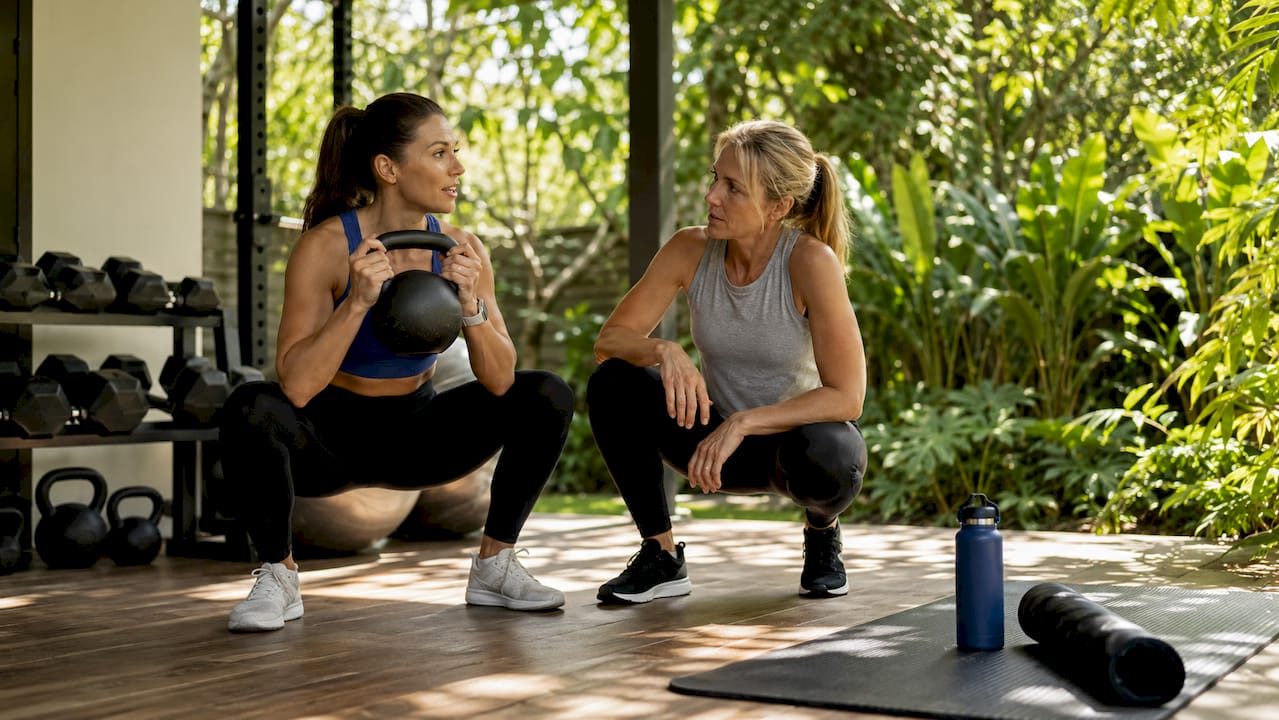
Supervision increases effort during resistance training, with coached trainees showing greater time under load and higher perceived exertion than those training alone. More effort, applied correctly, produces better results. That combination of quality and intensity is what separates a well-coached session from a self-directed one.
Personal training also delivers individualized expert advice, safe programming, motivation, accountability, and ongoing support. Each of these factors compounds over time. A trainer who knows your history, your sleep patterns, and your stress levels can make smarter decisions about your workload than any app or generic plan ever could.
How does real-time supervision improve safety and results?
Proper form is the foundation of every effective workout. Without it, even well-designed exercises can cause harm rather than build strength. A personal trainer watches every rep and corrects problems the moment they appear, whether that is a knee caving inward during a squat or a shoulder rolling forward during a row.
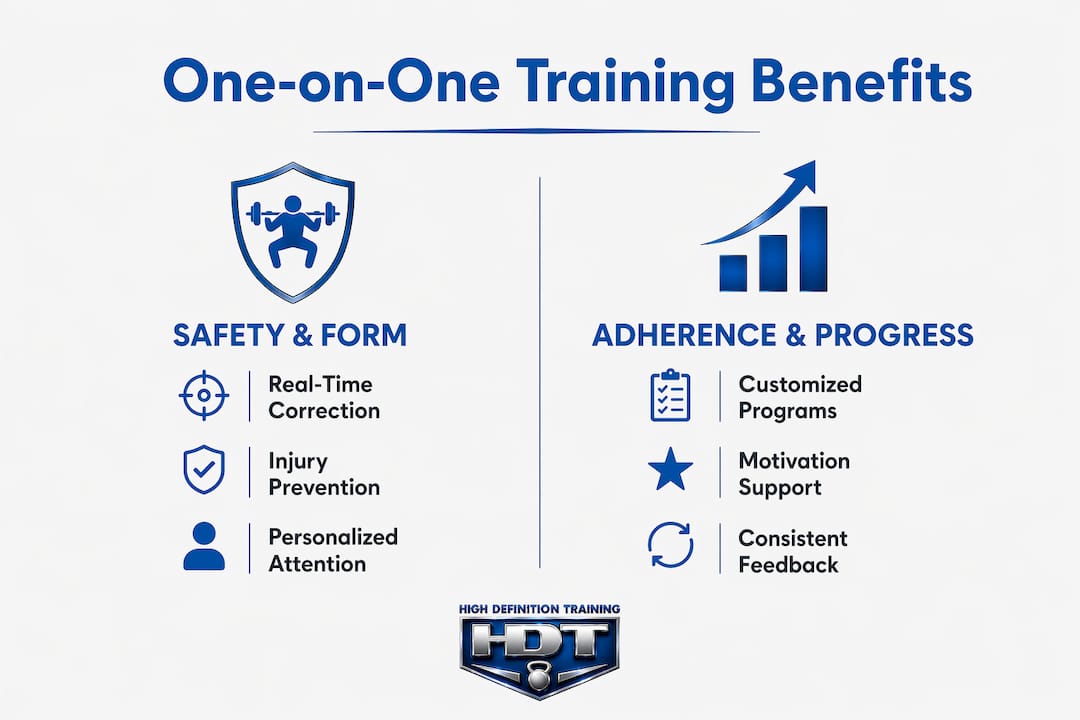
For women over 40, the stakes are higher. Bodies at this stage often carry old injuries, reduced bone density, and slower recovery rates. A trainer accounts for all of that before the session starts, not after something goes wrong.
Key ways real-time supervision protects and improves your training:
- Form correction on every rep: A trainer spots compensations you cannot see yourself, preventing the small errors that accumulate into injuries.
- Load adjustment mid-session: If a weight feels wrong that day, a trainer adjusts it immediately rather than letting you push through poor mechanics.
- Rest period management: Trainers regulate recovery time between sets to match your actual readiness, not a generic timer.
- Effort calibration: Supervised sessions push you to work harder than you would alone, without crossing into unsafe territory.
- Modification for joint concerns: Exercises get adapted in real time for knees, hips, or shoulders that need a different approach that day.
Pro Tip: Tell your trainer about any stiffness or soreness before the session starts, not after. That five-second conversation changes the entire workout plan for the better.
Personalized training works best because timely feedback instantly corrects form and load. Generic plans cannot deliver that. The result is cleaner movement, less pain, and faster progress.
Why does customized programming improve adherence and progress?
Consistency is the single biggest predictor of fitness results. Customized programming directly drives consistency by removing the guesswork that causes women to quit or plateau.
A personal trainer does not just pick exercises. They manage your progression week to week based on how your body actually responds. Progression personalization, adjusting volume and intensity based on individual response, is critical to avoiding plateaus and managing recovery, especially for women over 40. That means your program evolves with you rather than staying static until it stops working.
Here is how a well-structured personal training program builds lasting progress:
- Baseline assessment: Your trainer measures your current strength, mobility, and fitness level before writing a single session plan. This creates an honest starting point.
- Weekly adjustment: Volume and intensity shift based on your recovery, soreness, sleep, and stress from the previous week, not a preset schedule.
- Plateau prevention: When progress slows, a trainer changes the stimulus before you lose motivation or get stuck.
- Pacing for sustainability: Gradual increases protect joints and connective tissue while still driving adaptation, which matters more after 40.
- Feedback integration: Your trainer asks how you feel and uses that information to modify the plan, creating a loop that keeps training aligned with your real life.
Structured exercise programs with regular feedback maintain high adherence and improve fitness outcomes in older adults regardless of motivation differences. That finding matters because it means the structure itself does the heavy lifting when your motivation dips. You do not have to feel inspired to show up. The program keeps you moving forward anyway.
A fitness assessment at the start of your training relationship gives your trainer the data needed to build a program that fits your body, not a template built for someone else.
One-on-one vs. group training: what does focused attention actually change?
The difference between personal training and group classes is not just the number of people in the room. It is the quality of attention each person receives and the safety implications that follow.
| Feature | One-on-one training | Group class format |
|---|---|---|
| Form supervision | Every rep, every set | Occasional, shared across many |
| Program personalization | Built around your body and goals | Identical for all participants |
| Load and intensity adjustment | Real-time, session by session | Fixed or self-managed |
| Injury risk management | Proactive and individualized | Reactive, if noticed at all |
| Accountability | Direct, scheduled, personal | Social, inconsistent |
| Outcome potential | High, measurable, tracked | Variable, hard to attribute |
In a group class, an instructor manages 10, 15, or 20 people at once. That math means you receive a fraction of the attention a personal trainer gives you in a private session. For a woman over 40 learning a new movement pattern or managing a knee issue, that fraction is not enough.
Poor form in a group setting often goes uncorrected simply because the instructor cannot watch everyone. Those uncorrected errors repeat session after session until they cause pain. Personal training eliminates that risk by design.
Individualized training plans also allow for pacing that matches your recovery capacity, not the class schedule. That distinction becomes more important with every decade.
How do accountability and motivation keep you consistent?
Motivation is unreliable. Every woman who has ever skipped a workout knows this. Accountability is what fills the gap when motivation disappears.
A personal trainer functions as a scheduled commitment. You have an appointment, a person expecting you, and a program waiting. Accountability through personal trainers reduces workout skipping and improves consistency, which is the direct path to achieving fitness goals. Missing a session feels different when someone is waiting specifically for you.
Key ways personal trainers sustain motivation over time:
- Scheduled contact: Regular sessions create a rhythm that becomes part of your week, reducing the decision fatigue that leads to skipping.
- Progress tracking: Seeing measurable improvement, even small gains in strength or endurance, reinforces the habit of showing up.
- Encouragement calibrated to you: A good trainer knows when you need a push and when you need patience. That read on your state is impossible in a group setting.
- Goal alignment: Your trainer reminds you of your own goals during sessions when effort feels hard, connecting the discomfort to the outcome you want.
Pro Tip: Share your weekly schedule with your trainer, including work stress and sleep quality. Trainers who know your full picture can adjust session intensity to keep you consistent rather than burned out.
Structured behavioral support helps maintain adherence despite fluctuating motivation, especially among older adults. The trainer relationship provides that structure. Consistency in fitness is not about willpower. It is about building a system that works even on your worst days.
One-on-one coaching also accelerates skill development by tailoring instruction to unique needs and adapting strategies regularly. That principle applies directly to fitness: the faster you learn correct movement, the faster you build strength without getting hurt.
Key Takeaways
One-on-one personal training works better for women over 40 because it combines real-time supervision, customized programming, and direct accountability into a single system that generic plans and group classes cannot replicate.
| Point | Details |
|---|---|
| Real-time form correction | A trainer fixes errors every rep, preventing injuries before they start. |
| Customized weekly progression | Volume and intensity adjust to your recovery, not a preset schedule. |
| Accountability drives consistency | Scheduled sessions reduce skipped workouts better than self-motivation alone. |
| Supervision increases effort | Coached trainees work harder and achieve better results than those who train alone. |
| Personalization improves adherence | Structured, tailored programs maintain progress even when motivation fluctuates. |
What I have learned training women over 40 in the Bronx
Most women who come to me have tried group classes, followed online programs, or pushed through generic gym routines. They are not lazy. They are undertrained in the wrong direction. The programs they followed were built for someone else.
What I see consistently is this: when a woman over 40 gets a program built specifically for her, her confidence changes within weeks. Not because the exercises are easier, but because she finally understands what her body is doing and why. That clarity is something a group class cannot give you. You are one of many. In a one-on-one session, you are the only one.
The research backs what I observe every day. Supervision raises effort. Personalized progression prevents plateaus. Structured support keeps women showing up even when life gets hard. But the part the research does not fully capture is the trust that builds between a trainer and a client over time. That trust is what makes the hard sessions possible.
My honest opinion: women over 40 who invest in personal training are not spending money on fitness. They are spending it on safety, confidence, and a body that works well for the next 30 years. That is a different calculation entirely.
— Angel
Personal training at High Definition Training in the Bronx
High Definition Training works with women over 40 in the Throgs Neck and Pelham Bay areas of the Bronx, offering private sessions built around your specific goals, recovery needs, and schedule.
Every program at High Definition Training starts with an honest assessment of where you are right now. From there, your trainer builds a plan that fits your body, not a template. If you are ready to train with focused attention and a program that actually adapts to you, explore training programs designed for women who want real, lasting results. You can also review personal training pricing to find the right fit for your schedule and budget.
FAQ
Why does one-on-one training produce better results than group classes?
One-on-one training provides full supervision, real-time form correction, and a program tailored to your body. Group classes split attention across many participants, leaving errors uncorrected and progression unmanaged.
How does personal training help women over 40 specifically?
Personal training accounts for age-related factors such as joint health, recovery time, and hormonal changes by adjusting load, tempo, and exercise selection from session to session. That level of adaptation is not possible in a generic program.
Does motivation matter less with a personal trainer?
Structured support maintains adherence even when motivation fluctuates, meaning the trainer relationship keeps you consistent on days when willpower alone would not. Motivation helps, but the system does the real work.
How quickly does one-on-one coaching improve exercise technique?
Early coaching phases improve acceptance and perceived competence quickly, reducing the need for prolonged supervision as skills develop. Most women notice cleaner movement patterns within the first few weeks of consistent personal training.
Is personal training worth the investment for long-term health?
Personal training reduces injury risk, improves adherence, and produces measurable strength gains that generic programs rarely match. For women over 40, the long-term cost of injury or inactivity far exceeds the cost of expert guidance.