
TL;DR:
- Sustainable fitness emphasizes consistent, manageable habits tailored for women over 40 to support long-term health. It combines balanced exercise routines, proper recovery, and flexibility to adapt to life’s interruptions, fostering lasting results. Building a fitness identity through small, consistent actions is key to maintaining motivation and progress over time.
Sustainable fitness is defined as a long-term, adaptable approach to exercise that prioritizes consistent, realistic habits over short-term intensity. For women over 40, this definition carries real weight. Your body, schedule, and energy levels shift in ways that make crash programs and extreme regimens not just ineffective but counterproductive. The definition of sustainable fitness centers on building routines you can actually keep, blending strength, cardio, and mobility with recovery strategies that fit your real life. High Definition Training, based in the Throgs Neck and Pelham Bay areas of the Bronx, NY, builds every program around this principle.
What does sustainable fitness mean for your body after 40?
Sustainable fitness means building a routine your body can handle and your life can support, not just this month but for years. After 40, several physiological shifts make this approach non-negotiable rather than optional.

Metabolism slows, muscle mass begins to decline without deliberate resistance work, and recovery takes longer than it did at 30. These changes are not failures. They are signals that your training needs to evolve. A program designed for a 25-year-old athlete will not serve a 45-year-old woman managing a career, a household, and fluctuating energy levels.
The benefits of sustainable fitness align directly with these realities. Consistent, moderate exercise protects bone density, supports hormonal balance, reduces injury risk, and helps manage stress more effectively than sporadic, intense efforts. Consistency over intensity is the key to breaking the common cycle of starting and stopping fitness routines. That cycle is exhausting, and it erodes confidence every time it repeats.
Sustainable exercise practices also account for the mental load women over 40 carry. Stress is a physiological factor, not just an emotional one. High cortisol levels from overtraining or life pressures directly impair recovery and undermine results. A sustainable fitness lifestyle treats stress management as part of the program, not separate from it.
What are the core principles of sustainable fitness routines?
The core principles of a sustainable fitness routine come down to balance, manageability, recovery, and flexibility. These four elements work together. Remove one and the system weakens.
Balanced programming means combining three types of movement:
- Strength training to preserve muscle mass and bone density, which become critical after 40.
- Cardiovascular work to support heart health, energy, and mood regulation.
- Mobility and flexibility work to maintain range of motion, reduce injury risk, and support recovery between sessions.
No single type of training covers all three needs. Women who only lose muscle. Women who only lift often neglect the mobility work that keeps joints healthy long term.
Session length and frequency matter more than most people realize. Sustainable results come from targeting 20–45 minutes of exercise, 3–5 times per week. That range is achievable for most schedules and avoids the overtraining that derails longer, more intense programs. A 30-minute session you complete consistently beats a 90-minute session you skip half the time.

Recovery strategies are not optional extras. Balanced programming combined with recovery habits accounts for over 50% of sustainable fitness success. Consistent sleep, protein-rich meals, and active rest days are training tools, not rewards. Treating them as luxuries is one of the most common mistakes women over 40 make.
Flexible adaptation is what separates a sustainable plan from a temporary push. Plans that cannot accommodate life’s interruptions are short-term pushes rather than sustainable systems. A week of travel, a sick child, or a stressful work deadline should trigger a scaled-back version of your routine, not its abandonment.
Pro Tip: Use the “two-week review” technique: after starting any new habit, evaluate it at the 14-day mark. If it creates consistent friction, modify it rather than forcing it or quitting entirely.
How can women over 40 build and sustain fitness habits?
Building lasting fitness habits requires a different strategy than most programs teach. Motivation fades. Identity sticks.
Consistency stems from identity formation rather than fluctuating motivation. When you see yourself as someone who moves her body regularly, showing up becomes the default rather than a daily negotiation. Small wins build that identity faster than big efforts. A 10-minute walk completed is more powerful than a 60-minute workout skipped.
Here are the practical strategies that work:
- Start smaller than feels necessary. A 5-minute action, like a short walk or a few bodyweight exercises, lowers the barrier to showing up and reinforces the habit loop. Once you are moving, you often continue longer.
- Use habit stacking. Attach your workout to an existing routine. Exercise after your morning coffee, before your shower, or during your lunch break. The existing habit acts as a reliable cue.
- Allow imperfect action. Rigid plans fail because they ignore fluctuating human energy levels and motivation. Permitting yourself to do a lighter version of your planned workout keeps you in the game on hard days.
- Track meaningful progress. Log how you feel, what you completed, and what improved. Energy levels, sleep quality, and strength gains matter more than the number on a scale.
- Celebrate small wins deliberately. Acknowledging progress, even minor progress, reinforces the identity you are building. This is not self-indulgence. It is behavioral science.
Pro Tip: When life gets busy, ask yourself: “What is the smallest version of this workout I can do today?” Doing something, even 10 minutes, keeps the habit alive. Doing nothing breaks it.
The psychology of sustainable fitness shows that women who focus on showing up consistently, rather than performing perfectly, build stronger long-term habits than those who chase peak performance in every session.
What does a sustainable fitness routine actually look like?
A realistic weekly schedule for a woman over 40 balances effort with recovery and keeps sessions short enough to fit a full life.
Sample weekly structure
| Day | Activity | Duration |
|---|---|---|
| Monday | Strength training (full body) | 35–45 minutes |
| Tuesday | Light cardio or brisk walk | 20–30 minutes |
| Wednesday | Rest or gentle mobility/yoga | 20 minutes |
| Thursday | Strength training (lower body focus) | 35–45 minutes |
| Friday | Cardio and core work | 30 minutes |
| Saturday | Functional training or active recreation | 30–40 minutes |
| Sunday | Full rest or stretching | As needed |
This structure hits the 3–5 sessions per week target without demanding daily intense effort. Rest days are scheduled, not accidental.
Functional training deserves specific mention. Exercises that mimic real-life movements, like squats, hinges, carries, and presses, build the kind of strength that protects you in daily life. They also reduce injury risk better than isolated machine exercises, which matters more as recovery time lengthens after 40.
Gear choices also affect sustainability. Durable, multifunctional equipment like resistance bands and adjustable dumbbells supports routine longevity without frequent replacement costs. You do not need a full gym. You need a few reliable tools that travel with you and work across a range of movement patterns.
When travel, illness, or family demands disrupt your schedule, adjusting your routine rather than abandoning it preserves the habit. A hotel room workout with resistance bands, a 20-minute walk, or a single strength circuit keeps continuity intact. Continuity is the asset worth protecting.
Key Takeaways
Sustainable fitness for women over 40 is built on consistent, manageable habits that adapt to real life rather than demanding perfection.
| Point | Details |
|---|---|
| Core definition | Sustainable fitness prioritizes consistent, realistic habits over short-term intensity or extreme programs. |
| Session guidelines | Target 20–45 minutes of exercise, 3–5 times per week for results that last without burnout. |
| Recovery is training | Sleep, nutrition, and rest days account for over 50% of sustainable fitness success. |
| Identity over motivation | Small, repeated actions build a fitness identity that outlasts any motivational spike. |
| Adapt, never abandon | Scale back during disruptions rather than stopping. Continuity is more valuable than perfection. |
What I have learned training women over 40 in the Bronx
Most women who come to High Definition Training have tried the intense programs. They did the 30-day challenges. They pushed hard for six weeks and burned out. They are not lazy. They were given the wrong model.
The fitness industry sells intensity because intensity is visible and marketable. What actually works is far less dramatic. It is the woman who does her 35-minute strength session on Tuesday even when she is tired. It is the woman who walks for 20 minutes on a day she planned to rest. It is the woman who does half of her workout on a hard day rather than skipping it entirely.
The mindset shift that changes everything is moving from “I need to crush this workout” to “I need to show up for this workout.” Those are not the same goal. One depends on energy you may not have. The other depends only on commitment, which you can always access.
I have also seen women over 40 underestimate how much their body can do when given the right program and enough time. The results are not fast. They are real. Strength that builds over months feels different from a six-week transformation. It belongs to you in a way that a crash result never does.
Patience is not passive. Patience is choosing the approach that compounds over time instead of the one that burns bright and disappears.
— Angel
How High Definition Training supports your fitness goals
High Definition Training works with women over 40 in the Throgs Neck and Pelham Bay areas of the Bronx, NY, to build fitness programs that fit real life. Every program balances strength, cardio, and mobility within sessions that respect your schedule and your body’s recovery needs.
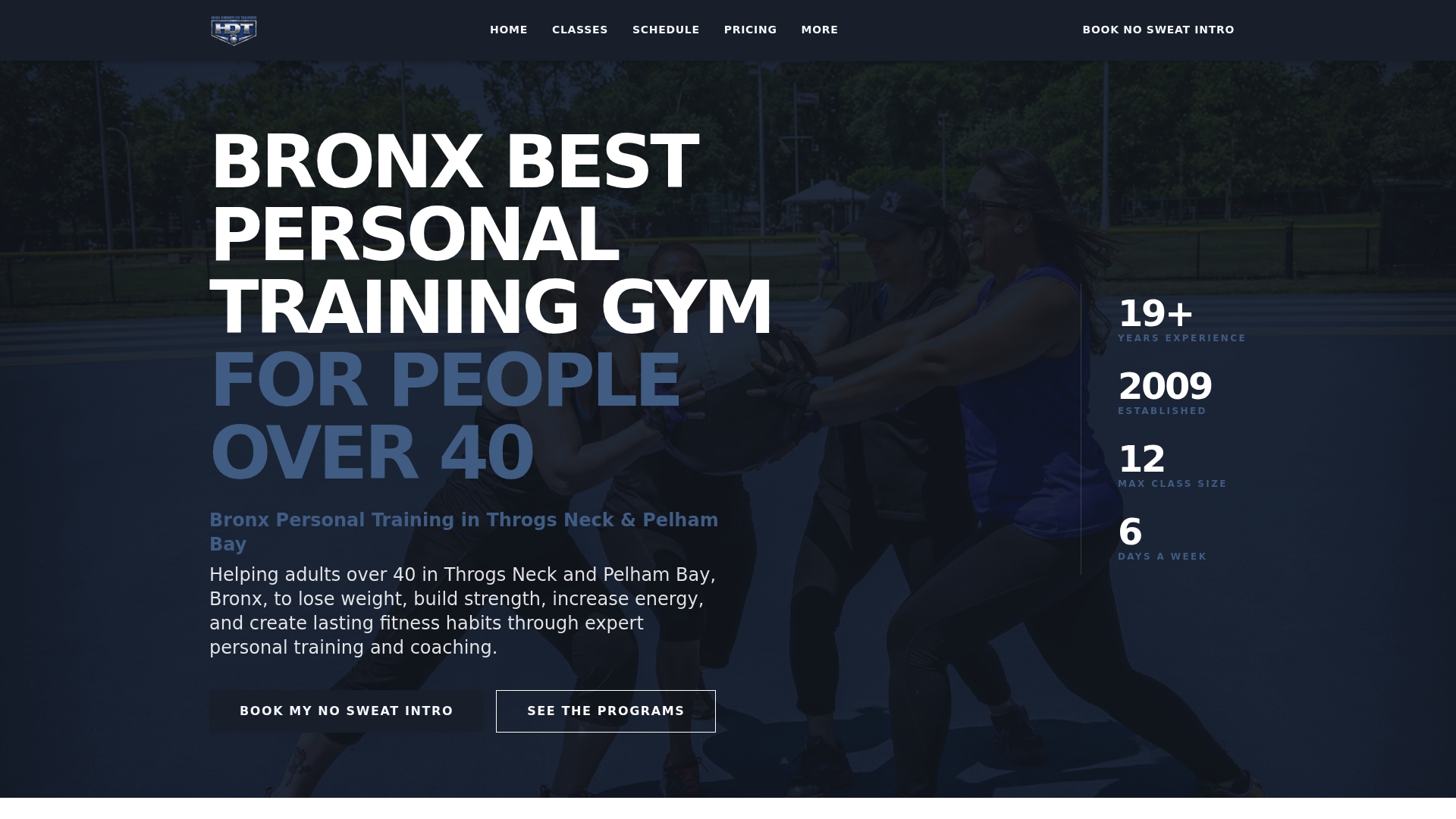
Programs at High Definition Training are built around the sustainable fitness principles covered here: manageable session lengths, balanced training types, and the flexibility to adjust when life gets in the way. If you are ready to build a routine that actually lasts, explore personal training classes designed specifically for women over 40. You can also visit High Definition Training to learn more about the approach and get started.
FAQ
What does sustainable fitness mean exactly?
Sustainable fitness is a long-term approach to exercise built on consistent, realistic habits rather than short-term intensity. It combines strength, cardio, and mobility work with recovery strategies that prevent burnout and support lasting results.
How often should women over 40 exercise for sustainable results?
Targeting 20–45 minutes of exercise, 3–5 times per week delivers sustainable results without overtraining. This frequency supports muscle maintenance, cardiovascular health, and adequate recovery.
Why do most fitness plans fail for women over 40?
Most plans fail because they treat exercise as a temporary intense push rather than a stable, adaptable habit. Plans that cannot accommodate life’s interruptions create failure cycles that erode confidence and consistency.
What is the most important habit for sustainable fitness?
Showing up consistently, even imperfectly, is the single most important habit. Small, repeated actions build a fitness identity that sustains behavior change better than motivation or willpower alone.
Does gear matter for a sustainable fitness routine?
Durable, multifunctional equipment like resistance bands and adjustable dumbbells supports routine longevity by reducing replacement costs and working across multiple movement patterns at home or while traveling.