TL;DR:
Regular exercise and good nutrition build energy and stress resilience, which are essential for balancing work and life. Short, targeted workouts and meal strategies support focus, mood, and sleep, improving overall well-being for busy professionals. Consistent routines and adaptive planning sustain progress amid unpredictable schedules without requiring extensive time or expense.
Fitness and nutrition are not rewards you earn after work gets easier. They are the tools that create the energy, stress resilience, and mental clarity that let work and life coexist without one constantly cannibalizing the other. Research on workplace exercise integration shows that targeted training of about an hour per week can reduce musculoskeletal complaints and improve workability across a large number of workers. Three things you can try in the next 24 hours: do a short bodyweight circuit before your first meeting, swap your afternoon vending-machine run for a protein-forward snack (Greek yogurt, hard-boiled eggs, or a handful of almonds), and take a brief movement break between calendar blocks instead of scrolling.
- 10-minute micro-workout: squats, push-ups, and a plank hold — no equipment needed
- Protein-forward snack: Greek yogurt, cottage cheese, or a boiled egg to stabilize afternoon energy
- Movement break: stand, walk to a window, do 10 shoulder rolls — resets focus in under 5 minutes
Table of Contents
- Why fitness and nutrition matter for a balanced work-life
- Signs your work-life balance — and fitness habits — are off
- Time-smart ways to fit fitness into a busy workday
- Nutrition strategies that support energy, focus, and recovery at work
- How to build a resilient routine that survives unpredictable work demands
- Realistic time and money expectations for fitness and nutrition
- Starter 7-day plan with 30/60/90-minute templates
- When to consider a coach, trainer, or structured program
- Key Takeaways
- What local coaching can add to your fitness plan
- Useful sources and further reading
- FAQ
Why fitness and nutrition matter for a balanced work-life
Exercise directly influences cortisol, the primary stress hormone. A single moderate-intensity session can blunt the cortisol spike that builds through a high-pressure workday, which is why people who train consistently tend to feel less reactive by 6 PM. Sleep quality improves too, because physical fatigue from movement deepens slow-wave sleep, the stage most responsible for cognitive restoration. Mood follows the same pattern: regular movement improves emotional regulation and presence in both work and personal life, functioning as an anchor that keeps you from carrying office stress into dinner.
Nutrition works on a shorter cycle. Protein at every meal slows glucose absorption, which prevents the mid-morning and mid-afternoon energy crashes that kill focus. Carbohydrates are not the enemy; poorly timed ones are. A carb-heavy lunch with no protein leads to a 2 PM slump. A balanced plate with a palm-sized protein source, complex carbs, and vegetables keeps blood sugar steadier for three to four hours.
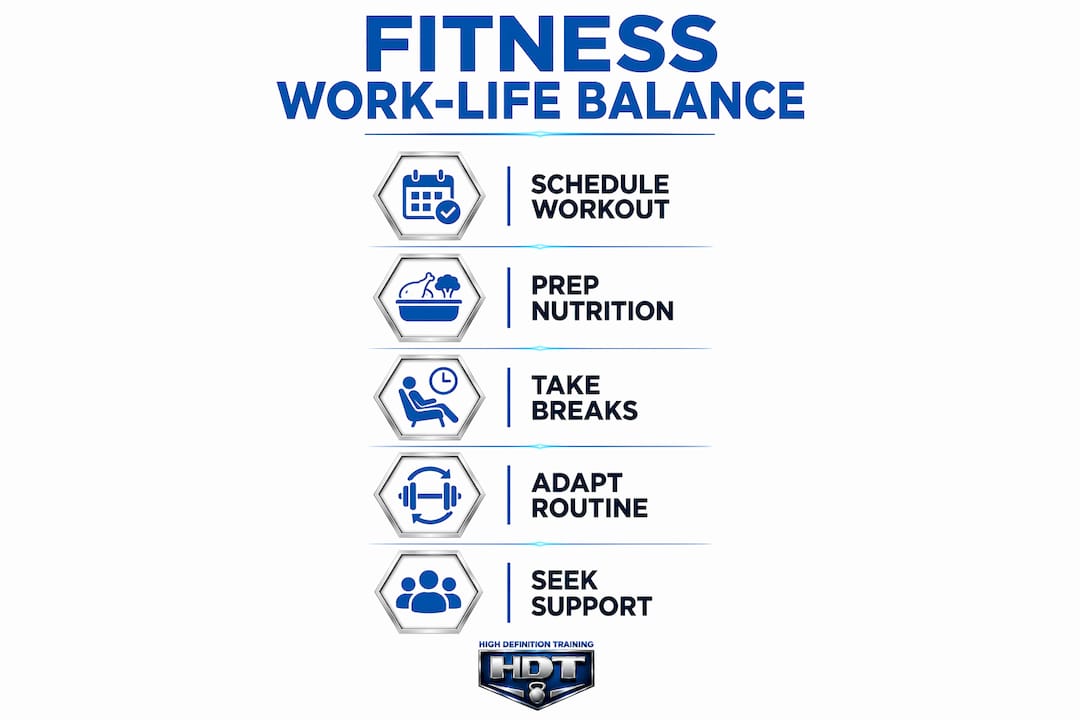
Framing fitness as a strategic cognitive tool rather than a health obligation changes how you prioritize it. Problem-solving, creative thinking, and decision-making all benefit from the neurochemical environment that regular exercise creates.
| Metric | Finding |
|---|---|
| IPET RCT participants | More than 4,000 workers across over 20 randomized controlled trials |
| IPET weekly training time | About an hour of customized training per week |
| Adults not meeting PA guidelines | An estimated 60–70% of adults do not reach recommended moderate-to-vigorous activity levels |
| Fitness benefit for work | Improved energy, focus, and emotional regulation that directly supports job performance |
Key figure: Roughly 60–70% of adults fall short of recommended physical activity levels, making workplace-integrated movement one of the most practical entry points for busy professionals.
Benefits that show up at work and at home:
- Lower resting cortisol and faster recovery from stressful meetings
- Deeper, more restorative sleep within two to three weeks of consistent training
- Steadier mood and more patience in personal relationships
- Sharper focus during cognitively demanding tasks
Signs your work-life balance — and fitness habits — are off
The first thing that slips when work pressure spikes is rarely a deadline. It is the workout you planned to do at 6 PM, then the meal prep you skipped on Sunday, then the sleep you sacrificed to catch up on email. By the time you notice the pattern, you have been running on caffeine and stress hormones for two weeks.
Watch for these signals:
- Chronic afternoon fatigue that coffee no longer fixes → try a protein snack and a 10-minute walk before reaching for a third cup
- Sleep disruption (waking at 3 AM, racing thoughts) → cut caffeine after 1 PM and add a 5-minute wind-down stretch before bed
- Mood swings or short fuse at home after work → a 15-minute walk between leaving the office and walking through your front door creates a buffer
- Missed workouts compounding (one skipped session becomes a week) → apply the never-miss-twice rule: one miss is fine, two in a row is the line
- Frequent late-night eating → usually a sign that daytime meals are under-fueled; add a protein-forward lunch and the evening cravings often shrink
- Loss of patience with family → often the clearest sign that personal recovery time has been fully colonized by work
Two scenarios where this plays out predictably: a remote worker whose commute disappeared but whose workday now bleeds into evenings, eating dinner at the desk and skipping movement entirely; and a parent working irregular shifts who eats whatever is fastest and trains only when everything else is done, which means rarely. Both situations are fixable with small structural changes, not a personality overhaul.
Time-smart ways to fit fitness into a busy workday
The 5 AM workout myth collapses for most professionals within two weeks. Rigid early-morning rituals work until one late meeting, one sick child, or one bad night of sleep breaks the chain. Resilient routines are flexible in timing and duration.
Micro-workout templates:
- 5 minutes: 3 rounds of 10 squats, 5 push-ups, 10 glute bridges — fits between back-to-back meetings
- 10 minutes: Add a 1-minute plank and 10 reverse lunges per side — enough to elevate heart rate and reset focus
- 20 minutes: Full bodyweight circuit (squats, push-ups, rows using a resistance band, hip hinges) with 30 seconds rest between rounds
Practical workday hacks:
- Replace one seated meeting per week with a walking meeting — most conversations that do not require a screen work fine on foot
- Set a movement reminder every 60–90 minutes; stand, walk to a colleague’s desk, or do 10 shoulder rolls
- Block workout time around predictable personal windows (a child nap time, a lunch break that rarely gets canceled) rather than hoping for open space at the end of the day
- Active commute options: walk or bike one leg of the trip, get off one stop early, park at the far end of the lot
Scheduling rules that survive busy weeks:
- Treat workouts as calendar appointments — not suggestions
- Flexible duration beats fixed time: a 15-minute session beats zero
- Never miss twice — one skipped session is rest; two in a row is a pattern you need to break
Pro Tip: Design your week with a “minimum viable workout” for high-pressure days — one movement you will always do regardless of schedule. For many people, that is a 10-minute walk. It keeps the habit alive when everything else falls apart.
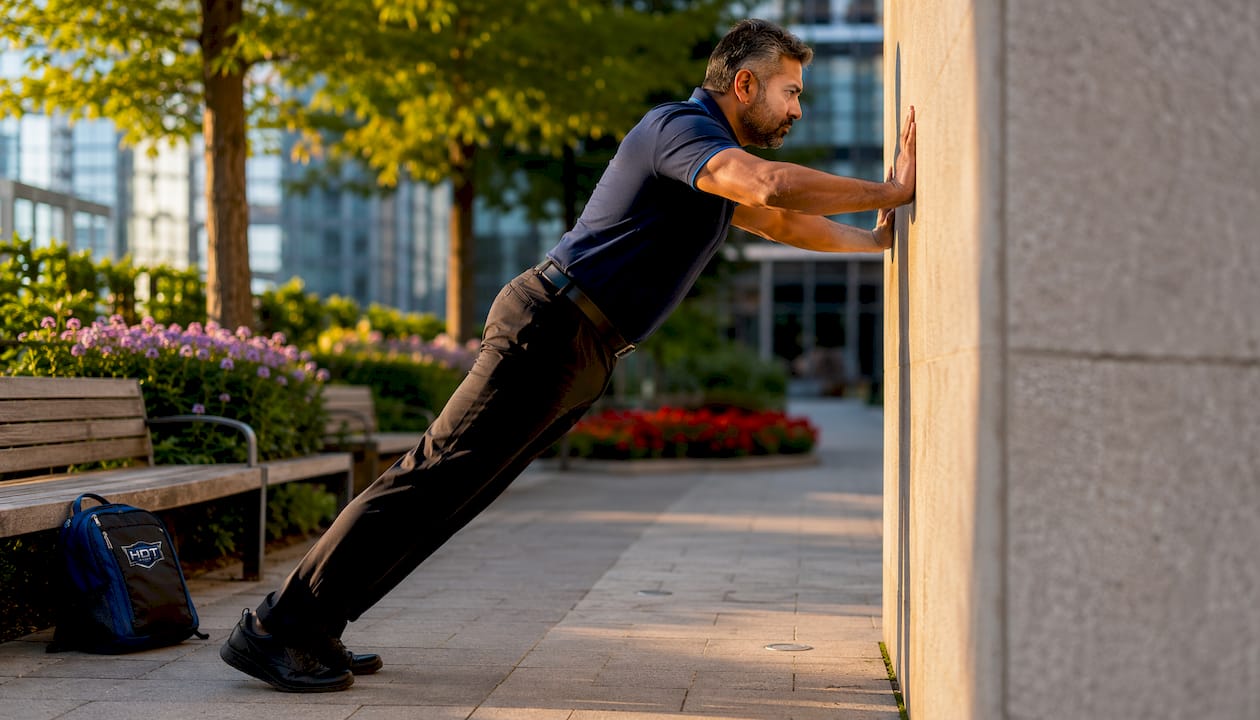
Nutrition strategies that support energy, focus, and recovery at work
You do not need a meal plan that reads like a clinical trial. Three reliable workday meals and a few timing rules cover most of what busy adults need.
Three workday meals worth building around:
- Quick breakfast: 2 eggs scrambled with spinach, or Greek yogurt with berries and a tablespoon of nut butter. Takes under 5 minutes and delivers protein plus slow-releasing carbs before the morning rush.
- Protein-forward lunch: Grilled chicken or canned salmon over greens with a quarter-cup of quinoa or brown rice. Keeps blood sugar stable through the afternoon without the 2 PM crash.
- Recovery snack (post-workout or mid-afternoon): Cottage cheese with fruit, or a rice cake with almond butter and a boiled egg. Protein plus a small carbohydrate source accelerates muscle repair and restores glycogen.
Timing guidelines:
- Prioritize protein within 30–60 minutes after training to support recovery
- Limit caffeine after 1 PM to protect sleep quality
- Eat a real meal before a late-day workout rather than training fasted — performance and recovery both suffer on an empty tank after a full workday
Meal-prep shortcuts:
- Sunday setup: cook a batch of proteins (chicken thighs, hard-boiled eggs, ground turkey) and chop vegetables once a week
- Keep portable options in your bag: protein bars with at least 15g of protein, individual nut butter packets, or a small container of mixed nuts
- Hydration: a 20-ounce water bottle at your desk, refilled twice before noon, handles most of what busy adults chronically skip
How to build a resilient routine that survives unpredictable work demands
Sustainable fitness for full-time workers is architecture, not willpower. The people who stay consistent through demanding careers are not more disciplined. They have built systems that remove the daily decision of whether to train.
Evidence-based design principles:
- Time blocking: schedule training the same way you schedule client calls — a specific slot, not “whenever I have time”
- HRV as a recovery check: heart rate variability, trackable on most modern fitness watches, tells you whether your nervous system is recovered enough for a hard session or needs a lighter day. Using it prevents the overtraining that often follows a stressful work sprint.
- Habit architecture: pair a new fitness habit with an existing anchor (e.g., always walk after your morning coffee, always stretch during the first 5 minutes of your lunch break)
Adaptive plan examples:
- Travel day: hotel room circuit (push-ups, lunges, plank) for 15 minutes — maintains the habit without requiring a gym
- Crisis week at work: drop to two 20-minute sessions and prioritize sleep and protein over intensity
- High-output sprint: three full sessions plus one active recovery walk; keep nutrition tight to support the load
The Sunday setup approach applies to training too, not just food. Fifteen minutes on Sunday to review the week’s calendar and block workout slots dramatically increases follow-through.
Pro Tip: Check in with your body subjectively each morning: rate your energy and mood on a 1–5 scale. Two consecutive mornings at 2 or below are a signal to reduce intensity, not to push harder. That simple check prevents the overtraining cycles that derail most busy professionals.
Research note: Workplace wellness integration works. The IPET model, tested with more than 4,000 workers, shows that individually tailored exercise, supported by routine integration, reduces complaints and improves productivity — without requiring hours of additional time.
For professionals navigating high-pressure careers, a work-life balance guide built for busy schedules can complement the fitness architecture with boundary-setting and scheduling strategies that protect personal time.

Realistic time and money expectations for fitness and nutrition
Meaningful fitness benefit does not require two-hour gym sessions. The evidence supports much shorter investments.
Time expectations:
- Maintenance: Moderate weekly activity spread across regular sessions
- Improvement: Increased weekly activity distributed over multiple sessions
- Micro-workout approach: Multiple short sessions throughout the week can support improvements
Cost ranges:
- Free/low-cost: bodyweight training at home or in a park, walking and cycling as an active commute, resistance bands ($10–$20), YouTube-based programs
- Low-tier gym: most commercial gyms run $25–$50 per month; many offer off-peak pricing
- Personal trainer: rates vary widely by market and format; group training and semi-private sessions cost significantly less than one-on-one coaching
Low-cost shortcuts worth knowing:
- A $15 resistance band replaces several gym machines for upper-body and lower-body work
- Walking groups through local parks or community centers cost nothing and add social accountability
- Meal-prep staples (eggs, canned fish, oats, frozen vegetables, legumes) keep weekly food costs lower than daily takeout while delivering better nutrition
Starter 7-day plan with 30/60/90-minute templates
Pick the template that fits your current schedule. Start with the 30-minute version if you are returning after a break.
30-minute template (time-crunched)
- Monday: 20-min bodyweight circuit (squats, push-ups, lunges, plank) + 10-min walk
- Tuesday: Rest or 10-min morning stretch
- Wednesday: 20-min resistance band session (rows, hip hinges, lateral band walks) + 10-min walk
- Thursday: Rest
- Friday: 20-min full-body circuit (repeat Monday) + 10-min walk
- Saturday: 30-min active walk or light bike ride
- Sunday: Rest + 15-min meal prep and schedule review
60-minute template (balanced)
- Monday: 45-min strength session (lower body focus) + 15-min walk
- Tuesday: 30-min brisk walk or light cardio + 10-min stretch
- Wednesday: 45-min strength session (upper body and core) + 15-min walk
- Thursday: Active recovery — 20-min yoga or mobility work
- Friday: 45-min full-body session + 15-min walk
- Saturday: 60-min recreational activity (hiking, cycling, swimming)
- Sunday: Rest + meal prep
90-minute template (dedicated)
- Monday: 60-min strength training (lower body) + 30-min walk or light cardio
- Tuesday: 45-min cardio + 20-min mobility + 10-min cool-down
- Wednesday: 60-min strength training (upper body) + 30-min walk
- Thursday: Active recovery — 45-min yoga, stretching, or foam rolling
- Friday: 60-min full-body strength + 30-min cardio
- Saturday: 90-min recreational activity or longer outdoor session
- Sunday: Rest + full meal prep
Scaling and troubleshooting:
- If week 1 feels too hard, drop every session by 10 minutes and add back gradually
- If you miss a day, apply the never-miss-twice rule and move on without guilt
- If energy crashes mid-week, check protein intake first — most adults undereat protein when busy
- High-efficiency gym sessions designed for adults over 40 can replace the bodyweight templates once you have access to equipment
When to consider a coach, trainer, or structured program
DIY works until it doesn’t. These are the signs a coach will accelerate your progress more than another month of self-directed training.
Decision checklist:
- You have had a recurring injury or chronic pain that modifies how you move
- You have been training for three or more months without measurable progress
- Accountability is the gap, not knowledge — you know what to do but consistently don’t
- Your schedule is genuinely unpredictable, and you need someone to adapt programming in real time
- You are over 40 and want to prioritize safe progression over trial and error
Questions to ask a trainer before committing:
- How do you adjust programming when a client has a high-stress week or travels?
- What does your onboarding process look like — do you assess movement quality before loading?
- How do you handle accountability between sessions?
- What are your pricing options, and is there a trial period or introductory session?
A personal trainer who works with busy schedules should be able to answer all four questions specifically, not generically. If the answer to the scheduling question is “we’ll figure it out,” that is a red flag. Cost versus outcome: a trainer who prevents one injury or breaks a three-month plateau pays for several months of sessions in the form of avoided physical therapy or wasted gym time. An accountability partner setup is a lower-cost alternative worth considering if budget is the primary constraint.
Key Takeaways
Fitness and nutrition work as a system: consistent movement, timed protein, and adaptive scheduling together create the energy and stress resilience that make work-life balance sustainable rather than aspirational.
| Point | Details |
|---|---|
| Fitness as a cognitive tool | Regular exercise improves focus, emotional regulation, and stress recovery — directly benefiting work performance. |
| Protein at every meal | Prioritizing protein stabilizes blood sugar, prevents energy crashes, and supports muscle recovery during busy weeks. |
| Never-miss-twice rule | One skipped session is rest; two in a row becomes a pattern. Recover immediately to protect momentum. |
| Adults fall short | An estimated 60–70% of adults do not meet physical activity guidelines, making short, integrated sessions a practical entry point. |
| High Definition Training | Offers tailored, pressure-free coaching for adults over 40 in the Bronx — structured programs that adapt to real schedules. |
The mindset shift that actually makes this stick
Most people approach fitness like a project with a finish line. They go hard for six weeks, life intervenes, and they restart from zero three months later. The professionals who stay consistent over the long term treat fitness the way they treat sleep: as non-negotiable infrastructure, not a bonus activity.
What I see consistently is that the clients who make the most lasting progress are not the ones who train the hardest in week one. They are the ones who show up for a 15-minute session on a Thursday when everything went sideways. That session does almost nothing for their physique. It does everything for their identity as a trainer.
The research backs this up. The IPET evidence and adaptive scheduling principles both point to the same conclusion: frequency and consistency at low-to-moderate intensity outperform sporadic high-intensity efforts for busy adults. Designing for resilience, not perfection, is the only approach that survives a real career and a real life.
What local coaching can add to your fitness plan
If you have read this far and recognize yourself in the signs-your-balance-is-off section, a structured program with real accountability is often the fastest path forward. Not because you lack discipline, but because personalized programming removes the guesswork that burns most self-directed adults out.
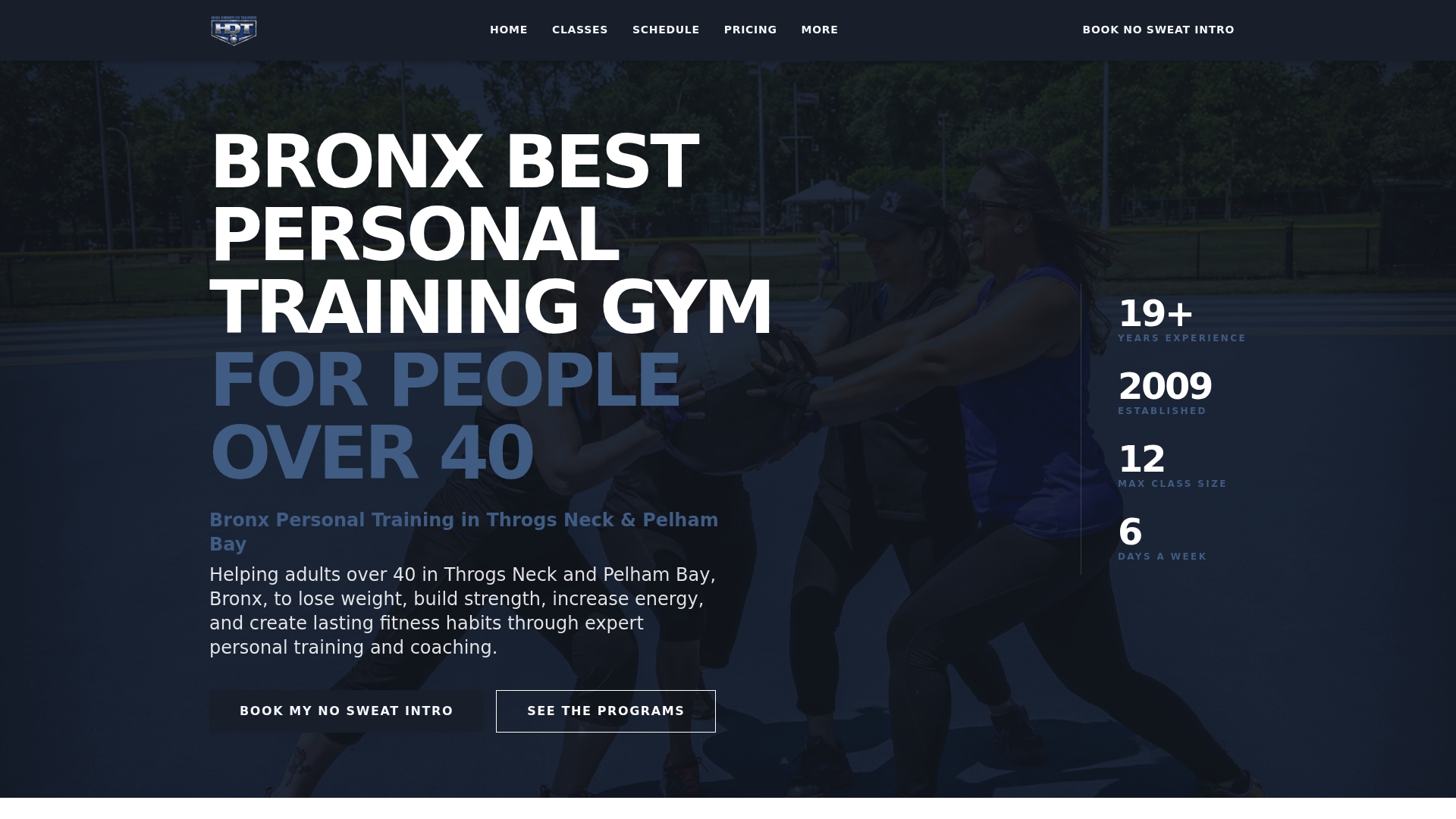
High Definition Training works specifically with adults over 40 in the Throgs Neck and Pelham Bay area of the Bronx. The introductory process is pressure-free: no hard sell, no assumption that you are starting from a fitness baseline you don’t have. Programs are built around your actual schedule, movement history, and goals, whether that means losing weight, building strength, or simply having enough energy to show up fully at work and at home.
The coaching covers both training structure and the habit architecture that keeps it going through demanding weeks. You get hands-on technique guidance, measurable progress tracking, and a community of adults navigating the same work-life pressures you are. Check available classes and programs or review pricing and membership options to find a format that fits your schedule and budget.
Useful sources and further reading
- Exercise Prescription for the Work–Life Population and Beyond (MDPI) — The primary IPET research review covering more than 20 RCTs and the evidence base for workplace-integrated exercise prescriptions.
- Fitness and Work-Life Balance: Optum Workplace Well-being — Practical guidance on integrating movement into the workday as a productivity strategy rather than an added obligation.
- How to Build a Fitness Routine That Survives a Demanding Career — Covers adaptive scheduling, the never-miss-twice rule, and why rigid rituals fail busy professionals.
- Fit-Focused: Celmira Turner’s Technical Blueprint — Practitioner-level detail on Sunday setup, HRV tracking, and treating meal prep as training infrastructure.
- The Role of Exercise in Achieving Work-Life Balance — Explains the “anchor” framing of exercise and its effect on emotional regulation and presence.
- Vitality for Professionals: Strategies for Resilience — Practical resilience and recovery frameworks for high performers managing demanding careers.
FAQ
What is the role of fitness in work-life balance?
Fitness creates the physical energy, stress resilience, and mental clarity that prevent work from consuming personal time. Regular movement lowers cortisol, improves sleep, and sharpens focus, all of which make it easier to be present both at work and at home.
What are the four pillars of work-life balance?
Definitions vary across frameworks, but a widely used version covers physical health (exercise and sleep), mental well-being (stress management and mindfulness), professional boundaries (time management and workload limits), and personal relationships (family, social connection, and recovery time).
What exactly is work-life balance?
Work-life balance is the sustainable distribution of time, energy, and attention between professional responsibilities and personal life, including health, relationships, and rest. It is less about equal hours and more about protecting recovery and presence in both domains.
What are practical examples of work-life balance with fitness?
Scheduling three 30-minute workouts as calendar appointments, taking a 10-minute walk between meetings, prepping proteins on Sunday to avoid poor weekday food choices, and applying the never-miss-twice rule when a session gets skipped are all concrete examples that fit real work schedules.
How much time per week does fitness actually require for meaningful benefit?
Meaningful fitness benefit does not require two-hour gym sessions. The evidence supports much shorter investments, and multiple short sessions throughout the week can support improvements, making micro-workouts a fully viable strategy for busy adults.