
TL;DR:
- High-efficiency gym sessions deliver maximum strength and cardiovascular benefits in 20 to 35 minutes using compound movements, supersets, and controlled rest.
- For adults over 40, three full-body workouts weekly optimize muscle growth, protect joints, and fit into busy schedules.
- Tracking progress and focusing on recovery enhance results from these time-efficient routines.
High-efficiency gym sessions are defined as structured workouts that deliver maximum strength and cardiovascular benefit in the shortest effective time, using compound movements, supersets, and precise rest periods. For adults over 40, this approach is not a shortcut. It is the scientifically supported standard. Muscle Protein Synthesis peaks 24–48 hours after stimulation, which means hitting each muscle group three times per week with full-body sessions produces three times the growth signals of a traditional split. Combine that with antagonist superset protocols and controlled tempo training, and you get workouts that protect joints, build strength, and fit inside a real schedule.
1. What are the most effective high-efficiency workout structures?
The three most proven structures for time-efficient fitness are the 3-day full-body split, antagonist supersets, and high-intensity low-volume training. Each one addresses a specific problem adults over 40 face: too little time, too much joint stress, or too slow a recovery.
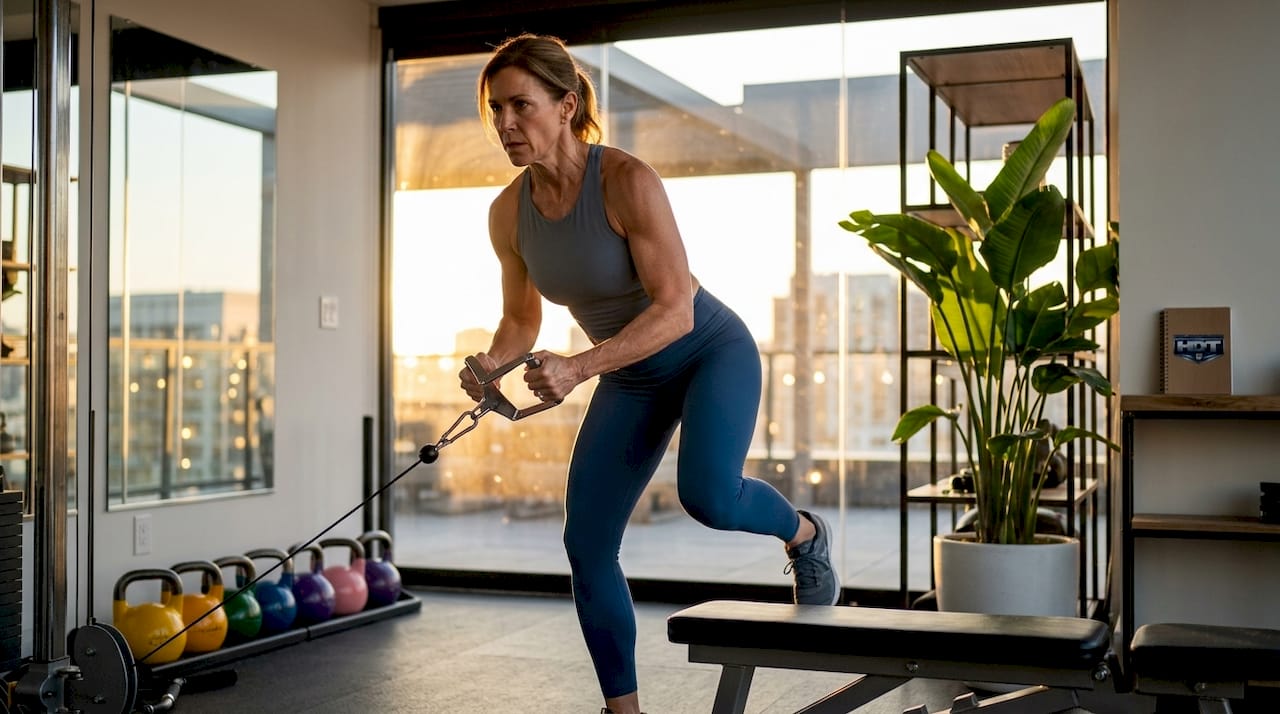
The 3-day full-body split hits every major muscle group three times per week. Full-body sessions three times weekly outperform traditional splits for adults over 40 because they align with the body’s recovery window and sustain growth stimulation without overloading any single session. That means less systemic inflammation and more consistent progress.
Antagonist supersets pair opposing muscle groups, such as a chest press followed immediately by a row. Antagonistic supersets cut total gym time by 40–50% without reducing total volume. One muscle rests while the other works, so you never waste a minute standing around.
High-intensity low-volume training focuses on effective reps rather than junk volume. Coach Jeff Cavaliere’s approach centers on effective reps with short rest-pause periods of 15–30 seconds to trigger better muscle growth than traditional high-rep sets. Quality beats quantity every time.
- Use a 2-second concentric and 3-second eccentric tempo on all lifts.
- Keep rest between supersets to 60–90 seconds.
- Track load and reps each session to define progress objectively.
- Prioritize compound movements: squats, presses, rows, and hinges.
Pro Tip: Never skip the eccentric phase. Lowering the weight slowly under control recruits more muscle fibers and reduces joint stress, which matters more after 40 than at any other age.
2. High-efficiency gym session example 1: 20-minute full-body superset routine
This is the entry point for adults who want results without a long time commitment. Minimalist routines using compound lifts and supersets produce 80–90% of hypertrophy and strength gains in 25% of the time, with sessions lasting 18–30 minutes. That finding alone should change how you think about gym time.
Structure: 3–4 rounds of 3 superset pairs. Rest 60 seconds between rounds.
- Superset A: Dumbbell bench press (15 reps) paired with dumbbell bent-over row (15 reps). No rest between exercises.
- Superset B: Goblet squat (15 reps) paired with Romanian deadlift (12 reps). Use a controlled 3-second lowering phase on both.
- Superset C: Overhead dumbbell press (12 reps) paired with cable or band pull-apart (15 reps).
- Finisher: Two sets of plank holds, 30 seconds each, with 20 seconds rest between.
Rep ranges sit at 12–15 for most movements. Start with 2 rounds and build to 5 over four to six weeks. Progress by adding one rep per set before increasing weight. This keeps load management safe and measurable.
The cardiovascular demand of moving between exercises with minimal rest elevates heart rate into a moderate aerobic zone. You get strength and conditioning work done simultaneously. That is the core advantage of this format for busy adults.
Pro Tip: Use dumbbells for this session if you are new to supersets. They are easier to swap quickly between exercises, which keeps your rest periods honest and your heart rate elevated.
3. High-efficiency gym session example 2: 35-minute full-body strength and conditioning workout
This session suits adults who have a baseline of training experience and want to blend heavy compound lifts with a conditioning finisher. Tracking training variables such as load, reps, and rest duration is what separates sustainable progression from stagnation. Write down every set.
Warm-up (5 minutes): Light cardio, bodyweight squats, hip circles, and shoulder rotations. This is not optional. Warm tissue moves better and resists injury.
Strength block (25 minutes):
- Barbell back squat: 3 sets of 8 reps, 90-second rest.
- Barbell bench press: 3 sets of 8 reps, 90-second rest.
- Romanian deadlift: 3 sets of 10 reps, 90-second rest.
- Pull-ups or lat pulldown: 3 sets of 8–10 reps, 90-second rest.
Conditioning finisher (5 minutes): Three rounds of 10 kettlebell swings followed by 10 push-ups, with 30 seconds rest between rounds. This finisher spikes metabolic demand without adding significant joint stress.
Progress the strength block by adding 5 pounds to lower-body lifts and 2.5 pounds to upper-body lifts every two weeks. If you miss reps, hold the weight and add one rep per set before moving up. This method prevents the ego-driven load increases that cause most injuries in adults over 40.
The balance and coordination demands of barbell squats and Romanian deadlifts also improve functional movement patterns. That carries over directly into daily life, which is a benefit no isolation machine can replicate.
4. High-efficiency gym session example 3: The Power Factor minimal-effort strength workout
Power Factor training is the most time-compressed example of high-intensity resistance training available. Power Factor training uses 30-second max-effort intervals on 10 compound exercises performed twice weekly. Total high-effort work amounts to roughly 2 minutes and 30 seconds per week. That number sounds impossible until you understand the mechanism.
The method splits into two workouts, each covering five exercises. You perform each exercise at maximum effort for 30 seconds, then rest fully before moving on. The exercises are compound movements: leg press, chest press, seated row, shoulder press, and lat pulldown in one session; leg curl, incline press, cable row, dip, and bicep curl in the other.
| Exercise | Duration | Effort Level | Rest |
|---|---|---|---|
| Leg press | 30 seconds | Maximum | Full recovery |
| Chest press | 30 seconds | Maximum | Full recovery |
| Seated row | 30 seconds | Maximum | Full recovery |
| Shoulder press | 30 seconds | Maximum | Full recovery |
| Lat pulldown | 30 seconds | Maximum | Full recovery |
Strength gains occur during recovery, not during the workout itself. Neural and muscular adaptations build between sessions. This is why Power Factor training works best with at least 72 hours between sessions and why adding extra sessions actually slows progress.
For adults over 40, this method removes the biggest barrier to consistency: time. Two sessions per week, each under 15 minutes of active work, fits into almost any schedule—progress by increasing the weight used during each 30-second interval every two to three weeks.
5. How to customize and implement high-efficiency sessions for individuals over 40
Customization is not optional. A beginner strength workout looks very different from an intermediate one, even when both use the same exercises. Start by matching session length and volume to your current recovery capacity, not your ambition.
- Tempo first, weight second. Use a 2-second lift and 3-second lower on every rep before adding load. Controlled tempo with a 2–3 second eccentric phase maximizes muscle fiber recruitment while protecting joints.
- Frequency over duration. Three shorter sessions per week beat one long session. 3-day full-body routines improve squat and bench press strength by 12% over 8 weeks while cutting gym time by up to 50%.
- Log everything. Record weight, reps, and rest time. This removes guesswork and shows you exactly when to progress.
- Pair sessions with daily habits. Schedule gym days on Monday, Wednesday, and Friday to align with natural weekly rhythms and protect weekend recovery.
- Reduce workout avoidance. Shorter sessions lower the psychological barrier to showing up. A sustainable fitness routine built on 20–35 minute sessions is one you will actually keep.
Strict form under fatigue is the non-negotiable rule. Maintaining strict form under fatigue prevents injury and sustains long-term training viability, especially for older adults. If form breaks, the set ends.
Key takeaways
The most effective approach to high-efficiency gym sessions for adults over 40 combines full-body compound movements, antagonist supersets, and controlled tempo to build strength and protect joints in 20–35 minutes per session.
| Point | Details |
|---|---|
| Full-body splits beat traditional splits | Three sessions per week produce three times the growth signals with less inflammation than six-day splits. |
| Supersets cut gym time nearly in half | Pairing push and pull movements reduces total session time by 40–50% without losing volume. |
| Power Factor training is the most time-compressed option | Two weekly sessions of 30-second max-effort intervals deliver strength gains in under 15 minutes of active work. |
| Tempo control protects joints | A 2–3 second eccentric phase on every rep recruits more muscle fiber and reduces joint stress for adults over 40. |
| Logging variables drives progression | Tracking load, reps, and rest time is the only reliable way to avoid plateaus and prevent injury. |
What I’ve learned training adults over 40 who have no time to waste
Most adults over 40 come to me believing they need to spend more time in the gym to see results. That belief is the first thing I work to change. The research is detailed, and my experience confirms it: duration is not the driver of progress. Intensity, recovery, and consistency are.
The clients who make the fastest gains are not the ones who train the longest. They are the ones who show up three times per week, push hard for 25–35 minutes, and then leave. They do not add extra sessions when progress slows. They add one rep or five pounds and trust the process.
The hardest part of training adults over 40 is not the physical work. It is the mindset shift from “more is better” to “better is better.” Supersets feel uncomfortable at first because they are unfamiliar, not because they are wrong. Once a client experiences a 20-minute session that leaves them genuinely fatigued, the argument for two-hour workouts disappears.
Recovery is where I see the most neglect. Adults over 40 who train hard three days per week and sleep poorly, eat poorly, or skip rest days will plateau faster than someone who trains twice per week and recovers well. The workout is the stimulus. Everything outside the gym is where the adaptation happens.
If you are over 40 and frustrated with your progress, the answer is rarely more gym time. It is smarter gym time.
— Angel
High Definition Training: built for adults who train with purpose
Adults over 40 in the Throgs Neck and Pelham Bay area of the Bronx have a specific resource for exactly this kind of training. High Definition Training builds personalized training plans around the principles covered here: full-body compound sessions, superset programming, and coached progression that protects joints while building real strength.
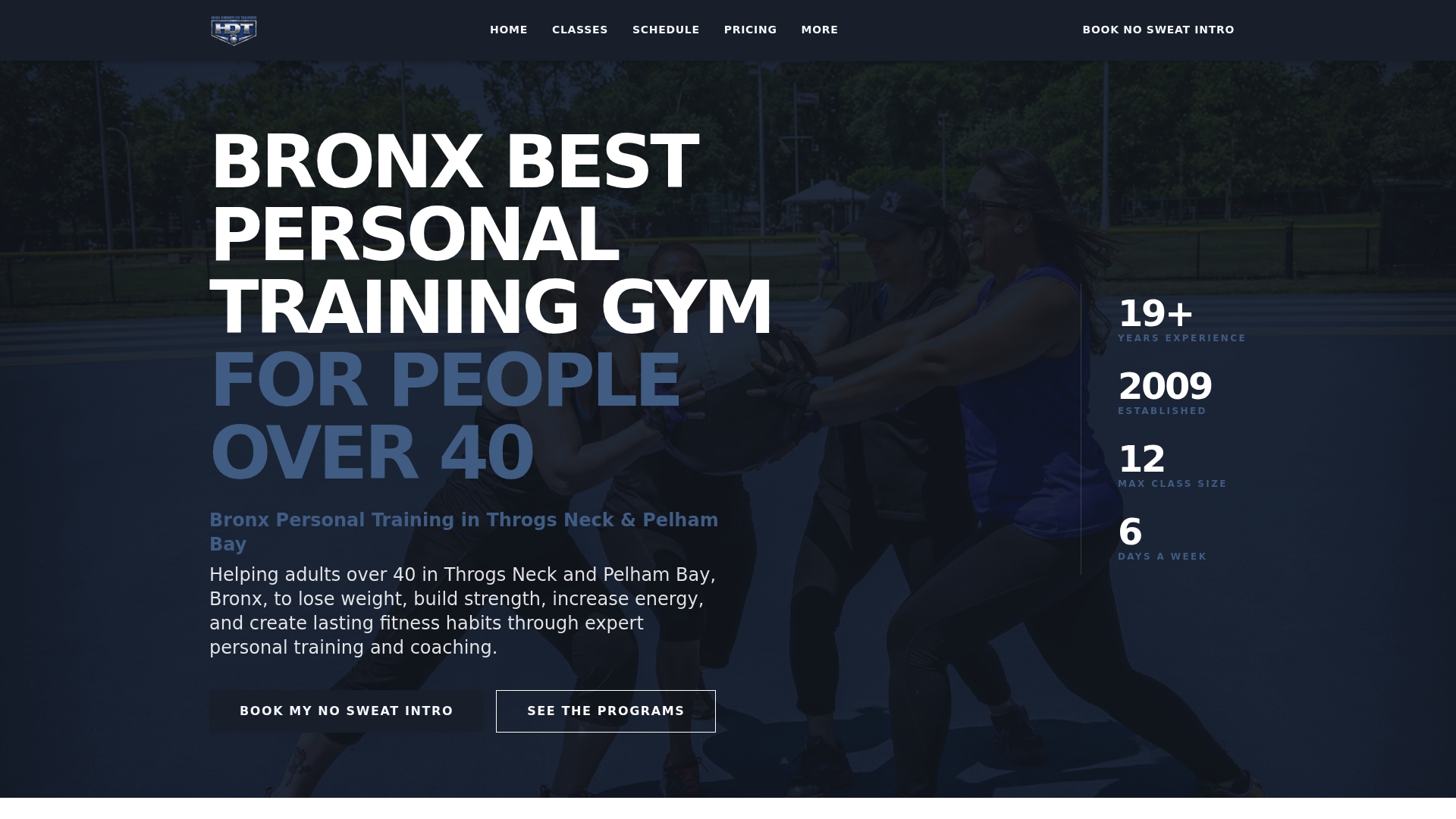
Every client at High Definition Training starts with a pressure-free introductory process. There is no guessing about where to begin or how to progress. Coaches track your load, reps, and recovery to make sure every session counts. If you want efficient workouts designed specifically for your body and schedule, visit High Definition Training to learn more about what is available for adults over 40 in the Bronx.
Ready to Maximize Your Gym Time?
Book your free No Sweat Intro and let’s build an efficient workout plan that fits your schedule.
FAQ
What counts as a high-efficiency gym session?
A high-efficiency gym session delivers maximum strength and conditioning benefit in 20–35 minutes using compound movements, supersets, and controlled rest periods. The goal is quality of effort, not length of time.
How many days per week should adults over 40 train?
Three full-body sessions per week is the most effective frequency for adults over 40. This schedule aligns with the 24–48-hour Muscle Protein Synthesis window and reduces systemic inflammation compared to six-day splits.
Are supersets safe for older adults?
Antagonist supersets are safe and well-suited for adults over 40 when performed with controlled tempo and appropriate load. Pairing push and pull movements allows partial muscle recovery between exercises, which reduces cumulative joint stress.
How long before I see results from short gym sessions?
Research shows that 3-day full-body routines improve squat and bench press strength by 12% over 8 weeks. Most adults notice measurable strength gains within four to six weeks when sessions are consistent and progressive.
What is the Power Factor workout method?
Power Factor training uses 30-second maximum-effort intervals on compound exercises performed twice weekly. Total active training time is roughly 2 minutes and 30 seconds per week, with strength gains driven by full recovery between sessions.