TL;DR:
- Resistance training helps women over 40 reverse muscle loss, improve balance, and strengthen bones effectively.
- Starting with simple equipment, setting functional goals, and focusing on consistency and proper nutrition ensures safe progress.
- Regular, progressive strength workouts support lasting health and functional independence beyond menopause.
Resistance training is the most effective tool women over 40 have to reverse age-related muscle loss, improve balance, and protect bone density. The medical term for this practice is resistance exercise, though “strength training” is the widely used everyday term. Research shows that resistance training in peri- and post-menopausal women produces a 19% increase in hip function and lower-body strength after just 12 weeks. That result alone makes a compelling case for starting strength training over 40 rather than waiting. The American College of Sports Medicine (ACSM) and the CDC both endorse muscle-strengthening exercise for adults at every stage of life, and the science behind those recommendations has only grown stronger.
How to start strength training over 40 safely
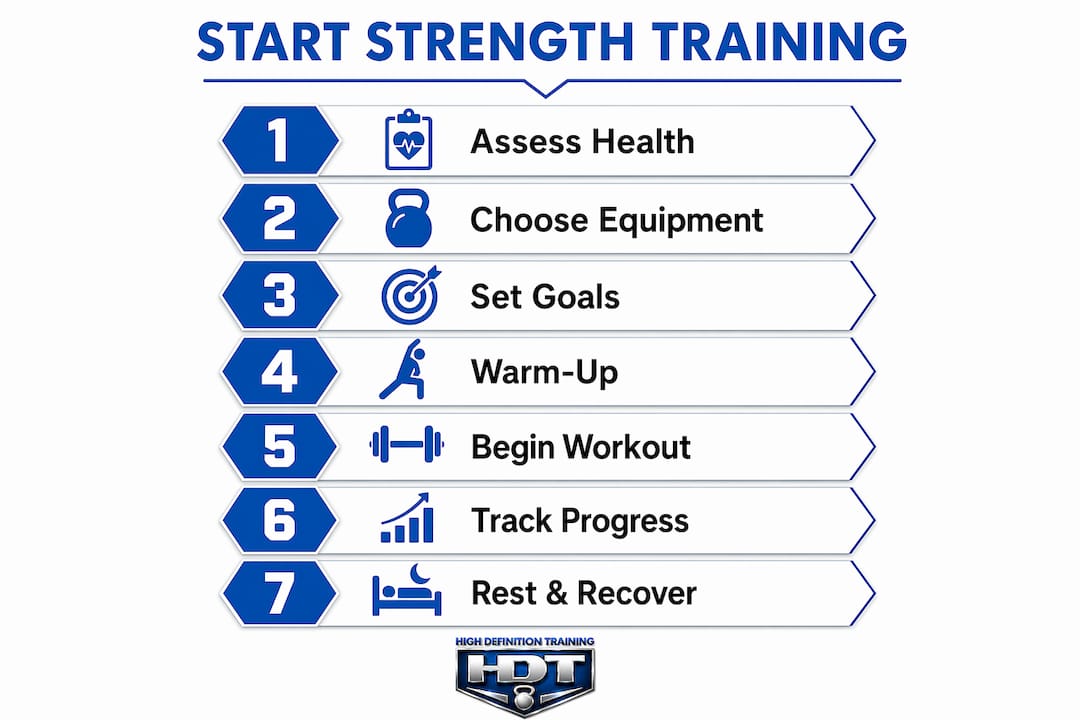
Before you lift a single weight, three things matter: your equipment, your health baseline, and your mindset about what progress looks like.
What equipment do you actually need?
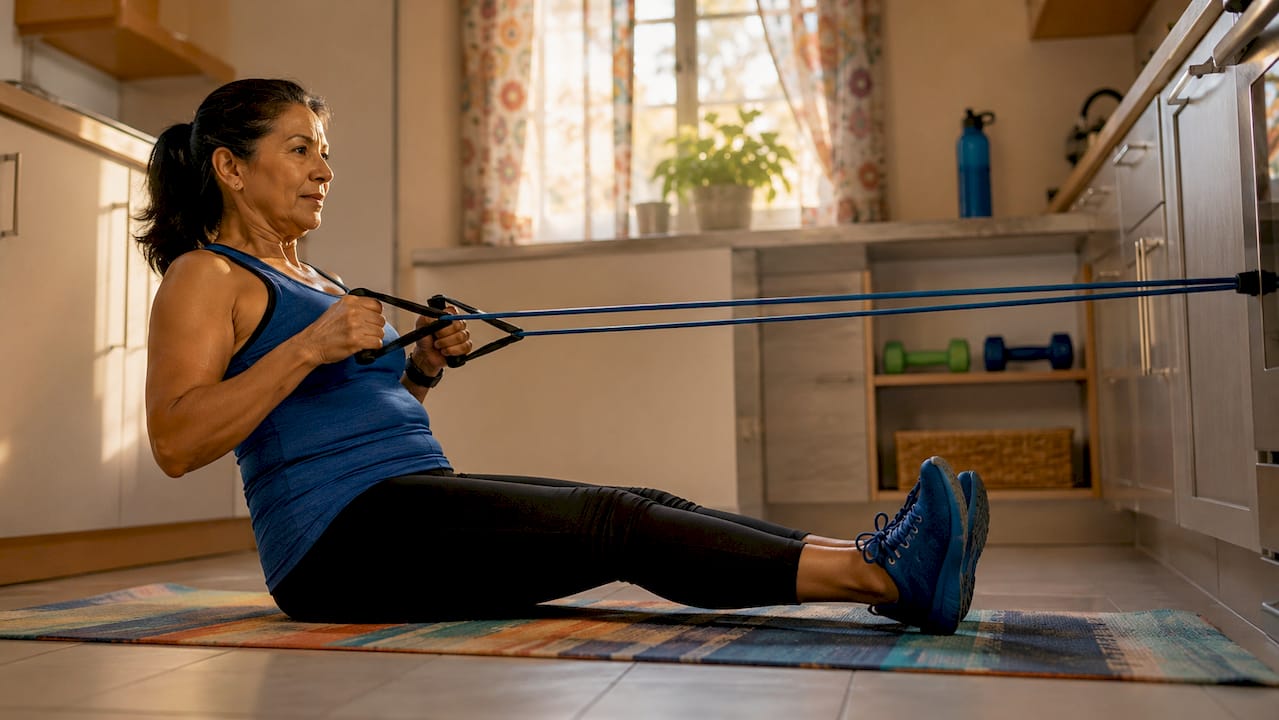
The barrier to entry is lower than most women expect. A pair of light dumbbells (5–15 lbs), a set of resistance bands, and a sturdy chair cover the full range of beginner strength workouts over 40. You do not need a full gym membership or expensive machines to build real strength. Many women at High Definition Training started with nothing more than a resistance band and bodyweight movements before adding load.
Health checks before you begin
If you have osteoporosis, fibromyalgia, or chronic joint pain, consult your doctor before starting a new program. These conditions do not disqualify you from strength training. They do require modifications, such as avoiding high-impact loading on the spine or choosing seated variations of standing exercises. Getting medical clearance takes one appointment and removes the guesswork about what is safe for your body.
Setting the right goals
Set goals around function, not appearance. Can you carry groceries up two flights of stairs without stopping? Can you get up from the floor without using your hands? These are the benchmarks that matter most for long-term health. Aesthetic changes follow functional improvements, not the other way around.
Pro Tip: Write down three functional goals before your first session. Review them monthly. Functional goals keep you motivated when the mirror feels slow to respond.
Warm-up basics
Every session should begin with 5–8 minutes of light cardio (walking in place, marching, or cycling on a stationary bike) followed by dynamic stretching. Hip circles, leg swings, and arm circles prepare your joints without the stiffness that static stretching before exercise can cause. Skipping the warm-up is the single fastest way to turn a productive session into an injury.
| Equipment | Best for | Cost range |
|---|---|---|
| Light dumbbells (5–15 lbs) | Upper and lower body strength | Low |
| Resistance bands | Joint-friendly pulling and pushing | Very low |
| Sturdy chair | Balance support, seated exercises | Free |
| Yoga mat | Floor work, core exercises | Low |
What does a beginner strength workout look like?
A well-structured beginner program for women over 40 follows a simple pattern: compound movements, moderate reps, and two full-body sessions per week.
The core movement categories
Every session should include one exercise from each of these five categories:
- Squat pattern (goblet squat, chair squat, box squat): builds quad and glute strength, protects the knee joint when performed with proper alignment.
- Hip hinge (Romanian deadlift, kettlebell deadlift): strengthens the posterior chain, including hamstrings and lower back, which supports posture and reduces back pain.
- Push (wall push-up, incline push-up, dumbbell chest press): develops chest, shoulder, and triceps strength for everyday pushing tasks.
- Pull (resistance band row, dumbbell row): counterbalances pushing movements and builds upper back strength, which directly improves posture.
- Core (dead bug, bird dog, Pallof press): trains the muscles that stabilize the spine during every other movement.
Frequency, reps, and sets
The CDC and ACSM recommend muscle-strengthening activities on 2 or more non-consecutive days per week for adults. Two full-body sessions per week is the right starting point. Three sessions per week becomes a natural progression after 6–8 weeks. Aim for 2–3 sets of 8–12 reps per exercise, using a weight that feels challenging by rep 10 but does not break your form.
The 3-3-3 tempo rule
Use a 3-second lowering phase, a 1-second pause, and a 3-second lifting phase on every rep. This tempo removes momentum from the movement, which forces your muscles to do the actual work. It also protects your joints by avoiding the jarring impact of fast, uncontrolled reps. Most beginners find this tempo surprisingly difficult at first, which is a sign it is working.
Progressive overload done right
Progressive overload means gradually increasing the demand on your muscles over time. The most reliable method for beginners is double progression: first increase reps within your target range (say, from 8 to 12), then increase the weight and drop back to 8 reps. This approach matches progression to your actual capacity rather than an arbitrary schedule.
Pro Tip: Log every session. Write down the exercise, weight, sets, and reps. A lifting log gives you objective proof of progress when motivation dips.
What mistakes should you avoid when starting after 40?
The most common mistake women make when starting strength training after 40 is lifting too heavy too soon. Ego lifting leads to poor form, which can cause injury and end the program entirely. The lightest dumbbells in the rack are often the right starting point.
Soreness vs. injury: know the difference
Delayed-onset muscle soreness (DOMS) peaks at 24–48 hours after a session and feels like a dull ache in the worked muscles. It is normal and fades within 72 hours. Sharp pain during movement, joint pain, or pain that worsens over days is an indication of an injury. Stop the exercise immediately if you feel sharp or localized pain, and do not train through it.
Adaptations for specific conditions
Women with osteoporosis should avoid loaded spinal flexion (crunches, toe touches) and focus on hip hinge patterns and standing exercises that load the skeleton safely. Women with fibromyalgia benefit from shorter sessions (20–30 minutes) with longer rest periods between sets. Joint pain often responds well to resistance bands, which provide variable resistance and reduce peak joint stress compared to free weights.
“Recovery capacity declines with age, and longer rest between sessions is not a weakness. It is a biological reality that smart programming accounts for.”
Recovery is training
Recovery capacity declines with age, which means rest days are not optional. Sleep quality directly affects muscle repair and hormonal balance. Aim for 7–9 hours per night. Nutrition on rest days matters as much as on training days because muscle protein synthesis continues for up to 48 hours after a session.
Pro Tip: Rate your energy and soreness on a scale of 1–10 before each session. If both scores are above 7, reduce the session volume by half rather than skipping it entirely.
How does nutrition support strength training after 40?
Protein is the single most important dietary factor for building muscle after 40. Most women in this age group consume far less than the amount needed to support strength gains.
Protein targets that actually work
Protein intake of 1.0–1.5 g per kg of bodyweight per day, split across 3–4 meals of 30–35g each, maximizes muscle protein synthesis. For a 150-lb (68 kg) woman, that means roughly 68–102g of protein daily. Spreading intake across meals matters because the body can only use a limited amount of protein for muscle building at one time.
Supplements worth considering
Creatine monohydrate at 3–5g daily improves strength, lean mass, and functional capacity in adults over 40. No loading phase is needed. The International Society of Sports Nutrition has confirmed its safety and effectiveness. It is one of the most studied supplements in existence and one of the few with consistent evidence behind it.
Lifestyle habits that compound your results
- Sleep: 7–9 hours per night supports muscle repair and keeps cortisol (a muscle-breaking hormone) in check.
- Hydration: Aim for at least half your bodyweight in ounces of water daily. Dehydration reduces strength output and slows recovery.
- Daily walking: 6,000 to 8,000 daily steps reduces mortality risk progressively in older adults. Walking at a conversational pace on rest days supports circulation without adding recovery debt.
- Anti-inflammatory foods: Fatty fish, berries, leafy greens, and olive oil reduce systemic inflammation that can slow recovery and increase joint discomfort.
| Nutrition factor | Target | Why it matters |
|---|---|---|
| Protein intake | 1.0–1.5 g/kg/day | Drives muscle protein synthesis |
| Meal frequency | 3–4 meals with 30–35g protein each | Maximizes absorption and use |
| Creatine monohydrate | 3–5g daily | Proven strength and lean mass gains |
| Daily steps | 6,000–8,000 | Reduces mortality risk, aids recovery |
| Sleep | 7–9 hours | Supports hormonal balance and repair |
Key Takeaways
Women over 40 who start resistance training with proper technique, consistent frequency, and adequate protein intake build real, measurable strength regardless of hormonal changes.
| Point | Details |
|---|---|
| Start with two sessions per week | Two full-body sessions on non-consecutive days are the safest, most effective starting frequency. |
| Prioritize compound movements | Squats, hip hinges, pushes, pulls, and core work deliver the most functional benefit per session. |
| Use progressive overload | Increase reps first, then weight, to match progression to your actual capacity. |
| Protein drives muscle gains | Aim for 1.0–1.5 g/kg/day split across 3–4 meals to support muscle repair and growth. |
| Recovery is non-negotiable | Rest days, quality sleep, and daily walking are as important as the training sessions themselves. |
What I’ve learned coaching women who start after 40
The women who make the most progress are not the ones who train the hardest in the first month. They are the ones who show up consistently for the first six months. That pattern holds without exception in my experience.
The fear I hear most often is “I’m too old to build muscle.” That fear is wrong. Hormonal changes from menopause do not prevent strength gains. They slightly adjust the timeline and emphasize the importance of recovery, but they do not close the door. Women in their 50s and 60s build meaningful strength every week at High Definition Training.
The second mistake I see is comparing progress to a 25-year-old. Your body is not competing with a 25-year-old. It is competing with the version of you that does nothing. Viewed through that lens, strength training as a lifelong tool for functional independence is not a consolation prize. It is the actual goal.
Start lighter than you think you need to. Master the movement. Add load when the form is clean. Track everything. That approach is not cautious. It is the fastest path to results that last.
— Angel
Strength training support for women over 40 in the Bronx
High Definition Training was built specifically for adults over 40 in the Throgs Neck and Pelham Bay area of the Bronx. Every program starts with a pressure-free introduction designed to meet you where you are, not where a generic fitness plan assumes you should be.
Coaches at High Definition Training provide hands-on technique guidance, track your progress with measurable benchmarks, and adjust your plan as your strength grows. If you are ready to move from reading about beginner strength workouts to actually doing them with expert support, check out the available training classes and schedule to find the right fit for your goals and availability.
FAQ
How often should women over 40 strength train per week?
The CDC and ACSM recommend at least two muscle-strengthening sessions per week on non-consecutive days. Two sessions is the right starting point, with three sessions becoming a natural progression after 6–8 weeks.
Can women over 40 build muscle after menopause?
Yes. Hormonal changes from menopause do not prevent muscle growth. Research shows that resistance training produces significant gains in strength and flexibility in postmenopausal women within 12 weeks.
What are the best exercises after 40 for beginners?
Compound movements deliver the most benefit: goblet squats, Romanian deadlifts, resistance band rows, incline push-ups, and dead bugs. These exercises build functional strength across multiple muscle groups simultaneously.
How much protein do women over 40 need to build muscle?
Aim for 1.0–1.5 g of protein per kg of body weight daily, split across 3–4 meals of 30–35 g each. Most women in this age group consume significantly less than this amount, which limits their strength gains.
Is strength training safe with joint pain or osteoporosis?
Yes, with appropriate modifications. Women with osteoporosis should focus on hip hinge patterns and standing exercises rather than loaded spinal flexion. Resistance bands reduce peak joint stress and work well for women managing chronic joint discomfort.
Recommended
- Beginner Strength Workouts for Women Over 40: A Guide
- Home Workout Plan for Women Over 40 That Works
- Why Professional Women Need Strength Training After 40
- Strength Training for Career Women
Ready to Build Real Strength?
Join our supportive community of women over 40 in the Bronx. Book your free No Sweat Intro today and let’s discuss how we can help you achieve your goals safely and effectively.