
How Professional Fitness Communities Drive Real Motivation
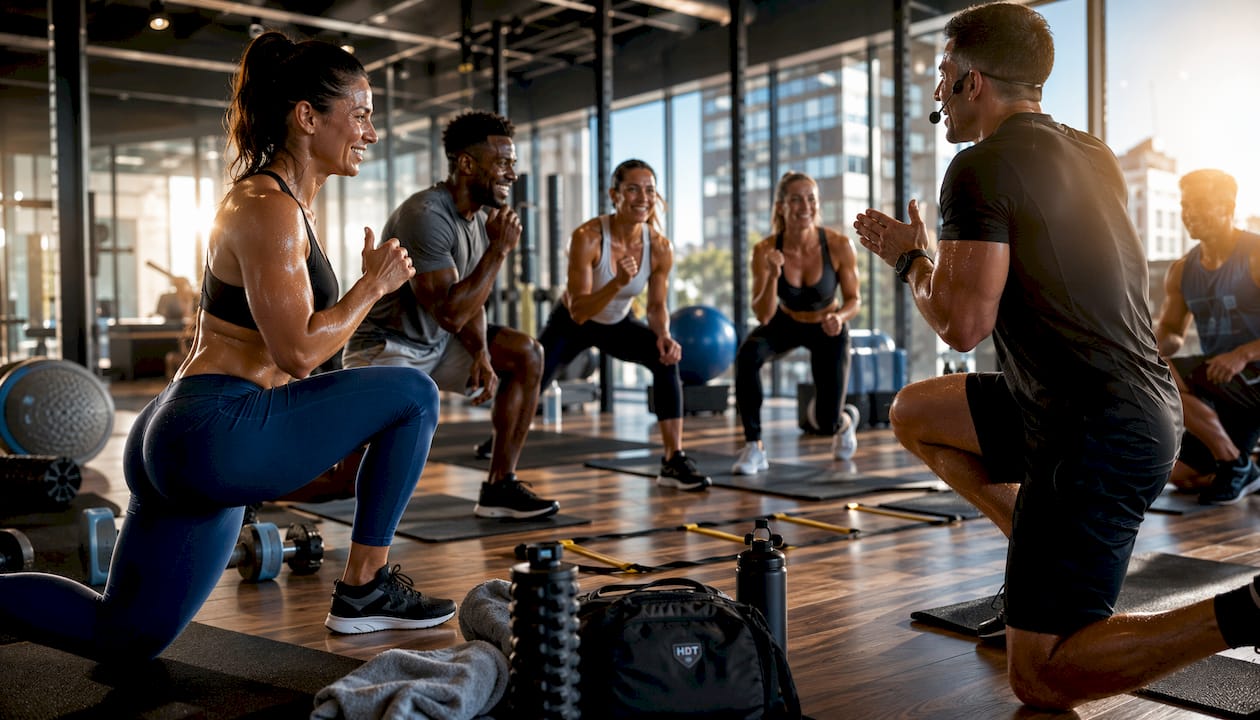
Professional fitness communities are among the most reliable sources of motivation available to anyone trying to build a consistent exercise habit. They work not because people enjoy company, but because structured social environments satisfy three core psychological needs: relatedness, competence, and autonomy. When a fitness professional deliberately designs a community around those needs, attendance climbs, dropout rates fall, and members develop what researchers call an "exercise identity" — a self-concept that makes skipping a workout feel genuinely out of character.
The role of professional community fitness motivation goes beyond cheerleading. It operates through specific mechanisms:
- Social support in multiple forms (emotional, informational, validation, companionship) strengthens the link between group membership and weekly physical activity
- Accountability structures created by professionals keep members visible to each other and to coaches
- Mastery-focused feedback from trained instructors builds competence faster than self-directed trial and error
- Reciprocity and trust within a group, according to 2026 research, function as direct antecedents of intrinsic motivation and long-term exercise intention
- Scheduled, repeated contact compounds relationships in ways that drop-in models never achieve
Table of Contents
- How fitness communities boost motivation and consistency
- How to build a fitness community that actually holds together
- What fitness professionals actually do to sustain community motivation
- What successful professional fitness communities look like in practice
- Strategies fitness professionals use to sustain long-term engagement
- How digital fitness communities extend motivation beyond the gym
- How to measure whether your fitness community is actually working
- High Definition Training: built for adults who need more than a gym
- FAQ
- Key Takeaways
How fitness communities boost motivation and consistency
The gap between exercising alone and exercising inside a well-run community is measurable. Members who train with a friend visit gyms more frequently than those who train solo. That figure reflects something deeper than social preference: shared goals create mutual obligation, and mutual obligation is a far more durable motivator than willpower.
Group membership also shapes identity. PMC research on group exercise found that belonging to an exercise group is associated with higher levels of emotional, companionship, validation, and informational support, all of which predict a stronger exercise identity. People who see themselves as exercisers are not just more active — they are more consistent across different settings and circumstances.
Mental health benefits compound the physical ones. Group participation reduces isolation, builds self-confidence, and generates positive achievement emotions that reinforce the habit loop. A community member who feels seen and supported is far less likely to disappear after a hard week quietly.
- Peer observation accelerates skill acquisition through modeling
- Shared milestones (group challenges, progress check-ins) sustain engagement between sessions
- Emotional support buffers against the discouragement that derails solo exercisers after setbacks
How to build a fitness community that actually holds together
The most common mistake fitness facilities make is treating community as a byproduct of programming. It is not. Research on gym retention is clear: community is a system of ongoing personal touches, not a series of events.
Fixed schedules matter more than most operators realize. Small groups that meet at the same time each week force repeated social contact. Relationships compound with exposure, and that compounding is what turns a class into a community. Flexible, come-when-you-want models undercut this entirely.
Front desk culture sets the tone before any workout begins. Staff who greet members by name and ask about their goals create a sense of belonging that no programming decision can replicate. Studies say staff who learn member names and ask about goals can name 80% of daily visitors, setting culture tone.
Events generate energy and referrals, but they do not retain members on their own. What retains members is the personal follow-up after the event — the text message, the check-in at the next session, the coach who noticed someone missed a class. Digital tools (habit-tracking apps, group messaging channels, virtual challenges) extend that personal touch between in-person sessions, maintaining emotional connection when members are not physically present.
What fitness professionals actually do to sustain community motivation
Fitness professionals are not passive facilitators. A 2025 meta-analysis found that group cohesion does not arise naturally — it requires professional design. Positive social dynamics in group settings must be intentionally engineered, not assumed.
Effective professionals deliver autonomy-supportive coaching: they give members choices, explain the rationale behind programming decisions, and frame feedback around mastery rather than comparison. This approach satisfies the psychological need for competence without triggering the defensiveness that performance-ranking systems often create.
The most effective fitness professionals monitor attendance and conversation patterns to catch disengagement before it becomes dropout. Retention-focused communities prioritize personal follow-ups to members showing early warning signals over large-scale event planning.
Blending live coaching with digital touchpoints is now standard practice among high-performing fitness professionals. Combining in-person training with digital tools — habit tracking, direct messaging, virtual challenges — maintains motivation and emotional depth between physical sessions. A coach who sends a timely check-in message after a missed session communicates something no algorithm can: that the member's absence was noticed and their return matters.
A 2025 study on social support and exercise found that feedback literacy strengthens the relationship between social support and physical exercise linearly. Members who understand how to receive and use feedback get more out of every coaching interaction, which means professionals who teach feedback skills are compounding their motivational impact over time. Fitness tracking tools, covered in depth in High Definition Training's guide for professionals, help coaches deliver that kind of data-informed feedback consistently.

What successful professional fitness communities look like in practice
The most instructive examples share a common architecture: strong brand identity, deliberate culture-building, and leaders who treat community as a core deliverable rather than a side effect.
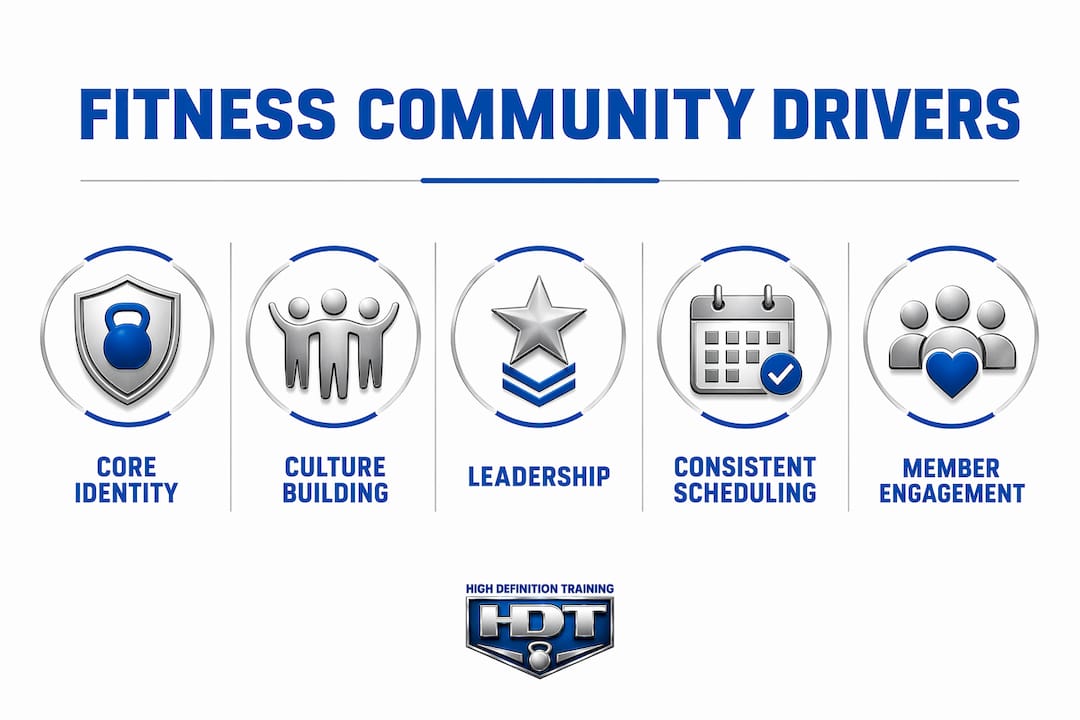
Group extreme conditioning programs have become a widely studied model. 2026 research on these programs found that their rapid growth and high retention rates are explained by social capital: trust, reciprocity, and a shared identity grounded in common values. Members do not just work out together — they exchange information, support each other outside the gym, and identify with the brand's culture. That identity-level connection is what separates a thriving community from a class with good attendance.
Boutique fitness studios that assign members to consistent small groups, use coaches who learn every member's name and goal, and follow up personally after absences consistently outperform larger facilities on retention metrics. The mechanism is not a mystery: repeated exposure, personal recognition, and timely follow-up create a sense of belonging, and belonging drives return visits.
Strategies fitness professionals use to sustain long-term engagement
Long-term engagement does not happen by accident. The professionals who sustain it use a recognizable set of practices, applied consistently over months and years.
Milestone recognition keeps members emotionally invested. Acknowledging a first unassisted pull-up, a weight-loss goal reached, or six months of consistent attendance signals to the member that their progress is seen. Public recognition within the community also reinforces the group's shared values.
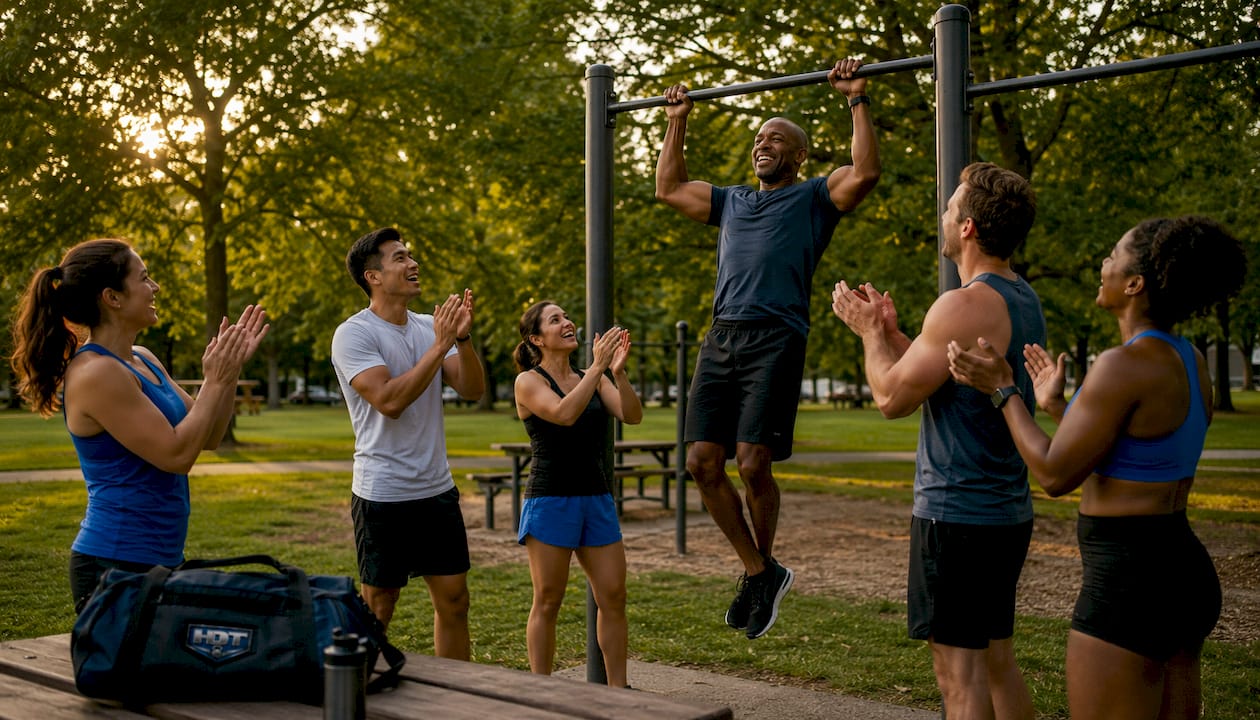
Progressive goal-setting prevents the plateau effect that kills motivation. Professionals who regularly update member goals — moving from weight loss to strength benchmarks to performance targets — give members a continuous reason to show up. The role of fitness support is partly about keeping the destination visible when daily effort feels routine.
Peer leadership development extends the professional's reach. Members who take on informal mentoring roles within the community become retention assets: they recruit friends, support newer members, and deepen their own commitment in the process.
Structured social extension beyond the workout setting reinforces community bonds. Group social events, online forums, and shared challenges outside the gym hours extend the community feeling into daily life, which research on social capital confirms strengthens intrinsic motivation.
How digital fitness communities extend motivation beyond the gym
Online and standard face-to-face groups produce broadly similar outcomes on physical activity, psychological, and functional measures, according to a 2025 meta-analysis. The critical variable is not the medium but the quality of interaction: accountability, shared goals, and social support transfer effectively to virtual environments when the community is intentionally designed.
Digital communities remove geographic and scheduling barriers that prevent many adults from accessing in-person groups. For adults over 40 managing work, family, and health considerations, an app-based accountability group or a coached virtual challenge can maintain motivation through weeks when in-person attendance is impossible.
The most effective hybrid models use digital tools to extend the emotional depth of live sessions, not replace them. A coach who delivers a live session and then follows up through a messaging channel maintains community engagement between encounters. Virtual challenges, habit streaks, and group leaderboards add a layer of friendly competition that sustains daily effort without requiring physical co-presence.
How to measure whether your fitness community is actually working
Measuring community effectiveness requires looking beyond attendance numbers. Attendance is a lagging indicator — by the time it drops, disengagement has already been underway for weeks.
Leading indicators worth tracking:
- Session-to-session return rate: the percentage of members who attend the following session after each visit
- Referral rate: members who bring a friend are demonstrating community investment, not just personal satisfaction
- Engagement signals: responses to coach messages, participation in group challenges, and social media interaction all reflect emotional investment before it shows up in attendance
- Qualitative feedback: brief post-session check-ins or monthly surveys surface disengagement signals that attendance data misses
A 2025 meta-analysis on individual versus group-based physical activity interventions found that group approaches showed superiority on functional outcomes after accounting for outliers, and that "true groups" — those actively employing group dynamics principles — produced larger health outcome effect sizes than standard exercise classes. That distinction gives fitness professionals a concrete benchmark: a class where people merely coexist is not a community, and its outcomes will reflect that.
Automated systems can flag attendance pattern changes, but the follow-up must be human. A coach who calls a member after two missed sessions does something no dashboard can: they make the member feel that their absence created a gap in the community, not just a gap in their own routine.
High Definition Training: built for adults who need more than a gym
Adults over 40 in the Bronx's Throgs Neck and Pelham Bay neighborhoods face a specific challenge: most gyms are not designed for them. High Definition Training is.
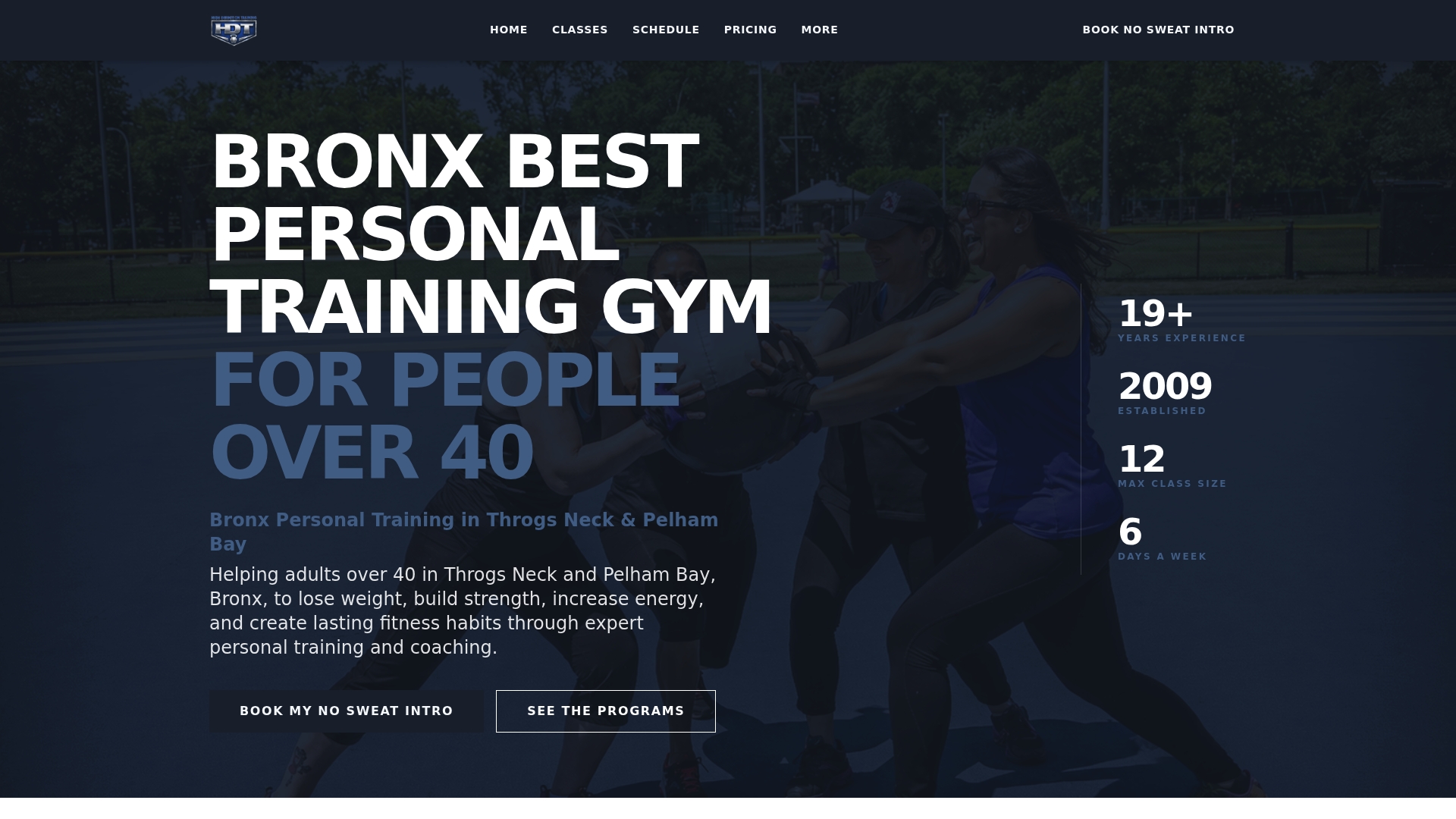
The facility specializes in personal training and coaching for adults over 40, with a pressure-free introductory process, personalized programming, and hands-on coaching that prioritizes safe progression over ego-driven intensity. The community at High Definition Training is not incidental — it is built into the structure of every session, with coaches who know members by name, track progress with measurable results, and follow up when someone goes quiet. Many clients have reached significant health milestones within weeks of starting. If you are ready to train in an environment where your progress is genuinely tracked and your presence genuinely noticed, explore the classes and schedule at High Definition Training.
FAQ
Why is community fitness important for staying consistent?
Community fitness creates accountability, social support, and a shared identity that make regular exercise feel less optional. Research shows that group exercise membership is associated with higher levels of emotional, companionship, and validation support, all of which predict stronger exercise identity and more weekly physical activity.
What motivates people to keep exercising in a group setting?
Trust, reciprocity, and a sense of shared identity are the most influential motivators in group fitness contexts. A 2026 study found that these dimensions of social capital directly and indirectly drive exercise intention, primarily by enhancing intrinsic motivation.
What are the main benefits of joining a professional fitness group?
Members gain accountability, mastery-focused feedback, emotional support, and a social identity tied to regular exercise. Members who train with a friend visit gyms more frequently than those who train alone, reflecting the concrete behavioral impact of social connection.
Do online fitness communities work as well as in-person ones?
Yes, when interaction quality is high. A 2025 meta-analysis found that online and standard face-to-face groups produced broadly similar outcomes on physical activity and psychological measures, with the quality of social support and accountability mattering more than the delivery format.
How does High Definition Training build community motivation for adults over 40?
High Definition Training uses personalized coaching, consistent small-group structures, and hands-on follow-up to foster a sense of belonging that sustains long-term fitness habits, specifically for adults over 40 in the Bronx who need programming tailored to their actual needs and goals.
Key Takeaways
Professional fitness communities drive motivation through deliberate social design, not proximity alone — and fitness professionals are the architects who make that design work.
| Point | Details |
|---|---|
| Social connection drives attendance | Members who train with a friend visit gyms more frequently than those who train alone. |
| Group identity shapes behavior | Group exercise membership predicts stronger exercise identity, which in turn predicts more weekly physical activity. |
| Trust and reciprocity are the key levers | In group fitness contexts, trust and reciprocity are the most influential social capital dimensions for sustaining exercise intention. |
| Digital communities are equally effective | Online and face-to-face groups produce broadly similar outcomes when interaction quality and social support are maintained. |
| High Definition Training | Offers structured, community-driven personal training for adults over 40 in the Bronx, with coaching designed to build lasting fitness habits. |