TheDefinitionGym.com Alternatives for Bronx Adults 40+
July 20, 2026
TL;DR:
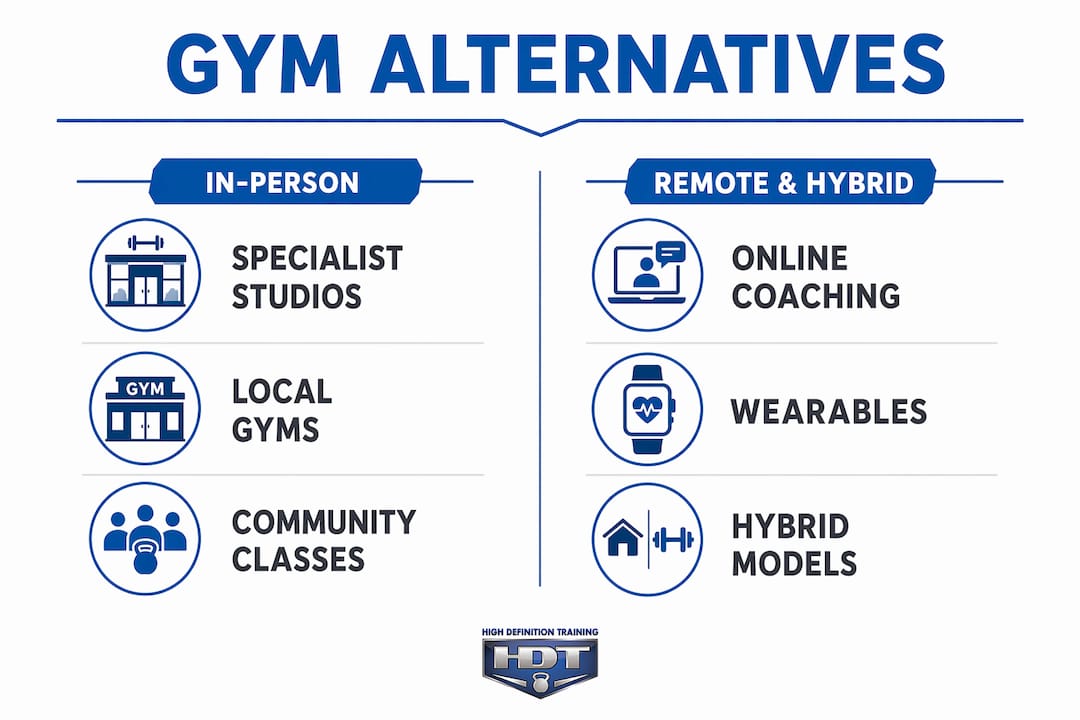
- If you're searching for TheDefinitionGym.com alternatives in the Bronx, the fastest fit for adults over 40 is a local specialist studio that leads with a movement assessment, not a sales pitch. High Definition Training in Throgs Neck and Pelham Bay is the most Bronx-accessible option built specifically for this age group. Beyond that, three other categories are worth knowing: boutique studios, hybrid coaching, and online 1:1 coaching.
If you're searching for TheDefinitionGym.com alternatives in the Bronx, the fastest fit for adults over 40 is a local specialist studio that leads with a movement assessment, not a sales pitch. High Definition Training in Throgs Neck and Pelham Bay is the most Bronx-accessible option built specifically for this age group. Beyond that, three other categories are worth knowing:
- Local boutique studios specializing in 40+: Hands-on coaching, movement screening, and a community that normalizes longevity-focused training over aesthetics.
- Hybrid coaching (local + app): Hybrid models combine one to two in-person sessions with remote check-ins, cutting cost without cutting accountability.
- Online 1:1 coaching with HRV tracking: Best for self-directed adults who already have a baseline and want objective recovery monitoring built in.
- Independent certified trainers (house calls): Flexible scheduling, no gym overhead, and fully personalized programming.
The comparison table below breaks down how each option stacks up on the dimensions that actually matter.
Table of Contents
- What are the best gym alternatives to TheDefinitionGym.com for adults 40+?
- How do you choose the right alternative when you're over 40?
- What should a proper introductory session include for adults 40+?
- Why do HRV monitoring and daily readiness checks matter after 40?
- Why High Definition Training fits Bronx adults 40+ looking for alternatives
- What timeline and cost should you realistically expect?
- Key Takeaways
- What actually separates good coaching from the rest at this age
- High Definition Training is the local alternative built for you
- Useful sources and further reading
- FAQ
What are the best gym alternatives to TheDefinitionGym.com for adults 40+?
| Option Type | Best For | Delivery Model | Hands-On Coaching | Tech (HRV/Wearables) | Community & Vibe | Bronx / North America | Price / Trial | Timeline to Results |
|---|---|---|---|---|---|---|---|---|
| Local boutique (40+ specialist) | Injury prevention, personalized progression | In-person, small group | High | Moderate | Inclusive, longevity-focused | Bronx-accessible | Trial often available | Functional improvements typically appear within 2–6 weeks |
| Hybrid coaching | Cost control, flexibility | 1–2 in-person + app | Moderate | High | Remote-supported | North America-wide | Cost varies; app add-on available | Functional improvements typically appear within weeks |
| Online 1:1 with HRV | Self-directed adults, travel-heavy schedules | Fully remote | Low | High | Minimal | North America-wide | Price varies widely | Functional improvements typically appear within weeks |
| Independent certified trainer | Maximum flexibility, house calls | In-person, 1:1 | High | Varies | None | Bronx-accessible | Price varies by provider | Functional improvements typically appear within weeks |
| High Definition Training | Bronx adults 40+ needing full-service coaching | In-person local + hybrid | High | Yes | Supportive, age-appropriate | Throgs Neck / Pelham Bay | Trial available; see pricing | Functional improvements typically appear within a few weeks |
Price note: In-person sessions across major US cities typically run $60–$150. Online packages vary widely. High Definition Training offers an introductory process designed to be pressure-free; check the classes and pricing page for current availability.
A supportive training environment that normalizes longevity-focused training consistently outperforms purely performance-oriented gyms on long-term retention for older adults.
How do you choose the right alternative when you're over 40?
Start with credentials. Look for NASM, NSCA, ACE, or ACSM certification plus continuing education in corrective exercise, functional movement screening, or post-rehab training. A baseline cert alone is not enough for this population.
Eight questions to ask before booking a trial:
- What does your first session look like — is it a workout or a movement assessment?
- How do you screen for pain triggers and range-of-motion asymmetries?
- Do you use HRV or daily readiness checks to adjust session intensity?
- How do you modify programming for arthritis, osteoporosis, or recent joint surgery?
- What is your cancellation and refund policy?
- Can I see a sample week of programming for a client my age?
- How do you handle it if an exercise causes pain mid-session?
- What certifications do you hold, and when did you last complete aging-related CE?
Red flags to walk away from:
- No formal movement assessment before the first workout
- "No pain, no gain" language anywhere in their messaging
- One-size-fits-all programs with no modification options
- Trainer cannot explain the reasoning behind exercise selection
- No trial session or introductory process offered
Pro Tip: Ask specifically about their protocol when an exercise causes pain. The correct answer, per practitioner guidance, is immediate modification or substitution. Any trainer who says "push through it" is a safety risk for adults over 40.
ACE and NASM both maintain trainer directories you can search by location and specialty. SilverSneakers and local YMCAs are also worth checking for reduced-cost vetted options.
What should a proper introductory session include for adults 40+?
A legitimate first session is a movement assessment, not a workout. Best practice focuses on range of motion, asymmetries, and pain triggers before any load or volume is prescribed. If a trainer hands you a barbell in session one without screening you first, that is a red flag.
Sample intro session flow:
- Reception and intake form (health history, medications, recent injuries)
- Sleep, recovery, and functional goal discussion
- Movement assessment: range of motion, asymmetry checks, basic mobility screens
- Pain trigger identification and modification planning
- Short demo of two to three planned exercises with coaching cues
- Wrap-up: next steps, scheduling, and program overview
The trainer should record your medications, sleep quality, any recent injuries, and your functional goals (not just aesthetic ones). "I want to carry groceries without knee pain" is a more useful starting point than "I want to lose 20 pounds."
Pro Tip: If you have joint pain or a recent injury, ask the trainer upfront for a written modification plan and a demonstration of pain-free alternatives before you commit to any package.
Why do HRV monitoring and daily readiness checks matter after 40?
Heart rate variability (HRV) measures the variation in time between heartbeats. A lower-than-normal HRV reading signals that your nervous system is under stress, meaning your body needs recovery, not another heavy session. Experts recommend using HRV and objective recovery data to pivot sessions toward mobility or lower intensity on low-readiness days.
In practice, this looks like a trainer swapping a planned squat progression for breathing work and hip mobility when your Whoop or Garmin shows a suppressed HRV score. That pivot protects your joints, prevents overtraining, and keeps you consistent over months instead of weeks. Adaptive coaching principles built around daily readiness are increasingly standard in quality programs for older adults.
Volume management matters as much. Effective coaching after 40 reduces working set counts, extends rest periods, and prioritizes technical precision over raw intensity. Mirroring the volume of a 25-year-old is one of the most common programming mistakes trainers make with this age group.
Trainers should explain how they collect and use wearable data and get your explicit consent before integrating it into programming.
Why High Definition Training fits Bronx adults 40+ looking for alternatives
High Definition Training serves the Throgs Neck and Pelham Bay neighborhoods of the Bronx, making it one of the few locally accessible options purpose-built for adults over 40. The model covers the dimensions that matter most for this age group: hands-on coaching, movement-first assessments, personalized progression, and a community environment that supports longevity over aesthetics.
Key proof points:
- Assessment-first intake: Every new client goes through a structured movement screen before any programming begins.
- Injury prevention focus: Programming is designed around safe, effective progression, not volume for its own sake.
- Supportive community: The environment is built for older adults, not repurposed from a younger demographic's gym.
- Hybrid flexibility: Local in-person coaching with options to extend into app-supported programming for cost control.
For a deeper look at how personalized training programs improve safety and outcomes for this age group, the High Definition Training blog covers the evidence in detail.
What timeline and cost should you realistically expect?
Typical timelines:
- Initial functional improvements typically appear within 2–6 weeks
- Measurable strength and mobility gains usually take 8–16 weeks with consistent, assessment-driven programming
- Longer-term health markers such as blood pressure and balance improve with consistent practice over time
| Delivery Type | Typical Price Range | Trial Availability |
|---|---|---|
| In-person single session (local) | Varies by provider | Often yes |
| Hybrid package (in-person + app) | Price varies | Sometimes |
| Online 1:1 coaching | Price varies | Varies |
| Semi-private (2–4 clients) | Cost-effective relative to private sessions | Often yes |
Pro Tip: Ask about employer wellness reimbursement programs before paying out of pocket. Many health insurance plans and FSA/HSA accounts cover personal training when prescribed for a specific condition. A semi-private format at a specialist studio can also cut per-session cost by 40–50% while keeping the coaching quality high.
On cancellation: ask upfront about notice periods, prorated packages, and whether unused sessions roll over. Month-to-month arrangements are preferable to annual contracts when you are still testing a new provider.
Key Takeaways
For adults over 40 in the Bronx, the best alternatives to TheDefinitionGym.com are local specialist studios and hybrid coaching models that lead with a movement assessment and adapt programming to daily readiness.
| Point | Details |
|---|---|
| Assessment before workouts | A legitimate first session screens range of motion and pain triggers before any load is prescribed. |
| Credentials matter | Look for NASM, NSCA, ACE, or ACSM certification plus aging-specific continuing education. |
| HRV and readiness checks | Objective monitoring helps trainers pivot intensity on low-recovery days, reducing injury risk. |
| Realistic timelines | Functional improvements typically appear within 2–6 weeks; measurable strength and mobility gains usually take 8–16 weeks. |
| High Definition Training | Bronx-local, assessment-first coaching for adults 40+ in Throgs Neck and Pelham Bay. |
What actually separates good coaching from the rest at this age
The fitness industry has a habit of treating "over 40" as a marketing segment rather than a physiological reality. Most alternatives to any gym will claim they specialize in older adults. Few actually restructure their programming around lower volume, longer rest, and daily readiness. The ones that do treat the trainer-client relationship the way a good physical therapist does: collaborative, adaptive, and grounded in what your body is telling you that day.
The Bronx has limited options that meet this standard locally. That's exactly why the assessment-first model matters so much here. You don't need the flashiest platform or the most features. You need a trainer who will catch a compensatory hip shift before it becomes a knee injury, and who will swap your heavy pull day for mobility work when your recovery data says you're not ready.
High Definition Training is the local alternative built for you
Adults over 40 in the Bronx don't need another generic gym membership. High Definition Training offers something more specific: a pressure-free introductory process, a structured movement assessment on day one, and programming designed around how your body actually recovers. No cookie-cutter plans, no pressure to keep up with a 30-year-old.
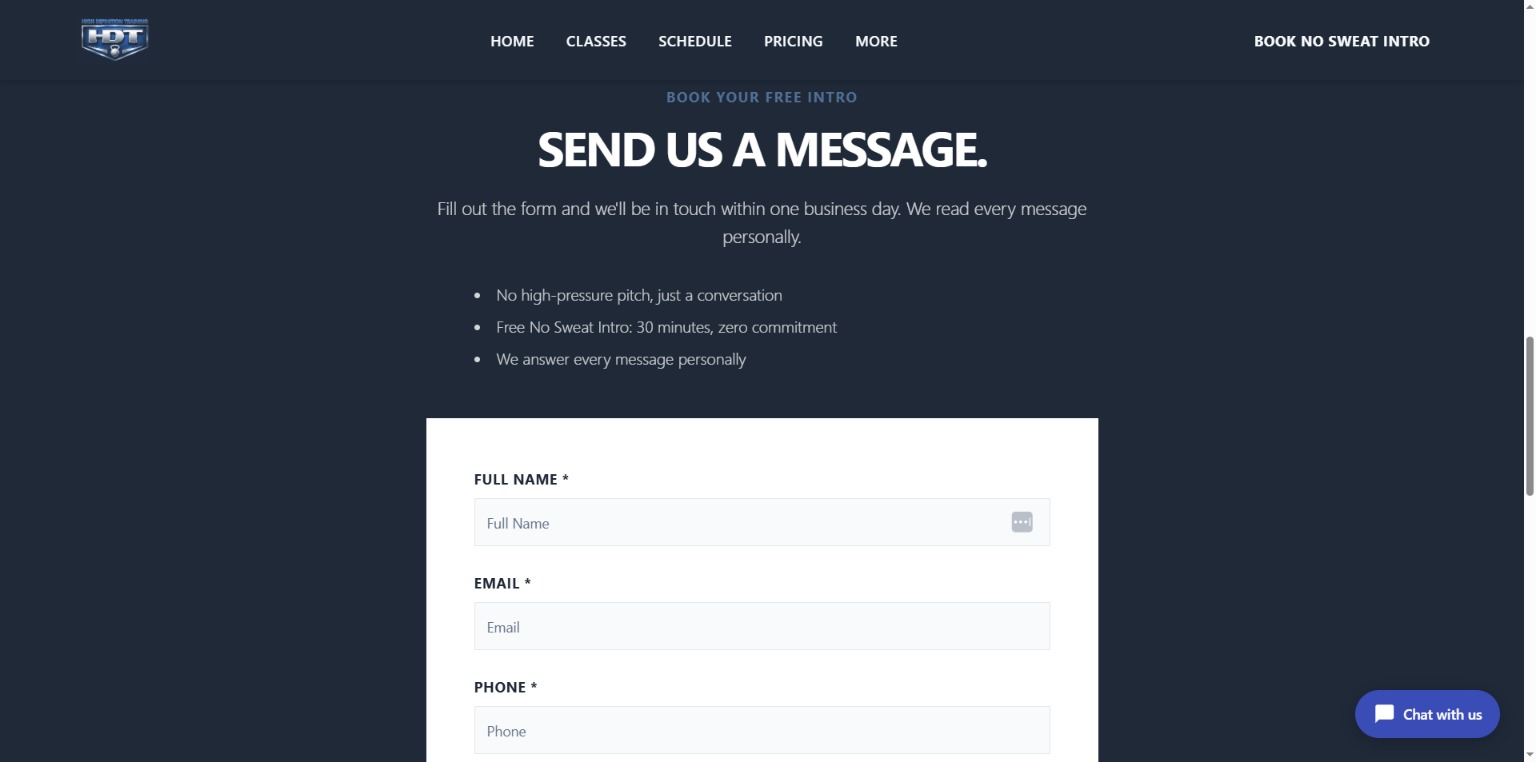
The trial is the starting point. You come in, go through a movement screen, and leave with a clear picture of where you are and what a realistic plan looks like. Scheduling is flexible, and the Throgs Neck and Pelham Bay locations serve most of the eastern Bronx. Check current availability and book a trial class or review pricing and packages to find the right entry point.
Useful sources and further reading
- Why Adults Over 40 Are Hiring Personal Trainers Now — Keedia: covers hybrid coaching models, assessment-first intake, and trainer selection criteria for older adults.
- How to Find a Personal Trainer for Seniors — Dad Bod 40: practical guide including HRV monitoring, ACE/NASM directories, and SilverSneakers programs.
- How to Choose a Personal Trainer That Fits Your 50+ Body — Back in Motion: RPE-based intensity guidance and pain modification protocols.
- What Personal Training Should Look Like After 40 — Move With Purpose: volume management and programming differences for older clients.
- Personally Tailored Exercises for Older Adults — PubMed systematic review: evidence base for assessment-driven, personalized exercise programs in community-dwelling older adults.
- Personalized Fitness Solutions That Actually Work — Rep Philosophy: hybrid and tech-integrated coaching models explained.
Verify trainer credentials directly through the NASM or ACE directories before booking any trial.
FAQ
What makes a gym alternative right for adults over 40?
The right alternative leads with a movement assessment, not a workout, and adapts programming to daily readiness. Look for NASM, NSCA, ACE, or ACSM credentials plus aging-specific continuing education.
Does High Definition Training serve the Bronx?
Yes. High Definition Training is based in Throgs Neck and Pelham Bay in the Bronx, with an introductory process designed specifically for adults over 40.
How quickly can you expect results from personalized training?
Initial functional improvements typically appear within 2–6 weeks; measurable strength and mobility gains usually take 8–16 weeks with consistent, assessment-driven programming.
What is HRV and why does it matter for training over 40?
HRV measures nervous system recovery. A low reading signals your body needs lighter work, so a good trainer will swap heavy sessions for mobility or breathing work rather than push through.
Are there low-cost alternatives to in-person personal training for older adults?
Semi-private sessions (cost-effective relative to private sessions) and hybrid coaching packages reduce cost while keeping coaching quality. SilverSneakers and employer wellness reimbursement programs are also worth checking before paying full price.