Benefits of Personalized Training Programs for Adults Over 40
TL;DR:
- Personalized training programs are tailored to individual goals and capacities, leading to better motivation and adherence.
- They also enhance safety and recovery for adults over 40 by managing load and stress, reducing injury risk.
- These customized plans accelerate progress by adjusting based on ongoing feedback and tracking, producing lasting results.
Personalized training programs are individualized fitness plans built around your specific goals, physical condition, and lifestyle. The fitness industry calls these "individualized exercise programs," and the benefits of personalized training programs go far beyond what any generic class or cookie-cutter routine can deliver. For adults over 40, the difference is not marginal. It is the difference between spinning your wheels for months and seeing real, measurable results in weeks. High Definition Training has built its entire approach around this principle, serving adults in the Throgs Neck and Pelham Bay area of the Bronx who are ready to train smarter, not just harder.
1. How personalized training programs improve motivation and adherence
Motivation is the first thing a generic program kills. When a workout does not match your goals, your schedule, or your fitness level, you stop showing up. Personalized exercise programs significantly improve psychological well-being and attitudes toward exercise compared to generic routines. That finding comes from a 12-week study with 35 participants, and it points to something coaches see every day: people stick with programs they actually enjoy.
The advantages of customized workouts go deeper than enjoyment. Psychological alignment, meaning the fit between what you value and what your program asks of you, turns exercise from a chore into a habit. When your plan reflects your preferences, your schedule, and your real goals, showing up feels less like discipline and more like a reasonable choice.
Retention numbers back this up. Clients on individualized programming achieve 90-day retention rates 20 to 35 percentage points higher than those using generic plans. That gap is enormous. It means personalized clients are still training three months in, while generic-plan clients have largely quit.
- Your program matches your actual schedule, not an idealized one
- Exercises align with what you find satisfying, not just what is theoretically optimal
- Progress feels visible and connected to your effort
- Coaching adjusts the plan when life gets in the way, keeping you in the game
Pro Tip: Tell your coach which exercises you genuinely dislike. A good program works around your preferences, not against them. Compliance beats perfection every time.
2. Safety, injury prevention, and smarter recovery for adults over 40
Safety is not optional after 40. Your body recovers more slowly, carries more accumulated wear, and responds differently to training stress than it did at 25. Generic programs ignore all of that. Personalized training improves safety and reduces the risk of overtraining by managing training volume and recovery based on individual capacity. That is not a minor benefit. Overtraining injuries are among the top reasons adults over 40 quit exercising entirely.

Recovery management is where personalization earns its value most clearly. Management of recovery windows based on life stress and non-gym factors is critical for adults over 40 to prevent burnout or injury. A week with poor sleep, a stressful work deadline, or a family obligation changes how much your body can handle. A personalized program accounts for that. A generic program does not.
Here is how a well-designed individualized plan manages physical risk:
- Assess your baseline. A coach evaluates your current strength, mobility, and injury history before writing a single workout.
- Set appropriate starting loads. Weights and volume begin at a level your body can recover from, not at what looks impressive on paper.
- Build in deload weeks. Planned lighter weeks prevent the accumulated fatigue that leads to injury.
- Monitor non-training stressors. Sleep quality, work stress, and nutrition all affect recovery. A good coach tracks these alongside your workouts.
- Adjust in real time. If you come in feeling run down, the session changes. Pushing through is not always the answer.
Pro Tip: Rate your energy and sleep quality on a simple 1–5 scale before each session. Share that number with your coach. It takes ten seconds and gives your program the data it needs to protect you.
3. Accelerated progress toward your fitness goals
Generic programs produce generic results. Tailored workout plans better match individual goals, schedules, and fitness levels, accelerating progress by avoiding the inefficiencies built into one-size-fits-all plans. For an adult over 40 trying to lose weight, build strength, or improve endurance, those inefficiencies are not just annoying. They are months of wasted effort.
The mechanism is progressive overload applied to your specific capacity. A personalized program increases weight, reps, or intensity at the rate your body can actually absorb. Too fast leads to injury. Too slow leads to plateaus. The right rate, calibrated to you, produces steady, visible improvement.
Personalization also includes modifying progression rates, intensity distribution, and deload strategies based on individual responses and lifestyle. That means your program is not a static document. It is a living plan that changes as you change.
| Training Approach | Progression Method | Recovery Strategy | Goal Alignment |
|---|---|---|---|
| Generic program | Fixed weekly increases | Standardized rest days | Broad population average |
| Individualized plan | Adjusted to your response | Based on your lifestyle stress | Specific to your goals |
The table above shows why individualized plans outperform generic ones on every axis that matters for adults over 40. Your goals, your recovery, and your progression rate are unique. Your program should be too.
4. The role of ongoing tracking and program adjustments
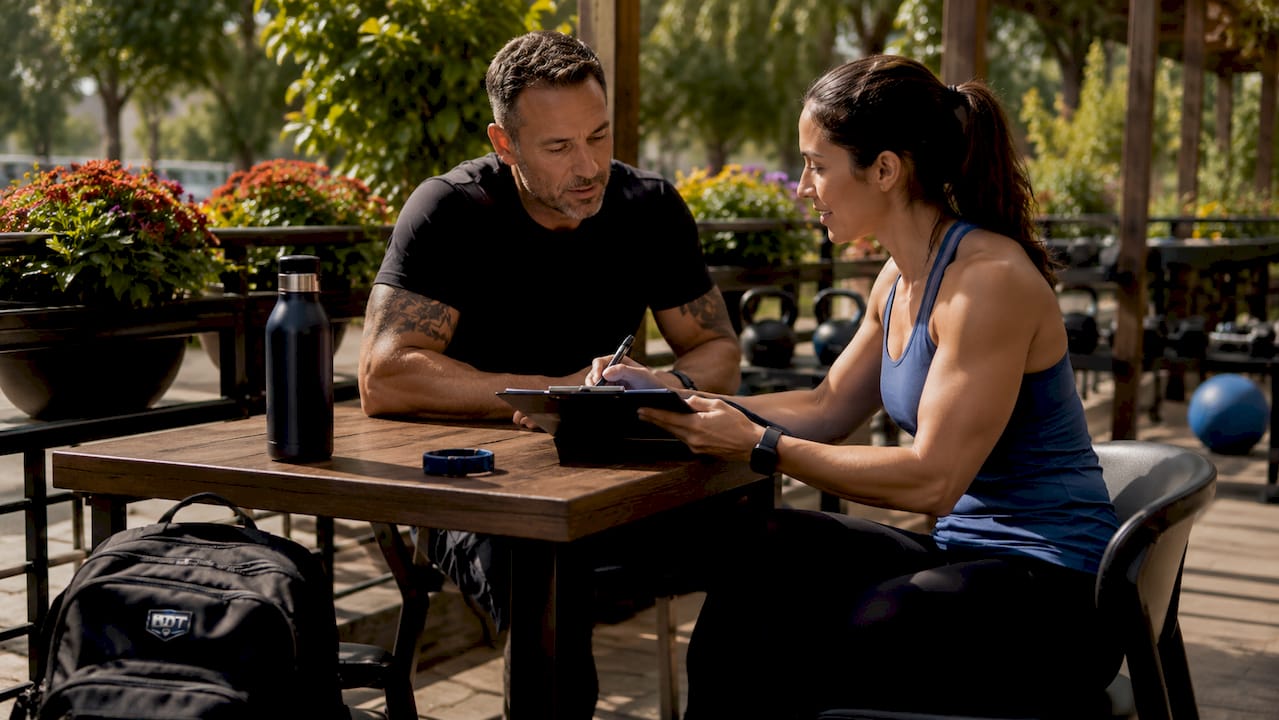
A personalized program that never changes is just a generic program with your name on it. Effective personalization is an evolving process requiring coach-client communication, not a static plan document. The best programs treat every session as data and use that data to make the next session better.
Tracking does not have to be complicated. Logging weight, sets, and reps takes under two minutes per session. Progress photos every four weeks create a visual feedback loop that numbers alone cannot capture. Together, these tools give your coach the information needed to keep your program working as your fitness improves.
Qualitative tracking matters as much as the numbers. Tracking qualitative metrics such as energy levels and how a session feels predicts long-term adherence better than tracking weight alone. A client who logs "felt strong today" or "struggled with fatigue" gives their coach far more useful information than one who only reports pounds lifted.
Dynamic personalization with ongoing adaptation outperforms static programming for adherence and reduces fatigue severity. A meta-analysis of 63 studies with 4,472 participants confirmed this finding. That is not a small sample. It is strong evidence that adaptation is not optional. It is the mechanism that makes personalized training work over months and years, not just weeks.
- Log every session: weight, sets, reps, and a one-line note on how you felt
- Take progress photos every four weeks in consistent lighting and clothing
- Review your numbers with your coach monthly to identify trends
- Adjust intensity, volume, or exercise selection based on what the data shows
- Track energy, sleep, and mood alongside workout metrics for a complete picture
Key Takeaways
Personalized training programs outperform generic plans for adults over 40 because they match your body, goals, and life, leading to better results with lower injury risk and higher long-term adherence.
| Point | Details |
|---|---|
| Motivation and adherence | Individualized plans raise 90-day retention rates 20–35 points above generic programs. |
| Safety and recovery | Personalized load management reduces the risk of overtraining, which is critical for adults over 40. |
| Faster goal progress | Tailored progression avoids plateaus and inefficiencies that slow generic-plan results. |
| Ongoing adaptation | Dynamic programs adjusted by coach-client feedback outperform static plans for long-term results. |
| Qualitative tracking | Logging energy and session feel predicts adherence better than tracking weight alone. |
Why I think most adults over 40 are training with the wrong plan
After working with clients in the Bronx for years, the pattern I see most often is this: someone over 40 walks in having already tried two or three programs that "didn't work." They blame themselves. They think they lack discipline or that their body doesn't respond anymore.
The real problem is rarely the person. It is the program.
Generic plans are built for a statistical average that does not exist in real life. They do not account for the bad week at work, the knee that flares up in cold weather, or the fact that you genuinely hate burpees. When the plan ignores those realities, you stop following it. Then you blame yourself for quitting.
What I have seen work consistently is a program that fits your actual life. Not your ideal life. Not the life you plan to have after you get your schedule under control. Your life right now, with all its constraints. When a program fits that life, you show up. When you show up consistently, results follow.
The other thing I have learned is that adults over 40 respond exceptionally well to seeing progress tracked over time. A client who can look back at where they started three months ago and see the difference, in strength, in energy, in how their clothes fit, becomes a different kind of motivated. That is not discipline. That is evidence. And evidence is far more powerful than willpower.
— Angel
Personalized training at High Definition Training in the Bronx
High Definition Training offers personalized training classes designed specifically for adults over 40 in the Throgs Neck and Pelham Bay area. Every program starts with a pressure-free introductory process that assesses your current fitness, your goals, and your lifestyle before a single workout is prescribed.
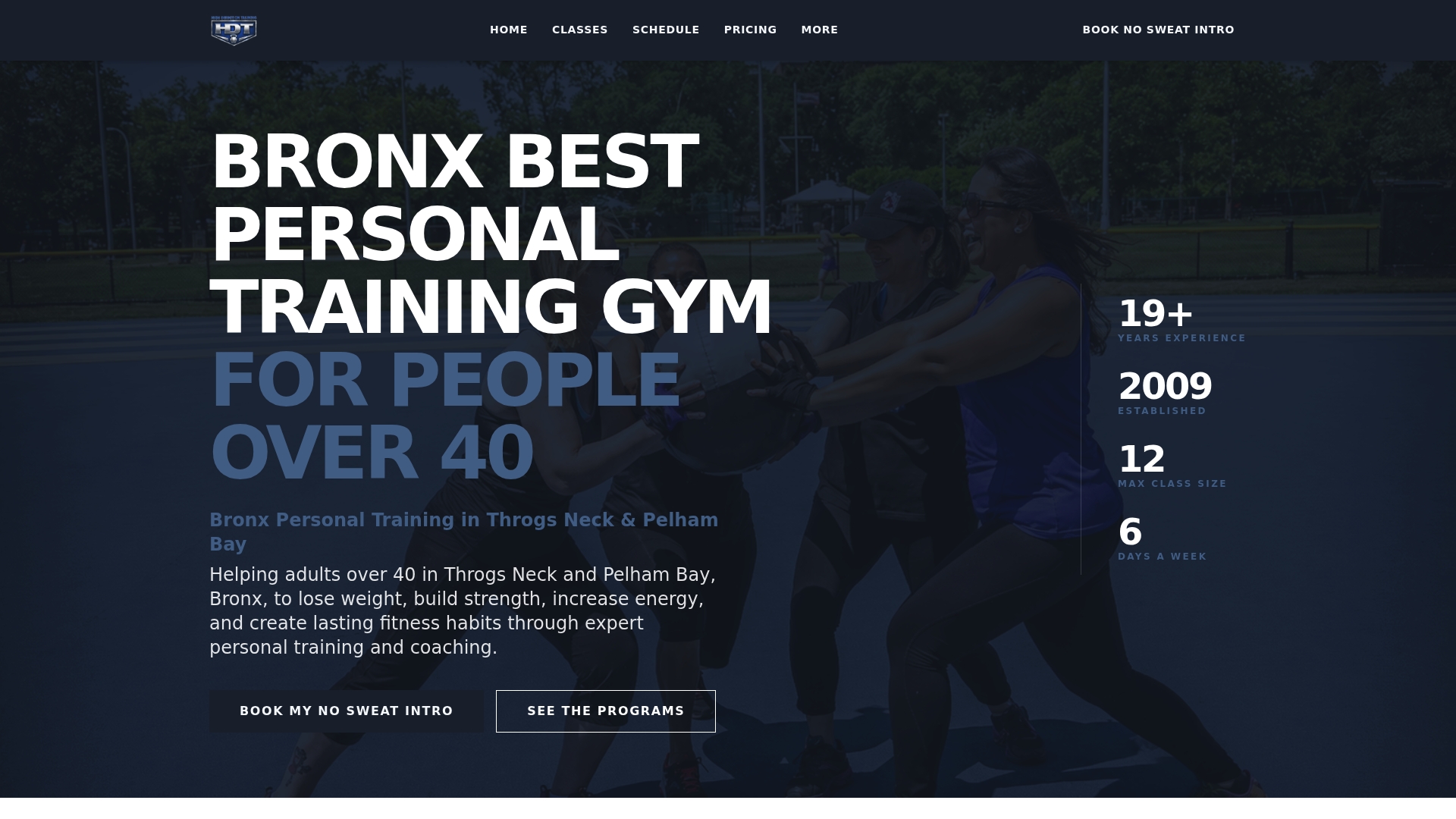
Coaches at High Definition Training adjust your program as you progress, tracking both your numbers and how you feel to keep results coming. The environment is welcoming, the coaching is hands-on, and the focus is on safe, effective progression. Pricing plans are available for different schedules and goals, so you can find the level of support that fits your life. Adults in the Bronx who are ready to train with a plan built for them, not for a 25-year-old, have a clear starting point right here.
FAQ
What are the main benefits of personalized training programs?
Personalized training programs improve motivation, reduce injury risk, and accelerate progress by matching your plan to your specific goals, fitness level, and recovery capacity. Research shows individualized programs produce 90-day retention rates 20–35 percentage points higher than generic plans.
How does personalized training help adults over 40 specifically?
Adults over 40 recover more slowly and carry more physical history than younger adults. Personalized programs account for lifestyle stress, mobility limits, and individual recovery needs, which generic plans ignore entirely.
How often should a personalized program be updated?
A personalized program should be reviewed and adjusted at least monthly, based on workout logs, progress photos, and qualitative feedback such as energy levels. Dynamic adaptation is what separates effective individualized training from a static plan.
Is tracking workouts really necessary for a personalized program to work?
Logging sets, reps, and session feel takes under two minutes and gives your coach the data needed to keep your program effective. Without tracking, adjustments are guesswork rather than evidence-based decisions.
Can personalized training programs help with weight loss after 40?
Personalized programs address the specific combination of training volume, recovery, and progression that produces fat loss without burnout, making them significantly more effective for weight loss than generic routines for adults over 40.