TL;DR:
- Crash diets accelerate muscle loss, trigger metabolic slowdown (adaptive thermogenesis), and work against the hormonal shifts of perimenopause and menopause.
- Immediate risks include nutrient deficiencies, accelerated bone loss, gallstones, and mood disruption — all more dangerous for women over 40.
- What works instead: a moderate 300–500 calorie deficit, 1.2–1.6 g/kg protein daily, and three resistance training sessions per week for sustainable fat loss.
Crash diets typically fail women over 40 because they accelerate muscle loss, trigger a metabolic slowdown called adaptive thermogenesis, and work directly against the hormonal shifts of perimenopause and menopause. The faster the weight drops, the more lean mass you lose — and losing muscle lowers your resting metabolism, making every future diet harder. Here is the short version of what to stop and what to do instead:
- Why they fail: Rapid calorie cuts strip muscle, depress resting energy expenditure, and collide with falling estrogen and rising insulin resistance — three forces that already work against fat loss after 40.
- Immediate risks: Nutrient deficiencies (calcium, vitamin D, iron), accelerated bone loss, gallstone formation, and mood and sleep disruption are all documented health risks of crash diets for women in this age group.
- What to do instead: A moderate calorie deficit (roughly 300–500 calories below maintenance), 1.2–1.6 g of protein per kilogram of body weight daily, and three resistance training sessions per week consistently outperform any crash approach for long-term fat loss.
Coach Angel at High Definition Training has worked with adults over 40 in the Bronx since 2006. Every recommendation below reflects what actually works in practice, backed by peer-reviewed research.
Key Takeaways
Crash diets fail women over 40 because they accelerate muscle loss, trigger metabolic adaptation, and work against the hormonal shifts of perimenopause and menopause — a moderate deficit with adequate protein and resistance training consistently produces better long-term results.
| Point | Details |
|---|---|
| Hormones change everything | Falling estrogen shifts fat to the abdomen and reduces insulin sensitivity, making crash diets less effective after 40. |
| Speed of loss predicts muscle loss | Faster early weight loss is associated with greater lean mass loss in older adults — losing weight more gradually reduces this risk. |
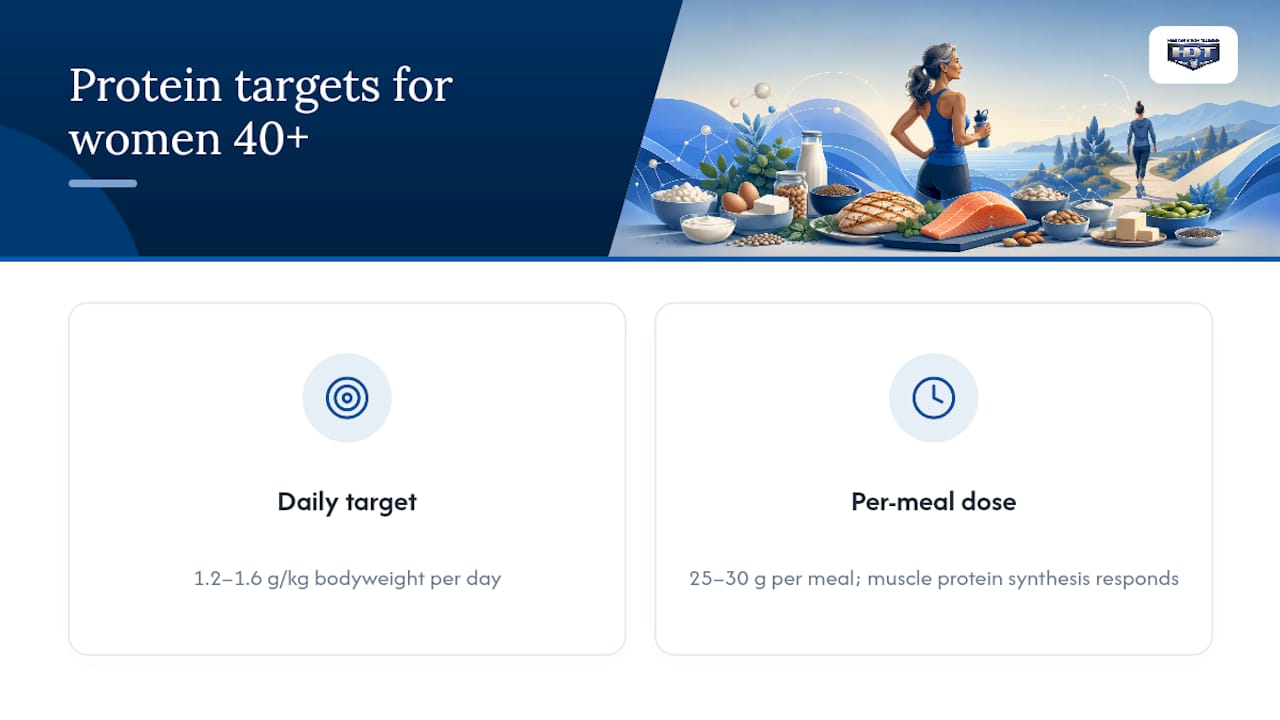
| Protein targets matter | Aim for 1.2–1.6 g of protein per kilogram of body weight daily, with 25–30 g per meal to support muscle protein synthesis. |
| Resistance training is non-negotiable | Three sessions per week at adequate intensity (above 50% of one-rep max) is the primary countermeasure to age-related muscle loss. |
| High Definition Training | The HDT 60-Day Transformation in the Bronx pairs individualized nutrition coaching with progressive strength training for adults over 40. |
Table of Contents
- 1. How hormones change your weight regulation after 40
- 2. What crash diets actually do to your metabolism
- 3. Specific health risks of crash diets for women over 40
- 4. Why preserving muscle is the real goal after 40
- 5. Practical strategies that actually work instead of crash dieting
- 6. Real coaching in practice: how a trainer helps you avoid crash-diet pitfalls
- What the scale misses about progress after 40
- High Definition Training: a real alternative to crash dieting in the Bronx
- Sources
- FAQ
1. How hormones change your weight regulation after 40
Falling estrogen is the single biggest metabolic disruptor women face in their 40s, and most crash diets are designed as if it does not exist. Clinical guidance from Family Doctor confirms that women begin losing roughly 0.5 lb of muscle per year starting around age 40, while hormone shifts simultaneously push fat toward the abdomen and reduce insulin sensitivity.
During perimenopause, estrogen and progesterone both decline — but they do not fall at the same rate. Progesterone drops first, which removes its mild thermogenic effect. Then estrogen falls sharply around menopause, triggering a redistribution of fat from the hips and thighs toward visceral (abdominal) stores. Visceral fat is metabolically active in a damaging way: it worsens insulin resistance and drives low-grade inflammation. Review evidence shows increased visceral adipose tissue after menopause even when total body weight stays the same.
The practical consequence is that a 1,200-calorie diet that produced results at 35 may produce almost nothing at 48 — not because you lack willpower, but because your hormonal environment has fundamentally changed how your body partitions energy and stores fat.
Pro Tip: If you are experiencing irregular cycles, sleep disruption, or unexplained weight gain concentrated in the abdomen, discuss hormone levels and the potential role of hormone replacement therapy with your clinician before starting any new diet program. Addressing the hormonal environment often makes the nutrition work.
2. What crash diets actually do to your metabolism
Crash diets cause fast initial weight loss, but a disproportionate share of that loss comes from lean mass rather than fat. Research published on PMC examining protein, weight loss, and fat-free mass in older adults found that the speed and size of the energy deficit strongly predicted fat-free mass loss — faster early weight loss explained 39% of the variance in lean mass lost across participants.
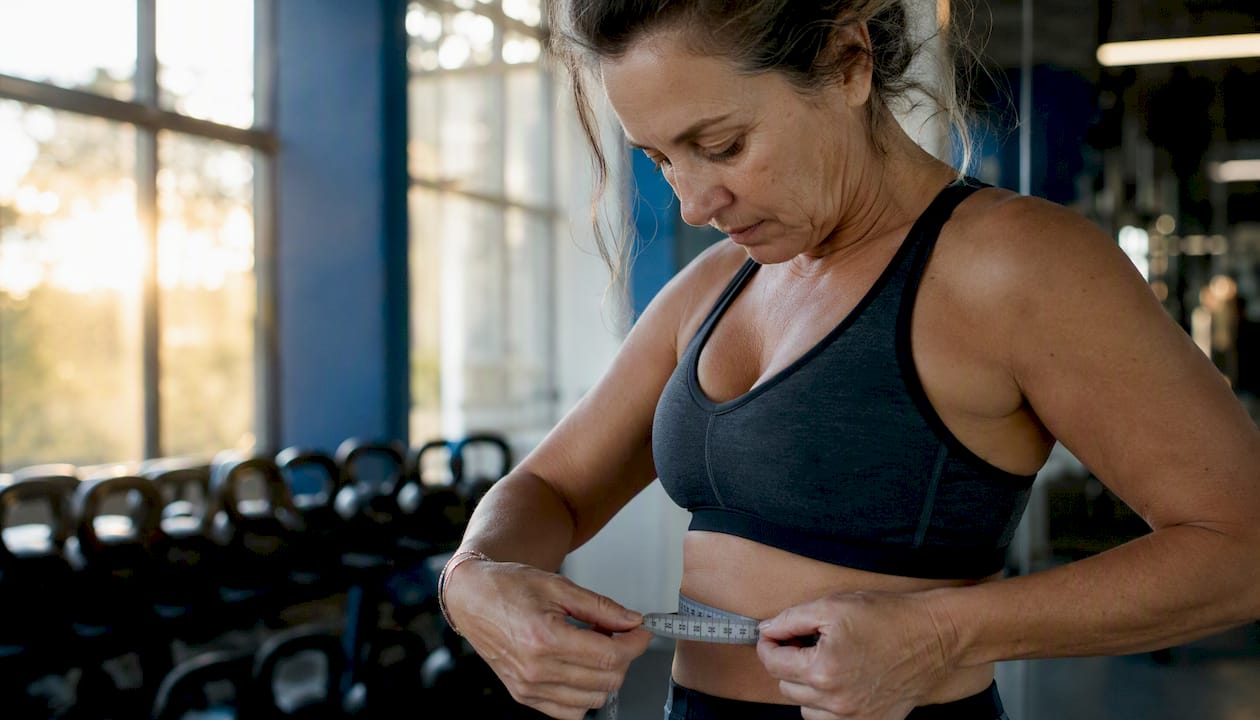
Lose muscle, and your resting energy expenditure (REE) drops. Your body then compensates further through adaptive thermogenesis: it downregulates non-exercise movement, reduces body heat production, and suppresses thyroid activity to burn fewer calories at rest. The result is a metabolism that now runs on less fuel than your body size alone would predict. Appetite hormones like ghrelin simultaneously rise, creating a biological drive to eat more just as your body is burning less.
The metabolic consequences of crash dieting:
- Resting energy expenditure falls beyond what body-size reduction alone explains
- Ghrelin (hunger hormone) rises, increasing appetite significantly
- Leptin (satiety hormone) drops, making fullness harder to feel
- Plateaus arrive earlier and last longer with each repeated diet cycle
- Long-term weight regain risk increases, often overshooting the original starting weight
This is not a character flaw. It is physiology. A commentary in Nutrients (MDPI) notes that even medically supervised weight-loss interventions can result in 25–40% of total weight lost coming from lean muscle mass — which is exactly why supervised resistance training is not optional.
3. Specific health risks of crash diets for women over 40
Women over 40 face a higher baseline risk from restrictive dieting than younger adults because bone density, muscle mass, and hormonal buffers are already declining. The Obesity Action Coalition lists the following clinical risks associated with crash dieting:
- Nutrient deficiencies: Calcium, vitamin D, and iron are the most common casualties of very low-calorie diets. Calcium and vitamin D are already harder to absorb after menopause; cutting food intake further accelerates the shortfall. Mitigation: prioritize dairy, leafy greens, and fortified foods; discuss supplementation with your doctor.
- Bone loss and osteoporosis risk: Rapid weight loss accelerates bone resorption, especially without adequate calcium and load-bearing exercise. Women lose bone density fastest in the first few years after menopause. Mitigation: safe loading exercises and adequate calcium intake are the primary countermeasures.
- Gallstones: Rapid fat loss causes the liver to secrete extra cholesterol into bile, which can crystallize. The risk is highest when losing more than 3 lbs per week. Mitigation: keep loss at 0.5–1 lb per week; see a clinician if you experience upper-right abdominal pain.
- Mood and sleep disruption: Severe calorie restriction raises cortisol and disrupts serotonin production, worsening anxiety, irritability, and sleep quality — all of which are already under pressure during perimenopause.
- Worsened insulin resistance: Crash dieting without resistance training accelerates muscle loss, and less muscle means fewer glucose receptors, making insulin resistance worse over time.
Pro Tip: If you have a history of disordered eating, thyroid conditions, or are currently on medications for blood pressure or blood sugar, get medical clearance before starting any calorie-restricted program. These conditions change how your body responds to a deficit.
4. Why preserving muscle is the real goal after 40
Muscle is your metabolic engine. Every pound of lean mass you carry burns calories at rest; every pound you lose on a crash diet lowers the floor of how much you can eat without gaining weight. Research on muscle loss and weight-loss treatments makes the case plainly: without supervised resistance training, a significant share of weight lost is lean tissue, not fat.
Adults lose approximately 3–8% of muscle mass per decade after age 30, with the rate accelerating around menopause. Crash dieting on top of that natural decline compounds the problem fast.
What the evidence supports for muscle preservation:
- Protein intake of 1.2–1.6 g per kilogram of body weight per day. For a 160-lb (73 kg) woman, that is roughly 88–117 g of protein daily. Distribute it across meals: aim for 25–30 g per meal, since muscle protein synthesis responds to per-meal dose, not just daily total.
- Resistance training three times per week. Compound movements (squat, deadlift, row, press) recruit the most muscle and produce the strongest metabolic stimulus. Springer research on training volume for postmenopausal women indicates that postmenopausal women need higher training volume and intensities above 50% of their one-rep max to trigger meaningful muscle maintenance.
- Progressive overload. Adding small amounts of weight or reps over time signals the body to maintain muscle. Staying at the same weight for months is not a training stimulus — it is maintenance at best.
A review of protein intake and functional outcomes in older adults found mixed results on lean mass preservation across study designs, but more consistent improvements in functional measures like grip strength. The takeaway: higher protein plus resistance training may not fully prevent lean mass loss during a deficit. Still, it substantially reduces it and preserves the strength that matters for daily life.
Pro Tip: When starting resistance training after 40, begin with bodyweight or very light loads and focus on movement quality for the first two to four weeks. Injuries from going too heavy too soon are the most common reason women stop training. Starting strength training safely means earning the right to add weight.
5. Practical strategies that actually work instead of crash dieting
The core principle is simple: a steady, protein-protected, strength-supported calorie deficit produces better long-term fat loss than any crash approach. The pace matters as much as the deficit size.
For a 160-lb woman, that is 0.8–1.6 lbs per week. Slower than a crash diet, yes — but the weight lost is predominantly fat rather than muscle, and the metabolic rate stays higher throughout.
A sample weekly action plan:
- Monday, Wednesday, Friday: 45–60 minutes of resistance training (compound lifts, progressive overload)
- Daily: 7,000–10,000 steps or 30 minutes of walking
- Every meal: Build the plate around a 25–30 g protein anchor (chicken breast, Greek yogurt, eggs, fish, legumes), then add vegetables and a moderate portion of complex carbohydrates
- Sleep: 7–9 hours. Cortisol rises sharply with sleep deprivation and directly promotes abdominal fat storage — this is not optional recovery
- Tracking: Weigh yourself weekly (same time, same conditions), but also track clothing fit, strength numbers, and energy levels. The scale alone misses the body composition improvements that matter most
What to expect over time:
- At 3 months: Strength improvements are usually visible first. The scale may move slowly, but body composition shifts as fat decreases and muscle is preserved or rebuilt.
- At 12 months: Metabolic markers (fasting glucose, triglycerides, blood pressure) often improve significantly with consistent resistance training, even when total weight loss is modest.
For women who are time-constrained, a home workout plan can bridge the gap between gym sessions and keep training consistent.
6. Real coaching in practice: how a trainer helps you avoid crash-diet pitfalls
Supervised, progressive coaching prevents the specific errors crash dieters make: losing muscle instead of fat, training at the wrong intensity, and abandoning the program when the scale stalls. Here is what the first 8–12 weeks look like at High Definition Training, where Coach Angel has coached adults over 40 in the Bronx since 2006.
Week-by-week milestones:
- Weeks 1–2 (Assessment): Movement screening, baseline strength testing, and a review of current nutrition habits. You learn your starting point — not just weight, but mobility, posture, and movement patterns. Bring comfortable workout clothes, a water bottle, and a list of any joint issues or past injuries.
- Weeks 3–4 (Technique-first strength): Bodyweight and light-load versions of foundational movements. Coach Angel modifies squats for knee discomfort (box squats, for example, reduce knee shear and build confidence before progressing to full depth). Deadlift mechanics are taught from the floor up, with load added only when the pattern is clean.
- Weeks 5–8 (Progressive loading): Weight increases systematically. Individualized protein targets are set based on body weight and activity level. Nutrition coaching focuses on hitting per-meal protein goals rather than obsessing over total calories.
- Weeks 9–12 (Measurable progress): Strength benchmarks are retested. Body composition, not just scale weight, is tracked. Recovery needs are assessed individually — some clients need 48–72 hours between sessions, and that is adjusted without judgment.
Coaching tips that prevent common mistakes:
- Never start with the weight you think you should lift. Start with the weight that lets you complete every rep with clean form.
- Three ways to train around limited shoulder mobility: use neutral-grip pressing, reduce range of motion temporarily, or substitute cable rows for overhead work until mobility improves.
- If you are considering GLP-1 medications for weight loss, supervised strength training is not optional — the lean mass protection it provides is the difference between losing fat and losing the muscle you need to keep the weight off.
Pro Tip: Before your first session, get medical clearance if you have been sedentary for more than a year, have cardiovascular risk factors, or are managing a chronic condition. A five-minute conversation with your doctor can prevent a six-week setback.
What the scale misses about progress after 40
Most women over 40 who abandon a program do so because the scale stopped moving — not because the program stopped working. This is the part that most fitness content gets wrong.
After 40, the most meaningful progress markers are often invisible to a scale: visceral fat decreasing, grip strength improving, resting heart rate dropping, sleep quality improving, and clothing fitting differently even when weight is unchanged. A woman who gains 2 lbs of muscle while losing 3 lbs of fat has made significant metabolic progress. The scale says she lost 1 lb. That framing kills motivation.
The research on adaptive thermogenesis makes this even clearer. Metabolic adaptation means your body fights back against a deficit — but resistance training is one of the few interventions that partially counteracts that adaptation by preserving the metabolically active tissue that keeps your REE higher. Tracking strength (how much you lift, how many reps) gives you a number that actually reflects whether the program is working, week over week.
Small, consistent changes compound over 12 months in ways that no crash diet ever has. That is not optimism. It is what the physiology of muscle preservation and metabolic adaptation actually predicts.
High Definition Training: a real alternative to crash dieting in the Bronx
Women over 40 in the Throgs Neck and Pelham Bay areas of the Bronx have a specific option that addresses every failure point this article covers: the High Definition Training 60-Day Transformation.

The program opens with a full movement and strength assessment, sets individualized protein and nutrition targets, and builds progressive resistance training from week one. Coach Angel modifies every movement for joint limitations — knees, shoulders, lower back — so you train hard without getting hurt. Strength and mobility are tracked with real numbers, not vague impressions, so you can see progress even when the scale is slow.
This is not a group fitness class or a generic program handed to you on a sheet. It is hands-on coaching designed specifically for adults over 40, in a community where everyone in the room is working through the same challenges you are. After 60 days, clients move into ongoing small-group or personal training with the same coach and the same progressive approach.
Book your assessment at High Definition Training and get a clear picture of where you are starting and exactly what to do next.
Sources
- PMC article on protein, weight loss, and FFM in older adults (PMC8255642)
- MDPI — commentary on muscle loss and weight-loss treatments (Nutrients, 2026)
- After 40: Women’s Nutrition and Metabolism Needs | Family Doctor
- The Risks of the Crash Diet — Obesity Action Coalition
This article is general information, not a substitute for advice from a qualified doctor. Consult a qualified healthcare professional about your own circumstances before acting on anything here.
FAQ
Why is it so hard for women over 40 to lose weight?
Falling estrogen reduces insulin sensitivity and shifts fat storage toward the abdomen, while natural muscle loss (roughly 0.5 lb per year starting around age 40) lowers resting energy expenditure. These two changes mean the same calorie deficit that worked at 35 produces far less fat loss a decade later.
What is the fastest safe way for a woman over 40 to lose weight?
A deficit of 300–500 calories below maintenance, combined with 1.2–1.6 g of protein per kilogram of body weight daily and three resistance training sessions per week, produces the fastest fat loss without triggering the muscle loss and metabolic adaptation that make crash diets backfire.
Why do crash diets fail in the long run?
Crash diets cause adaptive thermogenesis: the body down-regulates resting energy expenditure beyond what body-size reduction alone predicts, while simultaneously raising hunger hormones. The result is a lower metabolic rate and stronger appetite — a combination that drives rebound weight gain once normal eating resumes.
How much protein does a woman over 40 actually need to preserve muscle?
Research supports 1.2–1.6 g of protein per kilogram of body weight per day, distributed across meals with roughly 25–30 g per meal. This per-meal distribution matters because muscle protein synthesis responds to individual meal doses, not just the daily total.
When should a woman over 40 see a clinician about weight loss?
See a clinician before starting any calorie-restricted program if you have cardiovascular risk factors, thyroid conditions, blood sugar or blood pressure medications, or a history of disordered eating. Symptoms like upper-right abdominal pain during dieting, rapid unexplained weight gain, or severe fatigue also warrant medical review before continuing.