
Evening Workout Routines for Professional Women Over 40
TL;DR:
- Evening workout routines for women over 40 focus on moderate-strength exercises to improve sleep, build muscle, and support hormone balance.
- Short, consistent sessions like strength training or yoga deliver better results and help establish lasting habits.
- Timing workouts to end 90 minutes before bed protects sleep quality and promotes overall health.
Evening workout routines for professional women are defined as targeted, moderate-intensity exercise sessions performed after work to build strength, support hormone balance, and improve sleep quality. For women over 40, this practice carries extra weight. Hormonal shifts during perimenopause change how your body responds to stress, recovery, and exercise timing. The good news: short, consistent sessions deliver better long-term results than infrequent intense ones. You do not need two hours or a perfect schedule. You need the right approach.
1. Why strength training is the best evening workout for professional women
Moderate-intensity strength training is the most effective post-workday workout for women over 40. It builds muscle, supports bone density, and regulates the hormones that perimenopause disrupts. Strength training after 40 directly addresses the metabolic slowdown and bone loss that accelerate during this phase of life.
The exercises do not need to be complicated. Squats, push-ups, and glute bridges are the foundation of any solid evening fitness plan for this group. These moves recruit large muscle groups, which drives metabolic adaptation and keeps cortisol in check after a stressful workday. Resistance workouts like these produce visible muscle tone in 4–6 weeks, even with just 5-minute nightly sessions. That timeline matters because visible progress is one of the strongest drivers of long-term habit.
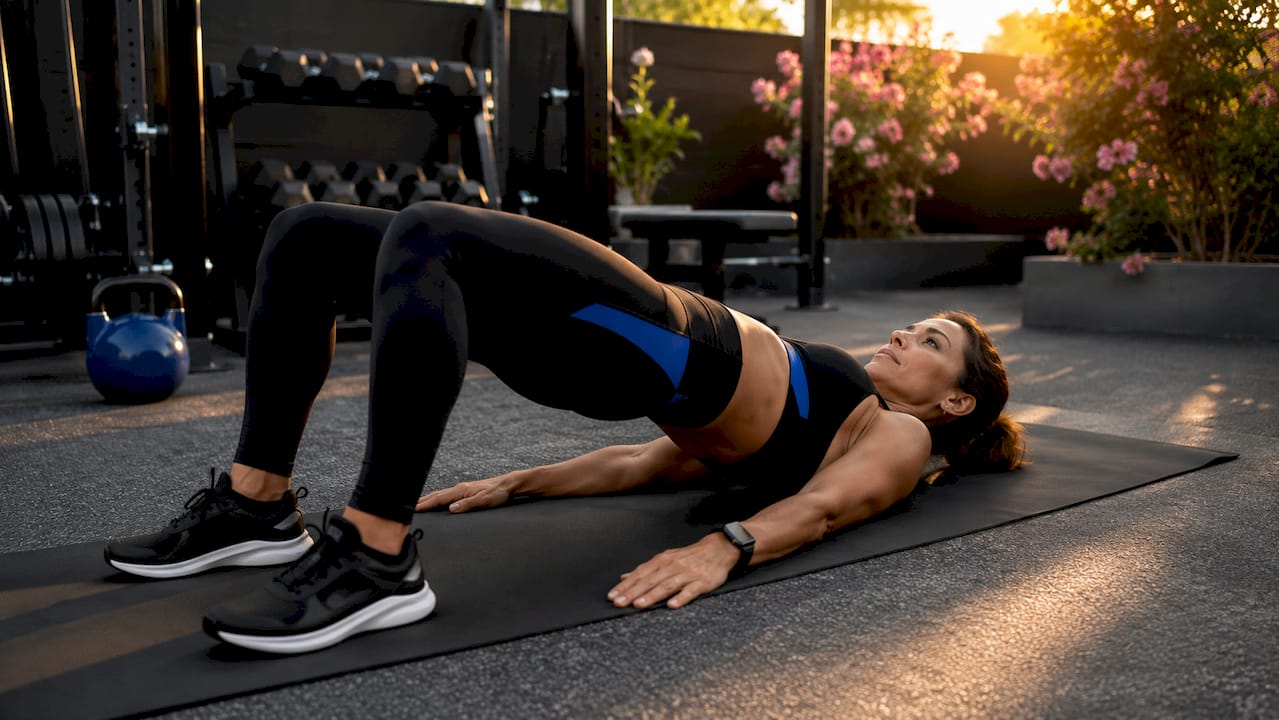
Strength training also improves sleep architecture by reducing the cortisol spike that keeps you wired at night. Lower cortisol means faster sleep onset and deeper rest. That is a direct return on a 30-minute investment.
Key strength moves for evening sessions:
- Modified squats: Reduce joint stress while activating glutes and quads
- Wall push-ups: Build upper body strength without shoulder strain
- Glute bridges: Target the posterior chain and support pelvic floor health
- Resistance band rows: Counteract the forward posture from desk work
- Dead bugs: Activate deep core muscles without spinal compression
Pro Tip: Use auto-regulation to adjust your weights and reps based on how you feel that day. On high-fatigue days, drop the load by 20% and focus on form. Consistency over weeks beats intensity on any single day.
2. How to overcome cognitive fatigue after work
Cognitive fatigue is not the same as physical exhaustion. After a full workday, your brain is depleted, but your muscles are not. That distinction changes everything about how you approach a post-work session.
Energy often returns within 10 minutes of starting activity. The fatigue you feel at 6:00 PM is largely psychological, driven by decision overload and mental load rather than true physical depletion. Starting is the hardest part. Once you move, the body catches up quickly.
The most effective strategy is to remove the decision entirely. Changing into workout clothes immediately after work is one of the most researched environmental cues for improving exercise adherence. It signals a behavioral shift before your brain has time to negotiate. Scheduling a fixed class time works the same way. You are not deciding whether to go. You are just going.
Practical strategies to make evening workouts stick:
- Change clothes before you sit down after work
- Keep your gym bag packed and visible the night before
- Schedule workouts like client meetings, with a set time and no rescheduling
- Eat a light carb-protein snack 60–90 minutes before your session
- Use a fixed playlist or warm-up ritual to trigger the workout mindset
Pro Tip: On days when motivation is zero, apply the Minimum Viable Dose principle. Ten minutes of mobility work plus two light sets count. It maintains the habit without overtaxing a depleted system, and preserving the habit is the real goal.
3. Five evening workout routines that fit a busy schedule
These five formats are specifically suited to the fitness needs of professional women after 40. Each one fits within a 30-minute window and can be done at home or in a gym.
1. Five-minute resistance circuit
This is the entry point for nights when time is short. Modified squats, wall push-ups, and glute bridges are performed in two rounds of 45 seconds each with 15-second rest periods. The total time is under 10 minutes including warm-up. Short nightly sessions like this build visible tone in 4–6 weeks when done consistently. The key is to do it every night rather than do more on fewer nights.
2. Restorative yoga
Restorative yoga activates the parasympathetic nervous system, the body's rest-and-digest mode. Poses like supported child's pose, legs-up-the-wall, and reclined butterfly held for 3–5 minutes each lower heart rate and cortisol. Restorative yoga is one of the most evidence-backed evening exercise ideas for improving sleep quality in women over 40. It is not passive. It is active recovery.
3. Pilates flow for core and hormone balance
A 20-minute Pilates flow targeting the deep core, hip flexors, and thoracic spine addresses the postural damage from desk work while supporting pelvic floor function. Pilates also regulates breathing patterns, which directly lowers cortisol. The controlled, low-impact nature makes it ideal for high-stress days when heavy lifting would push cortisol higher rather than lower.
4. Walking meditation
A 20-minute walk at a conversational pace, paired with focused breathing or a guided audio session, delivers cardio benefits without spiking adrenaline. Walking meditation improves mental clarity, reduces anxiety, and counts toward the 8,000–10,000 daily steps that support cardiovascular health. It is the most underrated quick evening workout in professional women's fitness.
5. Bedtime stretching sequence
A 10-minute sequence targeting the hip flexors, hamstrings, chest, and neck releases the physical tension that accumulates during a workday. Held stretches of 60–90 seconds each promote muscle relaxation and signal the nervous system to shift toward sleep mode. This routine pairs well with any of the four options above as a cool-down.
| Routine | Duration | Primary Benefit | Best For |
|---|---|---|---|
| Resistance circuit | 5–10 min | Muscle tone, metabolism | High-energy nights |
| Restorative yoga | 20–30 min | Sleep quality, cortisol reduction | Stressed or anxious nights |
| Pilates flow | 20 min | Core strength, posture | Moderate energy nights |
| Walking meditation | 20 min | Mental clarity, cardio | Any energy level |
| Bedtime stretching | 10 min | Tension release, sleep onset | Every night as a wind-down |
4. Timing and intensity guidelines to protect your sleep
The single most important rule for evening exercise is this: finish high-intensity training at least 90 minutes before bedtime. Evening exercise improves sleep quality by 30–40% in women over 40 when performed moderately and at the right time. Done too late or too intensely, it does the opposite.
Moderate intensity is the standard for evening sessions. That means you can hold a conversation but feel challenged. Heart rate stays in the 50–70% of maximum range. High-intensity, high-volume training during sleep deprivation stalls recovery and increases inflammation. This is especially relevant for women in perimenopause, whose cortisol regulation is already under pressure.
The research-backed frequency for workout plans for busy women is 3–5 sessions per week, each lasting 30–45 minutes. That is achievable without restructuring your life. Pair those sessions with a daily movement target of 8,000–10,000 steps, and you cover both strength and cardiovascular health.
Timing checklist for evening sessions:
- Finish vigorous training by 8:00 PM at the latest
- Allow 30 minutes of cool-down before any screen-free wind-down routine
- Eat a light meal or snack at least 60 minutes before training
- Use dim lighting and calm music post-workout to signal sleep preparation
- Avoid caffeine after 2:00 PM on training days
Key Takeaways
Effective evening workout routines for professional women over 40 combine moderate-intensity strength training, smart timing, and habit-based environmental cues to build lasting fitness without disrupting sleep or recovery.
| Point | Details |
|---|---|
| Strength training is the priority | Squats, push-ups, and glute bridges build tone in 4–6 weeks with short nightly sessions. |
| Timing protects sleep | Finish vigorous training 90 minutes before bed to improve sleep quality by 30–40%. |
| Cognitive fatigue is not physical | Energy returns within 10 minutes of starting; changing clothes immediately after work removes the decision barrier. |
| Auto-regulation sustains consistency | Adjust intensity daily based on energy levels rather than following a rigid plan. |
| Minimum Viable Dose preserves habit | Ten minutes of light movement on exhausted days keeps the routine intact over the long term. |
What I have learned from working with professional women over 40
The biggest mistake I see is treating fitness as an all-or-nothing commitment. Women come in after a brutal week and say they "fell off the wagon." But missing two sessions is not failure. Quitting the habit entirely is.
What actually works is building a routine so simple that skipping it feels stranger than doing it. The women at High Definition Training who make the most visible progress are not the ones who train hardest. They are the ones who show up consistently, even on the nights they least want to. A 15-minute session at 70% effort, done four times a week, beats a 60-minute session done once.
Hormonal fluctuations are real, and they affect performance. Some weeks your body will respond well to heavier loads. Other weeks, a Pilates flow and a walk are the right call. Rigidity is the enemy of consistency. The strength training approach for career women that works long-term bends without breaking.
Celebrate the small wins. Sleeping better after two weeks of evening stretching is a win. Feeling less stiff at your desk is a win. Visible muscle tone at six weeks is a win. These are not minor. They are the proof that the process is working, and that proof is what keeps you going.
"— Angel"
Evening fitness support at High Definition Training
Professional women in the Throgs Neck and Pelham Bay areas of the Bronx have access to evening sessions designed specifically for the demands of life after 40. High Definition Training offers class schedules designed to fit post-work hours, with expert trainers who understand perimenopause, fatigue patterns, and the need for safe progression.
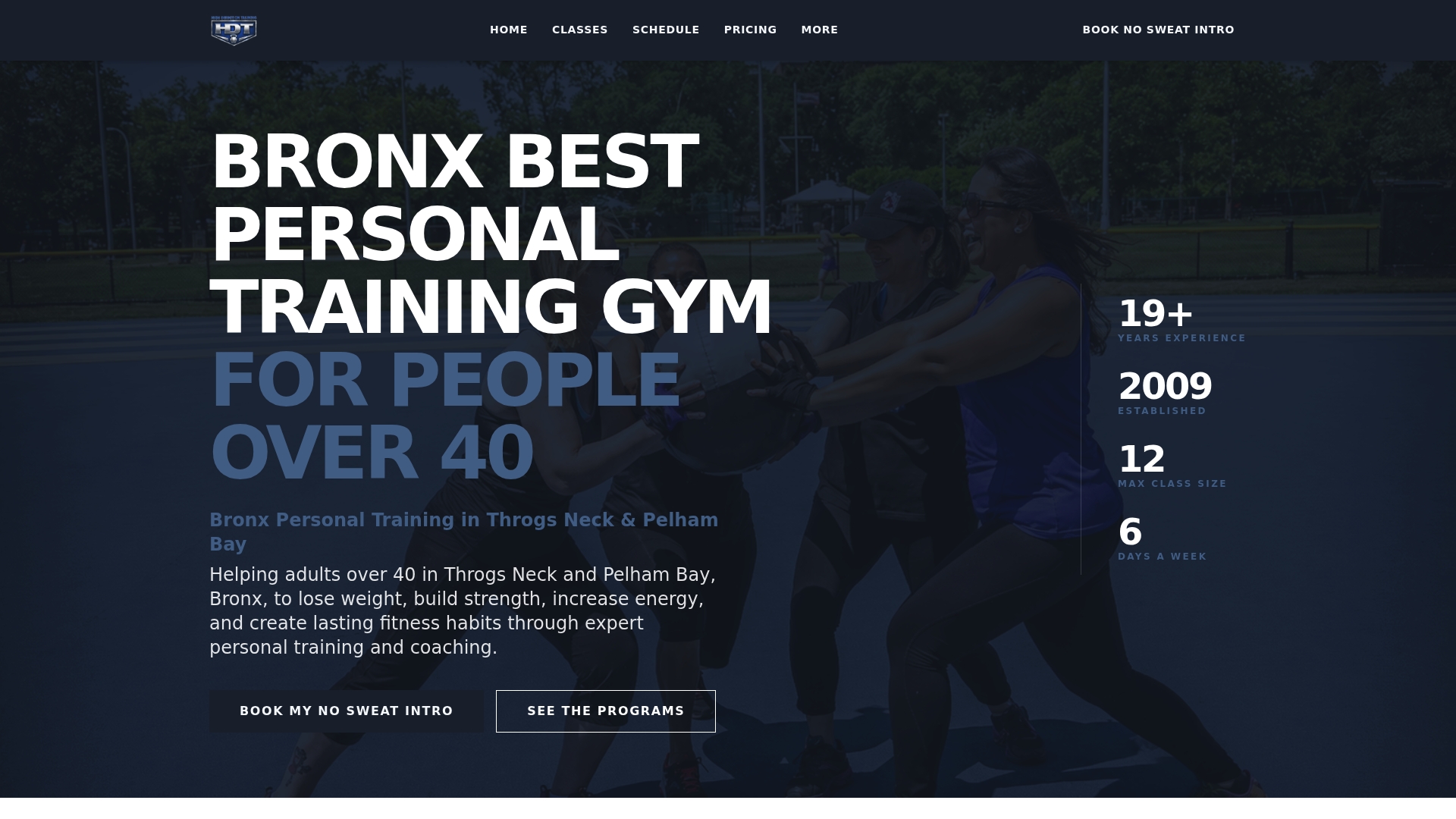
Every session scales to your energy level that day. No pressure to perform at peak when your body needs a lighter touch. If you want to know what a personalized training plan looks like for your schedule and goals, the team at High Definition Training is ready to walk you through it. Check current pricing and find a time that works for you.
FAQ
What is the best evening workout for professional women over 40?
Moderate-intensity strength training using moves like squats, push-ups, and glute bridges is the most effective option. These exercises build visible muscle tone in 4–6 weeks and support hormone balance without disrupting sleep.
How late can I work out without affecting my sleep?
Finish vigorous training at least 90 minutes before bedtime. Evening exercise improves sleep quality by 30–40% in women over 40 when timed and intensity are managed correctly.
What if I am too tired to work out after work?
Cognitive fatigue is not the same as physical exhaustion. Energy typically returns within 10 minutes of starting activity. On days of extreme fatigue, a Minimum Viable Dose of 10 minutes of mobility work helps maintain the habit without overtaxing your system.
How many times a week should professional women work out in the evening?
The research-backed target is 3–5 sessions per week, each lasting 30–45 minutes. Pair those sessions with a daily movement goal of 8,000–10,000 steps for full cardiovascular and metabolic benefit.
Does evening exercise help with perimenopause symptoms?
Yes. Restorative yoga, Pilates, and strength training all reduce cortisol and support the hormonal shifts of perimenopause. Regular moderate exercise is one of the most effective non-pharmaceutical tools for managing sleep disruption, mood changes, and muscle loss during this phase.