
Personal Training ROI for Busy Women Over 40
TL;DR:
- Personal training offers women over 40 long-term health benefits, such as improved bone density, muscle mass, and emotional regulation.
- The highest return occurs when training includes consistent frequency, hybrid models, and objective progress tracking from the start.
- Building independence early and measuring health markers ensure sustainable results and maximize overall training value.
Personal training ROI, defined as the measurable return a woman gets on her fitness investment of time, money, and health, is the deciding factor in whether a trainer is worth hiring. For busy women over 40, that return goes far beyond a number on a scale. Structured training improves bone density and muscle mass and supports emotional regulation during perimenopause and menopause, delivering long-term health value that compounds over years. The personal training roi busy women experience is most powerful when the right model, frequency, and goals align from day one.
What factors influence the ROI of personal training for busy women over 40?
ROI in personal training depends on several variables working together. Training frequency, session format, and lifestyle fit all shape how much value a woman actually gets from her investment.
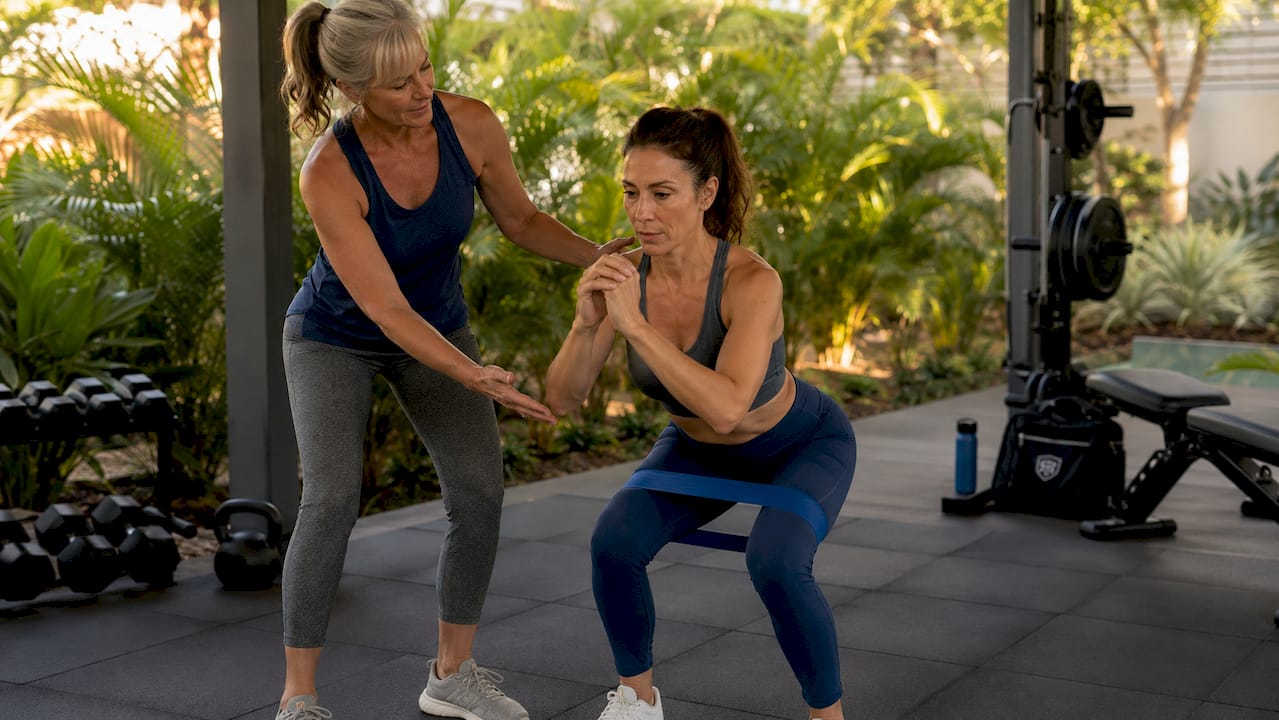
Training frequency and format
Twice-weekly personal training sessions in 2026 cost between $400 and $1,200 per month at most commercial gyms. That range reflects geography, trainer credentials, and session length. Cutting essential household expenses to cover that cost yields a negative financial ROI, regardless of how good the trainer is.
Format matters as much as frequency. Hybrid training models that combine in-person coaching with online programming increase adherence by 21% among beginners. Higher adherence means more sessions completed, which directly raises the return on every dollar spent.
Age-related health factors
Women over 40 face hormonal shifts that make unguided exercise less effective and riskier. Personal training during perimenopause and menopause protects bone density, builds muscle mass, and supports emotional regulation. These are not cosmetic benefits. They are clinical outcomes that reduce future healthcare costs and maintain quality of life.
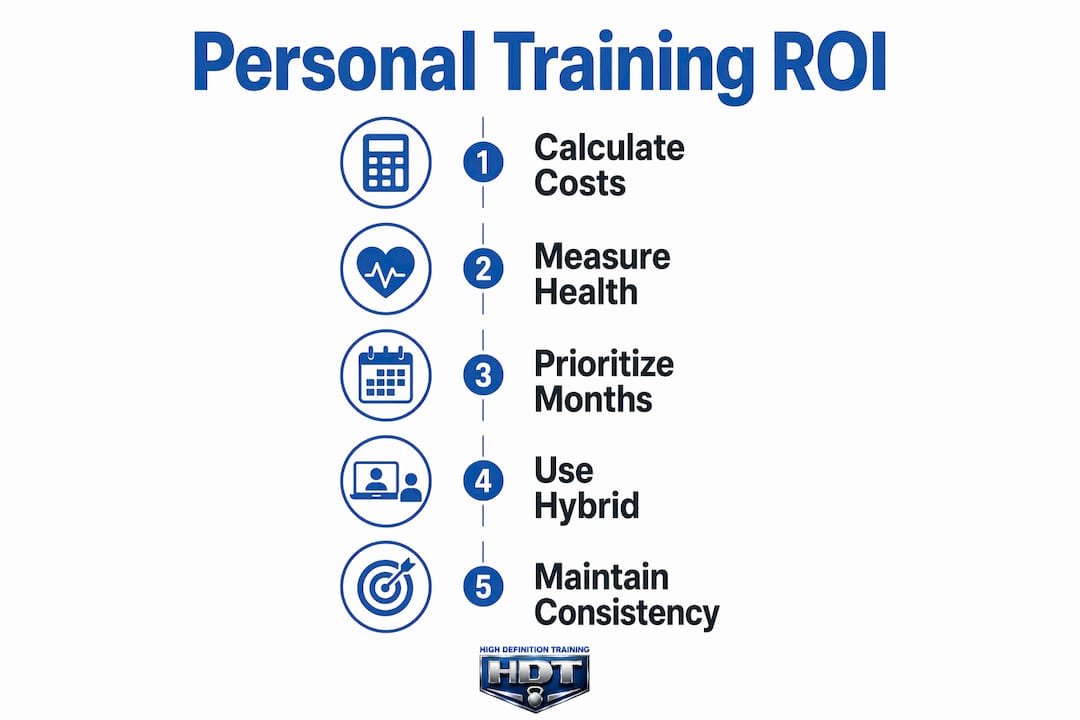
Time as a financial asset
Busy women often undercount the value of their own time. In-home or mobile trainers save up to 12 hours per month by eliminating commutes and prep time. For a professional earning $50 per hour, that time savings alone can offset a significant portion of training costs. Time ROI is real, and it belongs in any honest cost-benefit calculation.
- Training frequency directly controls total monthly cost and benefit accumulation
- Hybrid and online models lower cost while maintaining accountability
- Perimenopause and menopause make professional guidance more valuable, not less
- Time saved through mobile or in-home training adds measurable financial value
- Sporadic sessions under eight per month produce diminishing financial returns
How do you evaluate and maximize the returns from personal training?
Measuring return on a fitness investment requires both numbers and health markers. Women who track both get a clearer picture of what is working and what is not.
Calculate financial ROI first
The basic formula is straightforward: subtract the total training costs from the value of the outcomes achieved, then divide by the total costs. Outcomes include reduced medical visits, improved work productivity, and time saved. Structured training improves sleep quality, stress resilience, and cognitive performance, which translates directly into professional output. A woman who sleeps better and manages stress more effectively produces more at work. That productivity gain has real dollar value.
Measure health improvements with objective benchmarks
Tracking subjective feelings is not enough. Use these four markers to measure progress objectively:
- Strength benchmarks: Record starting weights for key lifts like squats, rows, and presses. Retest every six weeks.
- Bone density indicators: Schedule a DEXA scan before starting and after six months of consistent training.
- Sleep quality: Use a wearable like a Garmin or Fitbit to track sleep duration and deep sleep percentage weekly.
- Stress resilience: Monitor resting heart rate variability (HRV) as a proxy for nervous system recovery.
These markers give you data, not guesses. Data lets you hold your trainer accountable and justify the ongoing investment.
Prioritize the first 3–6 months
The first 3 to 6 months of personal training deliver the highest ROI by teaching foundational movement patterns, reducing injury risk, and building independent habits. After that window, many women can reduce the frequency of sessions and maintain gains with less coaching support. Front-loading your investment in this period is the single most effective way to maximize return.
Pro Tip: Book at least two sessions per week for the first three months. Consistency in this window builds the neuromuscular patterns that make every future workout more effective.
Use hybrid and online models to cut costs without losing structure
Online fitness coaching provides structure, accountability, and faster progress for women who struggle to stay consistent on their own—purchasing fewer than 8 sporadic one-on-one sessions per month yields diminishing financial ROI. Hybrid or online coaching with daily guidance and habit tracking generates four to eight times better ROI than sporadic in-person sessions.
| Training model | Monthly cost range | Adherence benefit | Best for |
|---|---|---|---|
| In-person only | $400–$1,200 | Baseline | Women needing hands-on form correction |
| Online only | Lower cost point | High with accountability | Women with flexible schedules |
| Hybrid (in-person + online) | Mid-range | 21% higher than solo | Busy women balancing cost and guidance |
| In-home or mobile | Varies | High (no commute barrier) | Women with zero commute time to spare |
What obstacles prevent busy women from getting good ROI?
The biggest barrier to strong training ROI is not money. It is inconsistency. A woman who pays for sessions but skips them due to schedule conflicts gets zero return on those dollars.
Schedule conflicts and motivation gaps
Inconsistent schedules are the most common reason women abandon training programs. The solution is not more willpower. It is a personal trainer who fits your schedule rather than forcing you to fit theirs. Early-morning, lunch-hour, and evening slots with a trainer who offers flexible rescheduling dramatically reduce dropout rates.
Financial pressure and overspending
Overspending on sporadic premium sessions creates financial stress that undermines motivation. A woman who feels guilty about the cost of training is less likely to show up consistently. Choosing a pricing model that fits the actual budget, even if it means starting with online coaching, produces better long-term results than stretching for in-person sessions that feel unaffordable.
Building independence after the initial phase
The goal of good personal training is to make itself partially unnecessary. After the first six months, a well-coached woman should be able to train independently two to three days per week. Failing to build that independence creates permanent dependency on expensive sessions. A trainer who teaches sustainable fitness routines rather than just delivering workouts is worth more in the long run.
- Block training time in your calendar like a non-negotiable work meeting
- Choose a trainer who offers flexible rescheduling, not a rigid weekly slot
- Start with a hybrid or online model if budget is tight, then scale up
- Ask your trainer explicitly: "What should I be able to do on my own by month six?"
Pro Tip: Set a 90-day review date at the start of your training contract. Evaluate your strength benchmarks, sleep quality, and energy levels on that date. If the numbers have not moved, change the program, not just the trainer.
What time-efficient workout formats deliver the highest ROI?
Short, structured sessions outperform long, unfocused ones for busy women over 40. A 45-minute session built around compound movements like deadlifts, push presses, and split squats delivers more hormonal and muscular benefits than 90 minutes of mixed cardio and machine work.
Strength-focused short sessions
Strength training is the highest-ROI workout format for women over 40. It builds muscle, protects bone, and raises resting metabolic rate. A home workout plan for women over 40 built around progressive overload, where weight or reps increase each week systematically, produces measurable strength gains within eight weeks. Progressive overload is the mechanism. Without it, workouts maintain fitness but do not build it.
Hybrid model in practice
A practical hybrid model looks like this: two in-person sessions per week for form coaching and accountability, plus three shorter home sessions guided by a video library or app. The in-person sessions anchor the week. The home sessions accumulate volume without adding cost. This format suits women in the Throgs Neck and Pelham Bay areas of the Bronx who want professional guidance without a daily commute.
Recovery as part of the ROI equation
Recovery is not optional. Sleep, stress management, and mobility work directly affect how much benefit a woman extracts from each training session. A trainer who includes recovery protocols in the program, not just workouts, delivers better long-term ROI. Women who sleep well and manage cortisol levels respond faster to training and sustain results longer.
- 45-minute compound strength sessions three times per week outperform longer, unfocused workouts
- Progressive overload is the core mechanism for building strength and bone density
- Hybrid models combine in-person coaching with home sessions to maximize volume at lower cost
- Recovery protocols (sleep, mobility, stress reduction) belong inside the training plan, not outside it
- Wearables like Garmin or Fitbit track sleep and HRV to make recovery measurable
Key Takeaways
Personal training delivers its highest ROI for busy women over 40 when it combines the right format, consistent frequency, and objective progress tracking from the first session.
| Point | Details |
|---|---|
| Front-load your investment | The first 3–6 months of training yield the highest ROI through foundational skill-building and injury prevention. |
| Choose the right model | Hybrid training increases adherence by 21% and cuts costs compared to in-person-only sessions. |
| Count time as money | In-home or mobile trainers save up to 12 hours monthly, offsetting a significant share of training costs. |
| Track health markers | Measure strength benchmarks, sleep quality, and HRV every six weeks to hold the program accountable. |
| Build toward independence | A good trainer teaches you to train alone, reducing long-term costs while sustaining results. |
What I have learned about ROI from training busy women in the Bronx
Most women come to me focused on the wrong number. They want to know the monthly cost. What they should be asking is: "What will this cost me if I do not do it?" After 40, the answer gets more serious every year. Bone loss accelerates. Muscle mass drops. Sleep quality declines. The compounding cost of inaction is real, and it shows up in medical bills, energy levels, and quality of life.
The women I work with at High Definition Training in Throgs Neck and Pelham Bay are not looking for a gym experience. They are looking for a return. They want to feel stronger at work, sleep better, and move without pain. When we set measurable goals tied to those outcomes, the ROI becomes obvious within 90 days.
The trade-off I see most often is time versus money. Women with tight budgets choose online or hybrid models and get excellent results because the accountability is built in. Women with greater flexibility tend to choose in-person sessions and benefit from hands-on form coaching. Neither path is wrong. The wrong path is doing nothing because the cost feels too high, while the cost of inaction keeps climbing.
My honest advice: start with a structured 12-week plan, track your benchmarks, and review the results at the end. If the numbers moved, you have your answer. If they did not, the program needs to change. Either way, you have data, and data beats guesswork every time.
— Angel
High Definition Training: built for women who have no time to waste
Busy women in the Bronx deserve a training program that fits their lives, not the other way around. High Definition Training works with women over 40 in Throgs Neck and Pelham Bay who need real results from a realistic schedule.
Whether you want in-person coaching, a hybrid plan, or a structured program you can follow at home, High Definition Training has a format that fits your needs. Every program is built around your health goals, your schedule, and your budget. Women who explore training options at High Definition Training get a personalized plan designed to deliver measurable returns from the first session. The investment is real. So are the results.
FAQ
What is personal training ROI for women over 40?
Personal training ROI measures the health, time, and financial value a woman gains relative to her training costs. For women over 40, it includes strength gains, protection of bone density, better sleep, and time saved through efficient workouts.
How long does it take to see a return on personal training?
The first 3 to 6 months deliver the highest ROI by building foundational movement skills and reducing injury risk. Most women see measurable improvements in strength and sleep within 8 to 12 weeks of consistent training.
Is a hybrid training model worth it for busy women?
Hybrid models that combine in-person and online coaching increase adherence by 21% compared to solo training. They also cost less than full in-person programs, making them the strongest ROI option for most busy women.
How do I know if my personal trainer is delivering good value?
Track objective markers every six weeks: strength benchmarks, sleep quality, and resting heart rate variability. If none of these metrics improve after 12 weeks of consistent training, the program needs to change.
Can I get good results with less than two sessions per week?
Fewer than eight sessions per month produces diminishing financial ROI. Two structured sessions per week, supplemented by independent home workouts, is the minimum effective dose for women over 40 seeking real results.
Recommended
- Personal Trainer Role for Women With a Busy Schedule
- Hire a Personal Trainer Over 40: Women's Guide
- 7 Signs You Need a Personal Trainer After 40
- Why One-on-One Training Works Better for Women Over 40
Ready to Build Real Strength?
Join our supportive community of women over 40 in the Bronx. Book your free No Sweat Intro today and let's discuss how we can help you achieve your goals safely and effectively.